An official website of the United States government

Official websites use .gov
A
.gov website belongs to an official government
organization in the United States.

Secure .gov websites use HTTPS
A
lock (
) or https:// means you’ve safely connected to
the .gov website. Share sensitive information only on official,
secure websites.

Search
Connect with the Peace Corps
If you're ready for something bigger, we have a place where you belong.
Apply to the Peace Corps
The application process begins by selecting a service model and finding an open position.
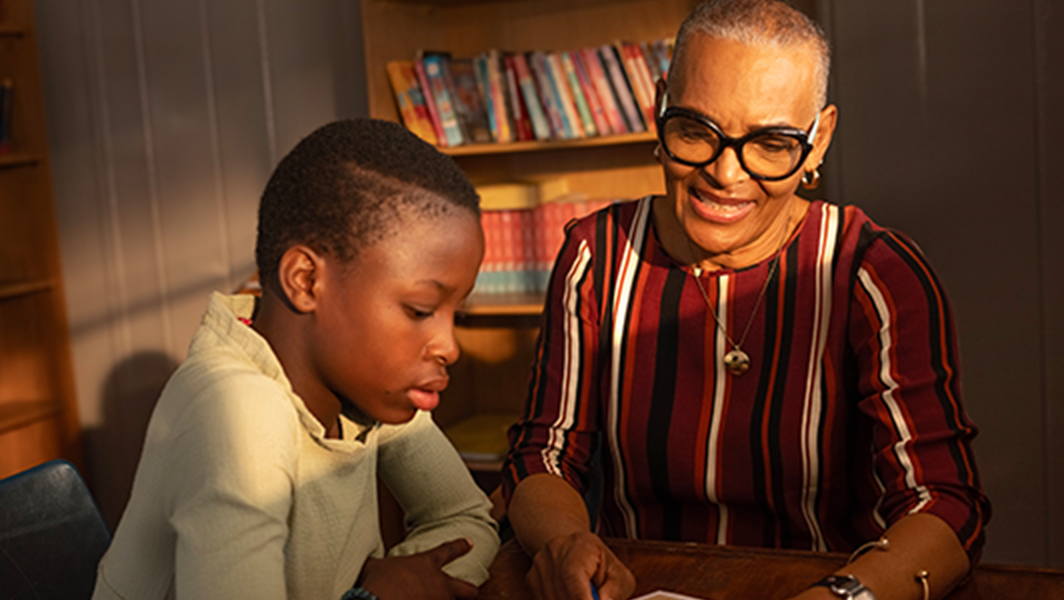
Let us help you find the right position.
If you are flexible in where you serve for the two-year Peace Corps Volunteer program, our experts can match you with a position and country based on your experience and preferences.
Serve where you’re needed mostMonitoring and Evaluation Advisor
 Education
Job highlights
- Apply data monitoring and evaluation skills to positively shape Namibia’s education system.
- Discover new approaches to measuring educational success while developing leadership and training skills.
- Learn to speak Oshikwanyama, Oshindonga, Otjiherero, Rukwangali, Silozi, Afrikaans, or Khoekhoegowab through daily conversations and dedicated tutoring.
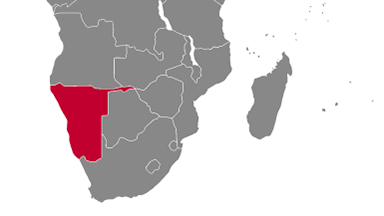
Namibia • Africa
In partnership with: Ministry of Education, Innovation, Youth, Sports, Arts, and Culture (MEIYSAC)
Get answers live — every weekday at .
Apply by
November 15, 2026Know by
January 1, 2027Depart on
May 30, 2027Duration
11 monthsAbout the project
Namibia is looking for experienced monitoring and evaluation (M&E) professionals who can transform school data into insights, enabling evidence-based program updates that directly enhance student learning outcomes.
With only 36% of grade 11 and 12 students eligible to progress to the next level, there is a critical need to strategically collect and analyze data to guide educational decisions. Namibia’s Ministry of Education, Innovation, Youth, Sports, Arts, and Culture (MEIYSAC) operates through 14 regional directorates that oversee the education management within their respective region. These directorates monitor student learning outcomes, implement strategies to improve academic performance, as well as collect and report education data for national-level planning. Inconsistencies in data quality, analysis, and use limit the team’s ability to identify priorities, measure the impact of interventions, and advocate for additional resources. Strengthening M&E skills will enable education leaders to make evidence-based decisions and improve educational outcomes.
As a Monitoring and Evaluation Advisor, you will collaborate with the chief education officer to strengthen data collection and monitoring efforts. Through collaboration with education officials and school leaders, you will contribute to more responsive and evidence-based practices. Your efforts will inform policy decisions for learning opportunities that will improve student learning.
Learn more about what Volunteers do in country by visiting our Namibia project page.
Required skills
Qualified candidates will have the following criteria:
Bachelor's degree in public health, international development, statistics, social science, or a related field.
AND
Two or more years of experience with monitoring, evaluation, and learning (MEL), including the use of data collection and analysis software.
Language: There are no pre-requisite language requirements for this position.
Required behavioral competencies
These competencies are essential for all service assignments and are assessed in the application and interview process:
Motivation for and commitment to service
Adaptability and open-mindedness
Problem solving and resourcefulness
Behavioral maturity and professionalism

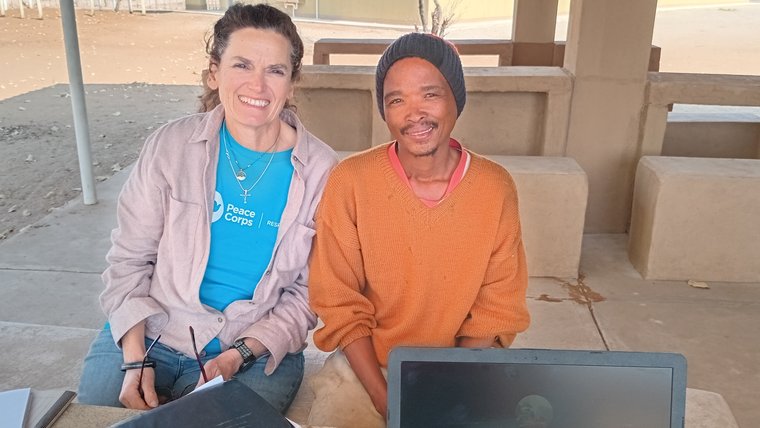
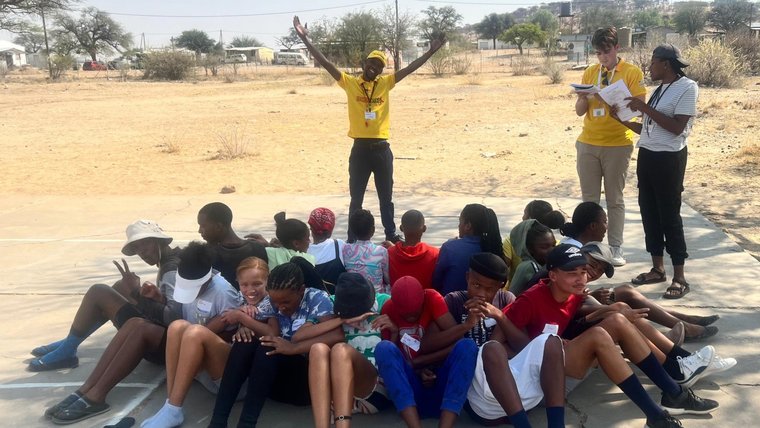
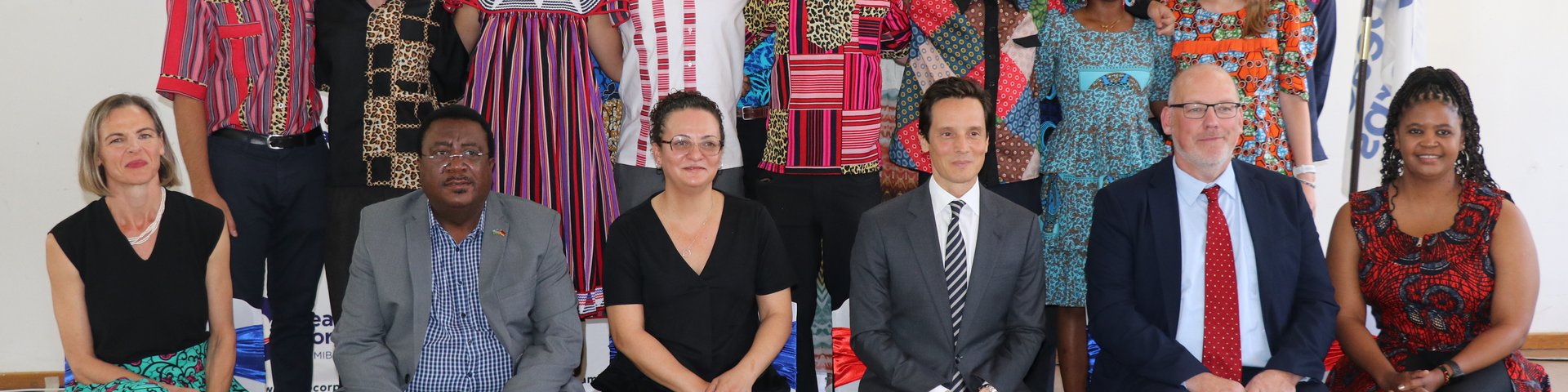
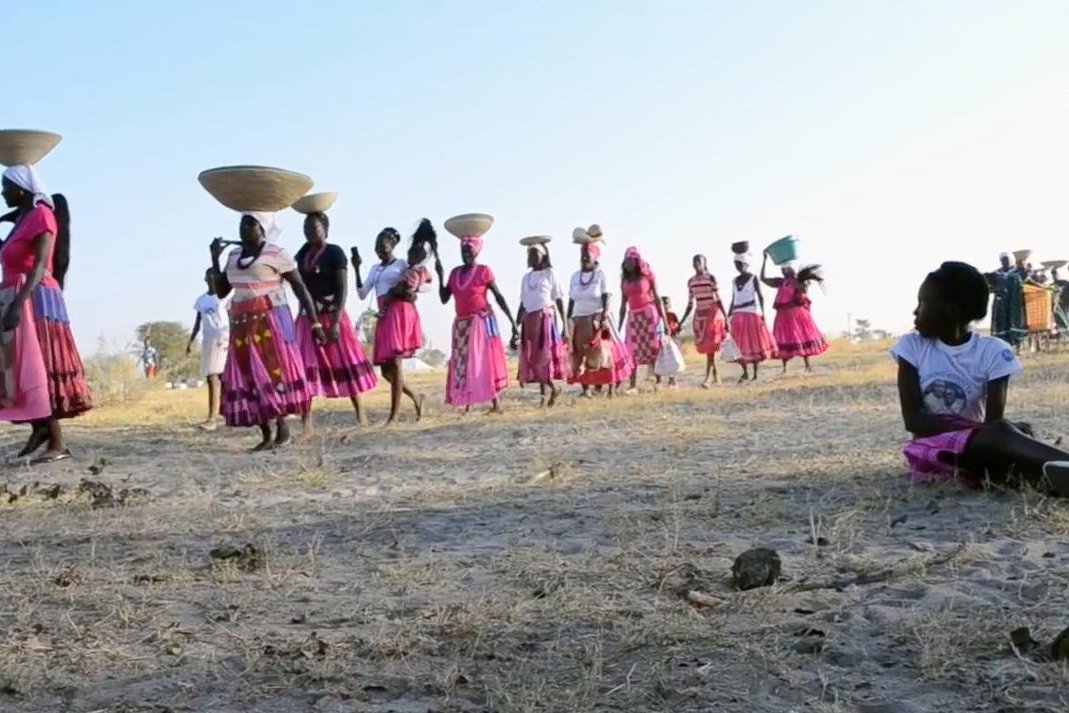
Photos from Namibia



How you and the community will make an impact together:
Manage data including data collection, storage, organization, and sharing.
Facilitate workshops on data collection, accuracy, and analysis.
Train and support school staff in data collection methods and the importance of accurate data.
Monitor and evaluate the impact of implemented policies.
Develop and implement early intervention strategies and areas needing improvement based on data insights.
You may also work on additional projects that meet the community’s interests and priorities, such as an English conversation club or wellness clubs.
The Volunteer will live in a peri-urban or urban community in Namibia’s Erongo, Otjozondjupa, Kharas, Oshikoto, or Kavango West region with convenient access to supermarkets and public transportation. The Volunteer will either live independently in a house, apartment, or a private room in a shared accommodation with a colleague. Housing will have reliable running water, electricity, and internet.
Learn more about the living conditions, including detailed information on culture, communications, housing, and health/crime statistics on our Namibia country page. You can also delve into stories about local communities by reading our blog or Volunteer stories.
Meet a Volunteer in Namibia

Kajol G.
Economic Empowerment Volunteer
"Peace Corps service gives you two full years of time for yourself – to rediscover your hobbies, refresh your mindfulness, and refocus on your present moments. It has given me the time and space for unmatched personal growth."
See full Volunteer profile
After a three-week orientation on topics such as health and safety, you will move to a peri-urban or urban community where you will collaborate with MEIYSAC’s Regional Directorate of Education to assess the data needs and develop a work plan in line with their established goals.
Peace Corps/Namibia will equip you with basic language resources in one of the following languages: Oshikwanyama, Oshindonga, Otjiherero, Rukwangali, Silozi, Afrikaans, or Khoekhoegowab. You may work with a tutor who can help you build basic language skills to connect with the community.
Only heterosexual couples can be accepted for this program. Each person must apply separately and qualify for a position in the same sector as their partner. Couples will live together during training but may separate occasionally for field-based activities. Couples who are selected for the same sector will live together but work with different local partners which may be in the same community or in neighboring communities (not more than 30 minutes apart). Cohabitating couples are highly encouraged to present themselves as married throughout service due to cultural expectations.
To learn more about serving as a couple in Namibia, visit the country page.
Application process
From application to departure takes around nine months. Learn about the application process for Volunteer opportunities.
Medical/legal clearance
You will need to be cleared medically and legally in order to serve in Namibia. Review information on medical clearance and legal clearance to learn about the process.