An official website of the United States government




Should I accept my Peace Corps invitation?

Jump to:
- You didn’t get placed in the country where you wanted to serve.
- You don’t have a background or interest in the language you’ll use during service.
- You’re concerned about the financial impact of volunteering for 27 months.
- You (or your family) don’t believe that volunteering will further your career goals.
As placement officers who have talked to hundreds of applicants about Peace Corps service, we know that the decision to accept or decline the invitation to serve is a big one.
It’s likely been many months since you first applied and possibly many more months or years since you first began to consider service abroad. You have many things to think about. For example, you may feel uncertain about your placement in a particular country. You may wonder if more than two years away will jeopardize your financial stability or career prospects. As you reflect on your decision, we would like to offer our thoughts about some common reasons individuals decline invitations—which you may want to consider if you have similar concerns.
You didn’t get placed in the country where you wanted to serve.
Peace Corps Volunteers and their communities learn to see opportunities beyond individual preferences to steward the mission of global peace and friendship. Core expectation #3 for Volunteers is to “serve where the Peace Corps places me with the flexibility needed for effective service.” That may include placement in a country different from the one you indicated an interest in. Volunteers (250,000 and counting since the agency’s inception) have made the decision to embrace the unknown and the unexpected to exemplify a commitment to service and resilience—both core aspects of being a Volunteer.
“I almost declined an invitation to serve as a teacher in Namibia after not getting my first choice of a position in Morocco," said Rose C. (Namibia, 2017-2019). "But once in Namibia I realized that I was well suited for my teaching position and really enjoyed living in Namibia’s beautiful rural desert. It was almost like my placement officer knew where I would be successful better than I did! Accepting my invitation was one of the best decisions I have ever made, and every day I am grateful that I took a leap of faith on Namibia.”
You don’t have a background or interest in the language you’ll use during service.
Volunteers serve in over 60 countries that host a delightful variety of languages. Spanish and French are languages spoken in about 18 host countries and most of those countries have additional languages as well. Mexico has over 250 languages and Indonesia’s languages exceed 700!
Linguistic diversity has always been a key part of Peace Corps service. Learning the language spoken in the community where you serve can be both exciting and challenging, and is critical to your integration and ability to prioritize local needs. Sharing a common language helps ensure that local people have a voice in community projects.
Volunteers also have opportunities to foster linguistic diversity post-service, especially as population groups migrate and the world becomes more interconnected. Keep in mind Core expectation #10 to “promote a better understanding of other cultures by intentionally and ethically sharing [your] Peace Corps experience … during and after service.” That includes indigenous languages and linguistic diversity.
“Learning the national and local languages has helped me integrate into my community the most. During pre-service training, I spent as much time with staff as possible and practiced my language skills consistently,” said Ella B. (Sierra Leone, 2022-24).
Helen M. (Ghana, 2022-24) explains: “An essential aspect of integrating into the community has been learning basic greetings in the local language, Ewe. When locals hear you speak their language, it sparks excitement, and sometimes they’re eager to teach you more words.”
You’re concerned about the financial impact of volunteering for 27 months.
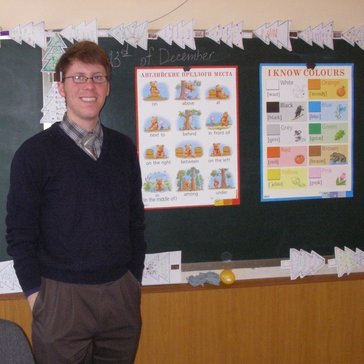
Peace Corps offers many financial benefits—before, during, and after service. These include reimbursing necessary medical evaluation expenses incurred during the application process, providing a living allowance and necessary and appropriate medical care during service, and giving a readjustment allowance to Volunteers after successful completion of service. (In specific countries this allowance has increased. Connect with a Peace Corps Recruiter to learn more.) Many financial benefits are available after service. You may be able to obtain student loan forgiveness or postponement, apply to attend graduate school with reduced tuition in a wide variety of Coverdell Fellows programs, or obtain in-state tuition in certain states even if you are not a resident there.
"The readjustment allowance helped pay for part of my grad school. I didn’t have to take out student loans," said Tim S. (Kazakhstan, 2007-09).
Emily B. (Kazakhstan, 2010-11) explains: "When I first returned to the States the medical and dental benefits were critical to helping me get my feet on the ground. Having a Peace Corps safety net that extends beyond your service, especially if you are young and just out of college, allows you to transition a little bit easier."
You (or your family) don’t believe that volunteering will further your career goals.
Peace Corps service helps individuals gain skills that are highly relevant in today’s workplace, in addition to some of the more obvious skills honed during service, such as intercultural competency and languages.
In a recent op-ed, Peace Corps Director Carol Spahn and LinkedIn Vice President of Social Impact Meg Garlinghouse explained that employers are increasingly looking for employees with “human-centric” soft skills that show adaptability, emotional maturity, and an ability to work with variable resources.
Volunteers across our six sectors are introduced to 75+ competencies that are sure to complement any degree or work experience. These new skills will shine on your resume, whether you go on to attend graduate school, get a job, or continue your journey of service.
After service, Returned Peace Corps Volunteers (RPCVs) have access to a wide variety of benefits. You become a part of a valuable alumni network with groups across the U.S. and the world that can facilitate connections for lifelong career and service opportunities. Additionally, some states and territories allow those who want to obtain teaching certification to use Peace Corps service to meet some certification requirements. Peace Corps service has the potential to broaden you and your professional opportunities—for life.
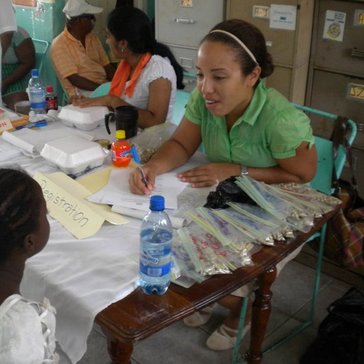
"After completing service I earned non-competitive eligibility (NCE), a federal hiring benefit, and was hired to adjudicate refugee and asylum claims for U.S. Citizenship and Immigration Services (USCIS)—an opportunity I may not have had without the NCE benefit. Throughout my time at USCIS, the skills and competencies I learned while serving helped me create spaces for people from all over the world to share their stories, " said Jeremy H. (Morocco, 2014-17).
Princess N. (Guyana, 2010-12) shared: "In hindsight I now understand that technical skills can be taught to anyone. Peace Corps service enhances Volunteers’ intangible skills like optimism, integrity, empathy, self awareness, curiosity, and most importantly, resilience. It is these intangible skills that serve Returned Peace Corps Volunteers throughout their lives."
Serving in the Peace Corps can be a life-changing experience, one that reorients your beliefs, values, and personal and professional goals. We understand that accepting the invitation to serve can be a momentous choice, but we and our community partners hope you’ll accept and join the 250,000 Americans who have served before you.