An official website of the United States government



Do I have to live with a host family during Peace Corps service?
You’ve lived on your own for a while now and are wondering if you’ll be assigned to live with a host family during Peace Corps service. The answer is: it depends. Let’s break it down.
You’ll likely live with a host family during pre-service training
Most Trainees live with a host family during pre-service training, which usually lasts two or three months depending on the country of service, sector, and training schedule. Meeting your host family can be nerve-wracking—just ask Adam, a Volunteer in Peru who shared his experience—but this living arrangement is often one of the highlights of training. Host families welcome Trainees into their homes and play a critical role in supporting them to learn the language, adapt to new norms, and take care of themselves in a different environment. You’ll have your own room with a lockable door and a country-appropriate bathroom that may or may not be shared with the family. Think of your host family members as your cultural mentors. They’ll show you how to cook traditional meals, help you practice the language, and give you real insight into the history of your host country.
Some Volunteers live with a host family
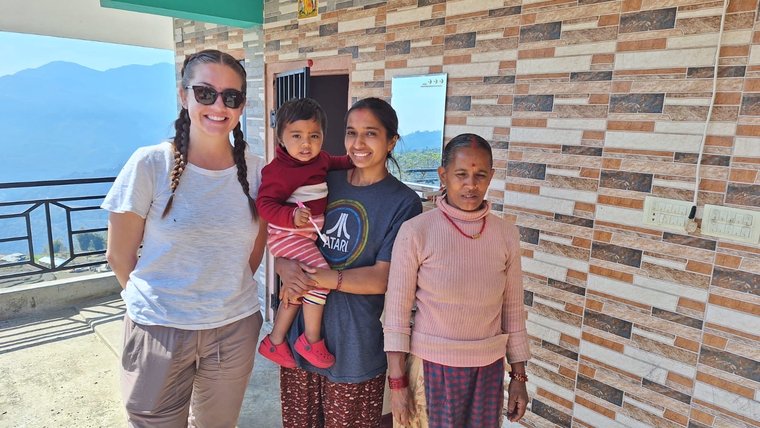
Once you swear-in as a Volunteer and move to your permanent site, whether you live with a host family depends on several factors, including safety and security, housing availability, your assignment area, and your preference. As you’re browsing Volunteer opportunities and deciding where you’ll apply for Peace Corps service, visit different countries’ webpages and navigate to the “Living Conditions” tab for more information. This page includes information on communications, housing and site locations, living allowances, and transportation. For example, you will learn that most Volunteers in Guinea do not live with host families but some live on family compounds. Meanwhile, most Volunteers in Colombia live with host families for their full 27-month service. Regardless of your living arrangement, you will have a private bedroom, a kitchen, and a place to do your laundry.
Be open to the possibilities
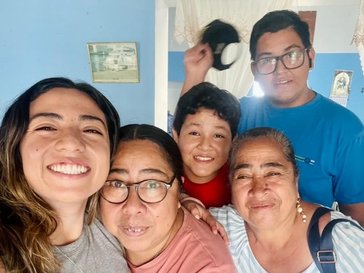
There are lots of good things about living with a host family, although this arrangement does take some adjustment.
Volunteer Marbrisa shares, “At first, my interactions with my host family were limited to mealtime conversations after which I’d often retreat to the solitude of my room.” Over time, and after an “incredibly embarrassing and humorous” bonding moment, this relationship shifted from one between strangers to one between family members.
Similarly, Volunteer Kennedy enjoys living with a host family and says, “From the very first day I arrived at my permanent site, my host family has treated me as one of their own. They’re always there to support me in any way they can, whether it’s helping me get rid of a giant spider in the middle of the night or making heart-shaped rotis just to make me smile. They’ve become a second family to me.”
Peace Corps service requires flexibility and a willingness to try something new. You do not know exactly where you’ll be assigned to live and work—or whether it will be in the North or the South, rural or urban, or whether you’ll live alone or with a family. You’ll have to wait and see. No matter what, the Peace Corps aims to set you up for success and asks that you be open to all the possibilities.