 An official website of the United States government


Featured Volunteer Profile
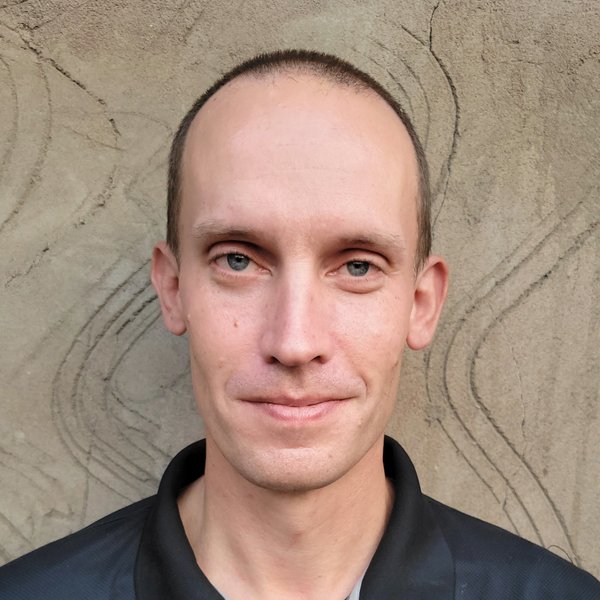
Sean M.
“When people ask where home is, my first response is: my Gambian village. The feeling of belonging and a sense of responsibility to help the place I call home is what I enjoy most.”
1. What got you interested in the Peace Corps?
I had never heard of the Peace Corps until I attended an informational meeting while in college. I was amazed that people would live in small communities in other countries for two years. I had read about other cultures, but did not know what it was really like to experience one. I found the prospect fascinating. But at the time I didn’t think that I could handle that kind of commitment.
Eight years later I was thinking about my next steps. How could I continue helping my community and gain more skills to do so? I remembered the Peace Corps. I wanted to learn how communities in other countries solved their problems. The Peace Corps seemed like the best way I could continue helping people and gain experience I couldn’t get anywhere else.
2. What projects are you working on?
Vitamin A deficiency is a big concern in our area so we identified all children 6 months to 2 years to start them on a vitamin supplement program. We are tracking all the children in the community to make sure all that want it are receiving it. Additionally, we are working on gardens with orange-fleshed sweet potatoes to provide good sources of nutrition.
We have fundraised to send two members of the community to a water project training, which will help them form water committees for the upkeep and maintenance of the water system in our village. They will also learn about preventative maintenance, sanitation, and minor repair work.
3. What strategies have you used to integrate into your community?
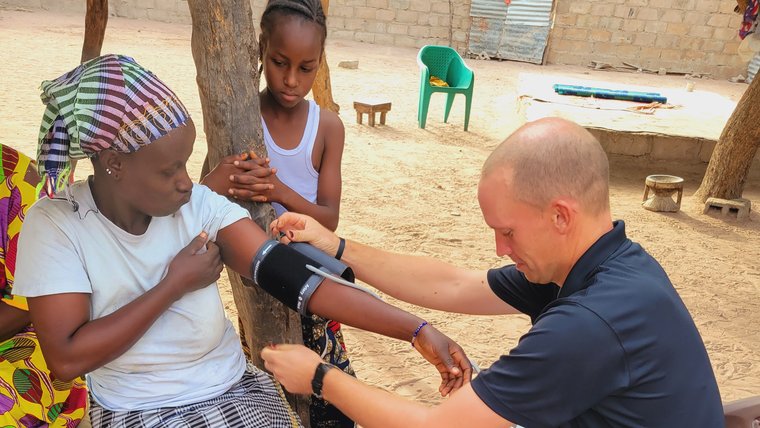
I like to attend any and all events—any futbol match, wedding, naming ceremony, or community project. As a Community Health Volunteer I have a blood pressure machine that I use with a few counterparts. We bring that with us to these events, and it gives me a chance to explain who I am and what I am doing. We also identify people that might need strategies to help with their blood pressure or a referral to the clinic.
When we were putting in a new water system in my village, I picked up a shovel and was able to meet people and then get invited to other projects that were going on in the village.
Finally, food: sharing things that I enjoy from my home as well as trying foods that I had never heard of before. I teach others how Americans prepare food and learn from locals how to prepare their dishes. Eating brings everyone together.
4. What is a highlight of your time in service so far?
After serving in The Gambia for 5 months in 2019-20, I was evacuated due to the COVID-19 pandemic along with all other Volunteers. During the two years I was back in the U.S. I kept in contact with my host family. When I returned to The Gambia, I was able to live with the same host family and work in the same community.
Every month we have a health clinic that serves people from seven communities. I help track the weight of children (newborns to 5 years). We refer children who are underweight for more services. Seeing the growth of children I met during my first service and tracking all the new babies, including two from my host family, brings me so much joy.
5. What have you enjoyed most about the community where you are serving?
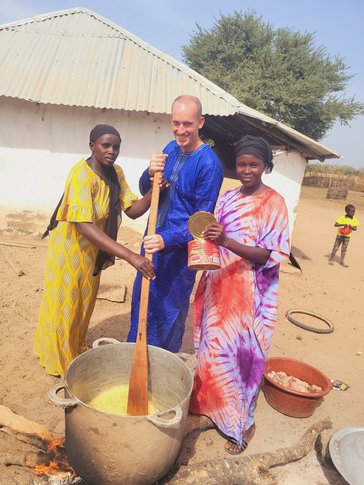
My community is truly my community. I am treated as part of the community, not as a visitor. When any NGO or government agency collects information, they always ask to count me as part of the community.
My host father died while I was back in the United States, so I am now the oldest male in my compound. Culturally that person is the head of the compound. When I go to meetings or gatherings, I am not only Yerro Bah (my Gambian name), Peace Corps Volunteer, I also represent my host family. When I speak with the eldest son, living in Spain, and the younger son in the compound they listen to my input.
This sense of belonging gives me a different view on how things work in the community and has opened many opportunities to discuss things with the people in the village. When people ask where home is, my first response is: my village. The feeling of belonging and a sense of responsibility to help the place I call home is what I enjoy most.
6. What are some of the most important things you’ve learned from your community?
Patience and a sense of what a community really is.
There is such a thing as Gambian time. In the village you can plan all that you want, but it will happen when it is meant to happen. Coming from the U.S. with deadlines and always moving forward, it is hard to slow down. Here, maybe a meeting starts very late, or no one comes. It is okay. They are still interested; it just wasn’t the time for that yet.
Within the village community there is no one to call. There is no fire department, or money to pay someone to help you with your farm. Here if there is a fire in your neighbor’s house, we are all the fire department. If you need help on your farm, you ask a friend, and they organize a group that will help you. In return you feed them and give them attaya (tea). The community only thrives if everyone is a part of it.
7. How do you spend time when you are not working on a project?
If I am not working on a project, I spend time with my host family and friends. Friends will come to our compound to watch movies, drink attaya, or just chat and relax. We also have a 6-month-old nicknamed Rose that I play with, or I may watch young men play futbol at school.
Once a month I go into the city with my host brother and sometimes a friend or two. We eat at restaurants and buy fabric to make matching shirts called asobe. Most of them work on projects with me so it’s a nice break for them as well.
8. What are you looking forward to in your remaining time as a Volunteer?
I extended service and am now in my third year in The Gambia. I am continuing to expand the orange-fleshed sweet potato gardens in more compounds. People are very excited about sweet potatoes!
I am continuing with the monthly clinics with surrounding communities. I look forward to supporting the families and watching all the kids grow over the next year.
9. Once you finish your service, what will you do differently when you return to the U.S.?
I will be more intentional about the community that I live in. Is it some way I can be more involved? How can I use what I learned here to help my new community? I will have a small garden as I have come to enjoy growing food and sharing it with my community.
Finally, I will look at opportunities to share my experience from The Gambia with other people—the food, dress, and music. I want to show the differences and similarities that we share.



