 An official website of the United States government


Featured Volunteer Profile
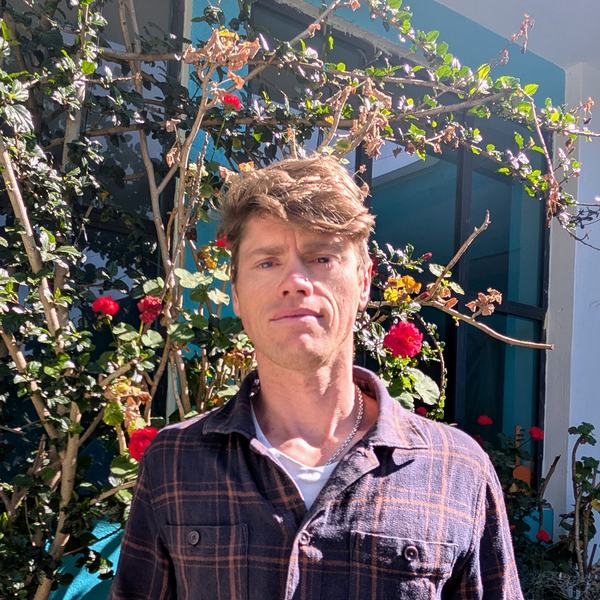
Riley A.
“Sharing of food is important in Guatemala. I always make sure to accept anything that I am offered … Therefore, whether it be stomach, cow foot, or some other delicious part of an animal I have never eaten, I always say 'yes'!”
1. What inspired you to apply for this Peace Corps position?
Awhile back, I met a Returned Peace Corps Volunteer from Ghana. He started sharing his experiences of service and I was immediately intrigued. I had just returned from a 2-month backpacking trip in Mexico, and much of what he was saying sounded a lot like my time there: adventure, problem solving, personal growth, etc. From that point on, the seed was planted, but it would be a few years after before I applied.
2. How has your education and experience shaped your approach to service?
I have an associate’s degree from Mesa Community College, which is part of the Phoenix metropolitan area in Arizona. Community college allowed me to explore interests in a variety of subjects, without having to commit to one thing right away. Most of my life experience comes from being in the United States Air Force. I spent four years on active duty, and another seven years as a reservist. So, working for the United States government is not exactly new for me. Frankly, every skill that I learned in the Air Force can be applied to my Peace Corps service—discipline, punctuality, adaptability, resilience, etc. I am somewhat of a unicorn in the Peace Corps. Globally, I do not think there are many currently serving vets, and many Volunteers have a 4-year degree. I am proud to represent veterans and those without a 4-year degree, and I hope more people with a similar background decide to apply!
3. Tell us about a moment that sticks with you from the first week at your site.
First week at site was challenging. Talk about overload. My language level was low; therefore, I couldn’t understand anyone, and they couldn’t understand me. I didn’t know where to buy things. I was eating with my host family, and their schedule was quite different. I would go for walks, and wild dogs would come after me. My work partners said show up to the office at 9, and then they rolled in at 10:30. Pre-service training covers the complexities a Volunteer could experience upon site entry, but it is an entirely different thing to experience them firsthand.
4. What projects are you working on?
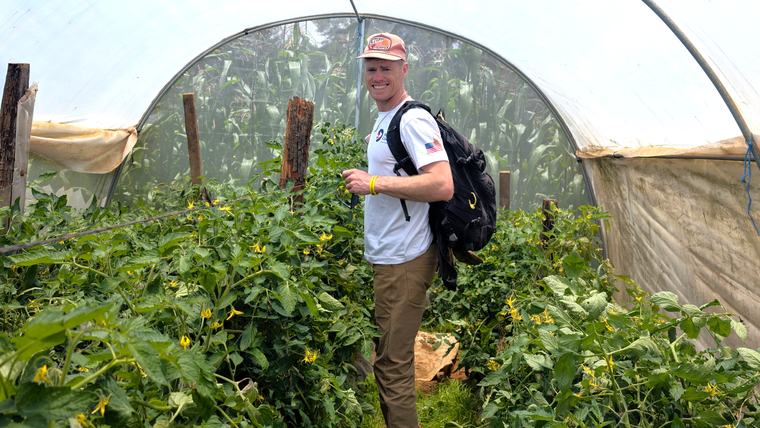
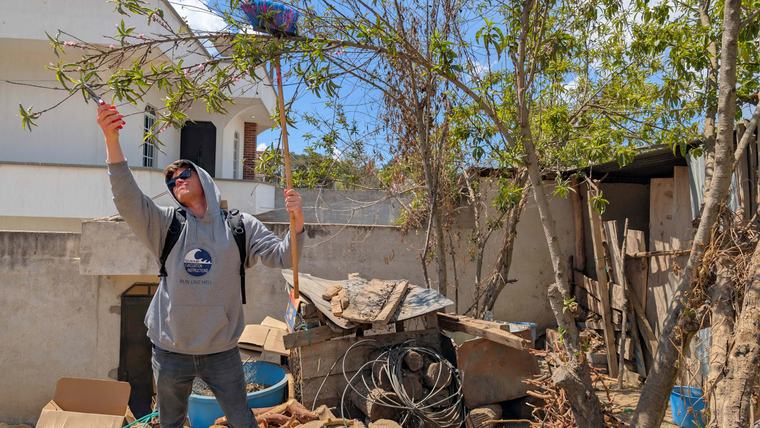
I work with the Ministry of Agriculture on a variety of projects related to food security. These include greenhouses, family/school gardens, fruit tree pruning, agroforestry initiatives, mushroom cultivation, organic insecticides, and soil erosion, to name a few. It is long list, but if it is outdoors, and deals with crops and dirt, chances are it falls in the realm of my team. One interesting thing to note—these activities are conducted almost exclusively with women.
5. What strategies have you used to integrate into your community?
Sharing of food is important in Guatemala. I always make sure to accept anything that I am offered. There is a lot of personal pride surrounding food, and saying “no” can communicate the wrong idea. Therefore, whether it be stomach, cow foot, or some other delicious part of an animal I have never eaten, I always say “yes”! Early on in my service I made a point to walk around my town and introduce myself to people in stores and restaurants. Over time I have remembered more names, and that has been helpful in creating connection as well.
6. What’s a typical day like for you?
My days can vary significantly. One moment I am constructing a greenhouse. Another day I may be working with community members to plant a garden. I have given presentations to kids at schools surrounding topics of food nutrition. Agricultural fairs, meetings with other Guatemalan government agencies, and tree planting are also activities I have taken part in. The variety is my favorite aspect of the job, as I never know what I am going to get up to.
7. What is a highlight of your time in service so far?
My work team and I were doing a greenhouse project for a member of my community who I know as Dona Margarita. She is lovely to be around. One of the days we were working out at her house, she invited us to have lunch with her. She was making churrasco, which is a local dish of grilled steak and green onions, with beans and tortillas. It is delicious. During lunch she asked about different aspects of my family in the United States. At first, I started to describe them, but then I asked if she wanted to meet them instead. She said yes, and so we Facetimed my sister and her children. It was a major success, and something I will always fondly look back on.
8. What have you enjoyed most about the community where you are serving?
People are genuinely kind, and willing to help. Thursday and Sunday are my town’s market day, and that is where I buy all of my produce. It is nice visiting with all the ladies who are selling their goods. Market day is somewhat of a social gathering in Guatemala. People obviously come to purchase products, but it is also an important way to tell stories and exchange information. It is just nice to be in a place where folks are friendly and willing to speak with you.
9. What are some of the most important things you’ve learned from your community?
My community is overwhelmingly Mam Mayan. As a whole, the Mayan people have been through a lot. Unfortunately, history has not been kind. And yet, in my community, local Mayan customs are alive and well. Clothing, language, and spirituality all continue to exist. Despite having been through so much, they continue to practice their culture that has been around for thousands of years. Through that, I have developed a deep appreciation for the resiliency my community has developed in the face of difficult odds.
10. How do you spend time when not working on a project?
In my free time I like to read, go to the gym, or find a great new place to eat. I also love to be outdoors, and there is no shortage of incredible hiking in Guatemala. Sometimes I visit Lake Atitlan for the weekend to enjoy sunshine and swimming. It is important to find those activities during service that are part of your life back in the United States. They have helped me stay grounded during some of the more challenging moments.
11. Tell us about the strongest relationship you’ve developed while in country.
Don Hector works at a local hardware store in my town. One day I introduced myself to him, hoping to get his help making a camp stove out of aluminum cans. Sure enough, in true kind Guatemalan fashion, he went to work. As we got to talking, I learned that he had lived and worked in the U.S. for several years. As I was fumbling through my broken Spanish, he revealed to me he speaks English! By chance I had made an instant connection in my community. Now I say good morning to him every day on my walk to the office. Sometimes I buy us each a bottle of Coca Cola, and we sit and talk for a few minutes at his store. As Volunteers, we come to Peace Corps to work on specific projects, but much of the experience is simply talking and getting to know people.
12. What are you looking forward to in your remaining time as a Volunteer?
As of this writing I have a year left, which is crazy to think about. I look forward to continuing with my work projects. I came here with zero agricultural experience, and in my first year have learned a lot. I also look forward to continuing to build relationships in my community. I really do consider this my home, and it will be strange to leave one day. I also look forward to using my remaining annual leave to travel to El Salvador and Costa Rica. They are two countries I have never been to, and I am excited to see what other parts of Central America have to offer.
13. Tell us your favorite phrase in the local language.
Guatemala is the Mayan capital of the world. The Guatemalan government recognizes 22 different Mayan languages. In my community the local language is Mam. Unfortunately, it has been difficult enough to learn Spanish, so I have not been able to learn a lot of Mam. But my favorite word in Mam is “chjonte,” which means “thank you.”
14. What will you do differently when you return to the U.S.?
One of the things I want to continue to do is find opportunities to volunteer post service. In ways big and small, I hope to continue giving my time to worthy causes. Prior to this, I did not think that way, and that is a significant change. I plan on attending university in fall 2027, and I believe there will be many opportunities to apply what I have learned in the Peace Corps to continue to the move the needle in the direction of good.
15. What would you say to someone thinking about joining the Peace Corps?
Do it! My service has yielded some incredible moments. Things I will never forget. There is also a flip side to that. This is not for everyone. There will be moments of loneliness, isolation, etc. Sometimes I refer to Peace Corps as a PhD in adaptability and resilience. It can be difficult. But if you are someone who wants to test your mettle, and travel the world in a truly unique way, send it.
Learn more about serving as a Peace Corps Volunteer in Guatemala.



