 An official website of the United States government




Featured Volunteer Profile
Maxim A.
“When I first joined the Peace Corps, I expected to be placed in a remote area. Instead, I was assigned to one of the larger cities in the country … I’ve come to really appreciate the resources and opportunities that come with … a more urban setting.”
1. What got you interested in the Peace Corps?
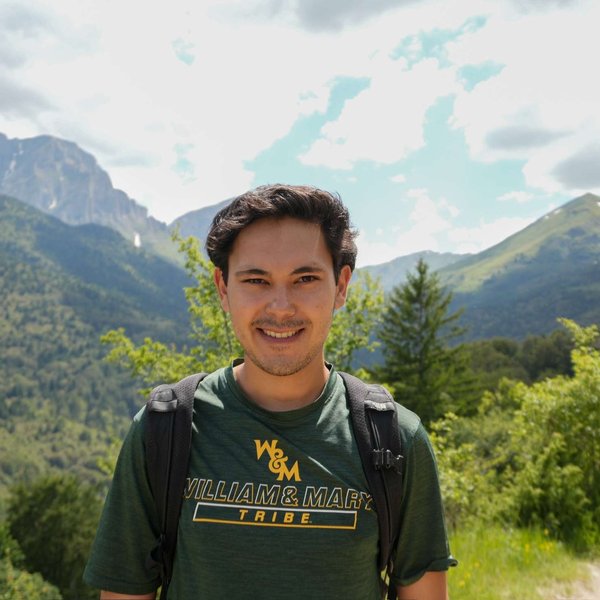
I became interested in the Peace Corps through my family. My parents met through the Peace Corps. My mom was a Volunteer in the first cohort to serve in Kazakhstan in the 1990s, and my dad was a host country national. I also have an aunt and uncle who met through the Peace Corps, and my cousin is currently serving in Madagascar. Growing up, the Peace Corps was always something I heard about through stories at the dinner table, photos, and values that emphasized intercultural understanding and service. It felt like a natural path for me to want to experience it firsthand.
Beyond family, I have always been a big fan of cultural immersion. I wanted to step outside my comfort zone, contribute meaningfully, and learn about a new culture from within. My original goal was to serve in a Russian-speaking country to improve my Russian, but none were available at the time I applied. Then I noticed North Macedonia. The Cyrillic alphabet caught my attention, and I asked my former Russian professor, who is Serbian, about it. She shared insights about the region, and I became even more intrigued. I had only heard of North Macedonia through playing soccer video games in the 2010s; Goran Pandev is a famous Macedonian player who was featured in the games. The more I learned, the more it seemed like an interesting and culturally rich place to serve.
2. What projects are you working on?
I split my time between working with the municipality and the local national park. Summer tends to be a bit slower, but I recently completed two grant proposals for the municipality. One focuses on promoting tourism by improving infrastructure around ancient religious and cultural sites in the city. This includes creating more walkways, improving accessibility, and adding tourism information. The second grant is part of a broader European Union initiative that encourages cooperation between municipalities across Europe. It aims to repurpose abandoned or underutilized public spaces into areas where the community can gather for events, leisure, or cultural activities. We work closely with other local governments to share best practices and build more inclusive public spaces.
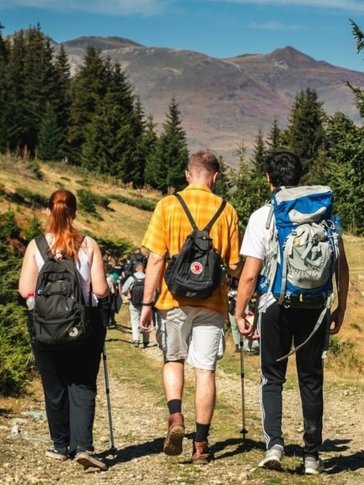
At the national park, I’ve been collaborating with my counterpart to develop an environmental education campaign for schools, focusing on forest fire safety and general environmental protection.
Outside of these larger projects, I also support both the park and the municipality with map-making, using the GIS skills I learned during college. Some of the maps I created were recently published in the official almanac of the municipality, which was a proud moment for me.
3. What strategies have you used to integrate into your community?
One of the main strategies I use to integrate into my community is playing soccer (called “football” here). It's extremely popular in North Macedonia and was a great way to meet people early on. I made my first friend outside of my host family through a local game, and since then I’ve continued playing regularly. It’s helped me build strong friendships and feel more connected. One of the funnier compliments I’ve received after a match was someone saying, “I didn’t think you were American, because I didn’t think Americans knew how to play football.”
Beyond sports, I also try to connect with people through everyday routines like grabbing coffee. Coffee culture is a big part of life here, so I take time to sit down with friends and colleagues, which naturally builds trust and relationships. I also try to show up for people in the community. For example, a local friend recently had a violin recital, and attending that event was a nice way to support him and engage with the cultural life of the town. Small moments like these have helped me build meaningful relationships and feel more at home.
4. What is a highlight of your time in service so far?
A major highlight of my service so far has been exploring the natural beauty of North Macedonia. Working part-time with the national park has given me the chance to hike through incredible mountain landscapes and learn more about the country’s environment. I have also traveled to places like Lake Ohrid, where you can discover hidden beaches along the shore. The accessibility and variety of nature here make it easy to regularly connect with the outdoors.
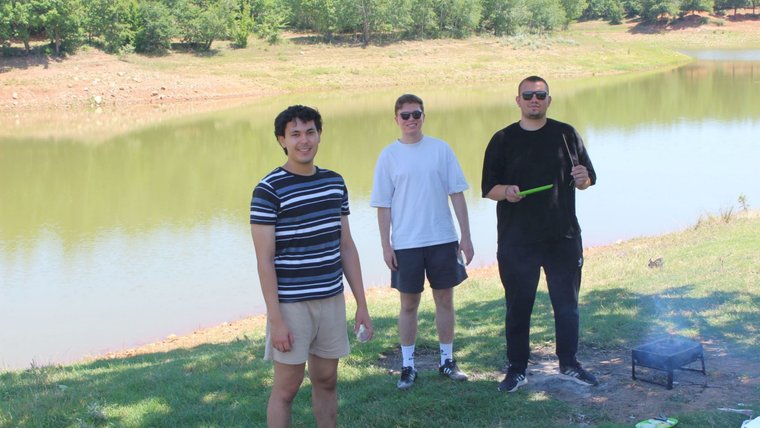
One moment that really brought this appreciation to life was when local friends surprised me with a spontaneous barbecue. I got a call at 10 a.m. saying “be ready in 30” and they picked me up and drove to a small village about half an hour away. We ended up at a quiet lake tucked between the hills, a peaceful spot I never would have discovered on my own. We grilled fresh meat from the local butcher, sat by the water, and talked as the mountains stood in the distance. It was a simple afternoon, but it cemented the natural beauty of this country forever in my memories. That day, surrounded by nature and good people, was one of the most meaningful moments of my service so far.
5. What have you enjoyed most about the community where you are serving?
What I’ve enjoyed most about the community where I am serving is how accessible and connected it is. When I first joined the Peace Corps, I expected to be placed in a remote area. Instead, I was assigned to one of the larger cities in the country. While it was different from what I imagined, I’ve come to really appreciate the resources and opportunities that come with being in a more urban setting.
There are plenty of shops, restaurants, and ATMs nearby, which makes daily life much easier. I know some Volunteers have to travel out of site just to withdraw cash, so I definitely do not take that convenience for granted. There are also two universities in the city, which has made it easier to meet people who are around my age. Being able to build friendships with peers has been one of the most rewarding parts of my experience. It has helped me integrate more naturally into the community and has given me the chance to learn more about the local culture and language in an informal, everyday way. Having that support system and those connections has made a big difference in how comfortable and welcomed I’ve felt here.
6. What are some of the most important things you’ve learned from your community?
One of the most important things I’ve learned from my community is to be more relaxed and flexible with time. Back in the U.S., I used to plan every part of my day down to the minute, but here that just doesn’t work. People are often late and tend to have a more laid-back approach to schedules and deadlines. Over time, I’ve come to understand and appreciate that mindset more.
I’ve started to slow down myself, taking time to “stop and smell the roses” during walks or while running errands around town. It’s helped me enjoy the moment more and reduce stress about sticking to strict plans. This shift in perspective has been a valuable lesson both in adapting to the local culture and in finding a healthier balance in my daily life.
7. How do you spend time when you are not working on a project?
When I’m not working on a project, I like to keep myself busy by making maps for the municipality and the national park. It’s a great way to practice and improve my GIS skills, which I really enjoy using. Since I’m potentially interested in a career in urban planning, which relies heavily on GIS, I’m glad I get to apply those skills in a meaningful way during my service.
I also use my downtime to grab coffee with my coworkers. Over time, I’ve built good relationships with people here, and I feel like everyone knows me pretty well now. Those casual moments help me stay connected and make the experience even more rewarding.
8. What are you looking forward to in your remaining time as a Volunteer?
I don’t have a ton of time left in my service, so I’m focused on making the most of the time I do have. If the opportunity comes up, I’d love to do a bit more traveling within the region, especially to places I haven’t had the chance to visit yet. At the same time, I’m really looking forward to continuing the simple, everyday moments at site: getting more coffee with friends, playing soccer, and spending time with the people I’ve built relationships with.
I also want to make sure I wrap up my work in a way that is useful for my counterparts, whether that means finishing some final maps, helping organize project materials, or passing along ideas they can continue building on after I leave. As I reach the final stretch, I’m trying to be present, appreciate the routines I’ve come to enjoy, and leave feeling like I contributed something meaningful while learning a lot in return.
9. Once you finish your service, what will you do differently when you return to the U.S.?
Once I finish my service and return to the U.S., I think I’ll approach daily life with a more relaxed mindset. I’ve learned not to stress as much if things don’t go exactly as planned or if people are running a little late. That shift in perspective has helped me become more flexible and patient, and I hope to carry that with me moving forward.
Peace Corps has also sparked a deeper interest in language learning for me. There’s something really satisfying about successfully having a conversation in Albanian or Macedonian, and those small wins have made me want to keep building on that feeling. I plan to continue improving my Russian, and I’m also interested in picking up French or Spanish. The more languages I can learn, the more I’ll be able to connect with people from different cultures, which is something I’ve come to truly value during my time here.
Learn more about serving as a Peace Corps Volunteer in North Macedonia.



