 An official website of the United States government


Featured Volunteer Profile
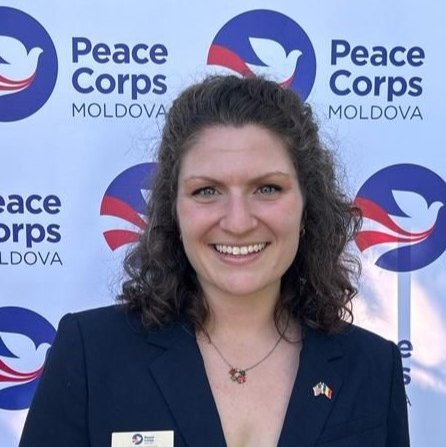
Laura R.
“I was at a place in my career where I was on autopilot and not really sure about my next step. [Returning] to Moldova to serve as a Peace Corps Response Volunteer ... was a good chance to take some time and think about what I wanted.”
1. What got you interested in the Peace Corps, specifically the Response program?
I was at a place in my career where I was on autopilot and not really sure about my next step. When I learned about the opportunity to come back to Moldova to serve as a Peace Corps Response Volunteer, I felt it was a good chance to take some time and think about what I wanted. At the same time, it meant coming back to a place that means so much to me and getting to contribute in a meaningful way.
2. What projects are you working on with your community?
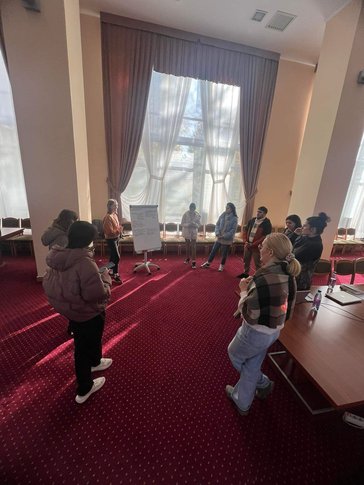
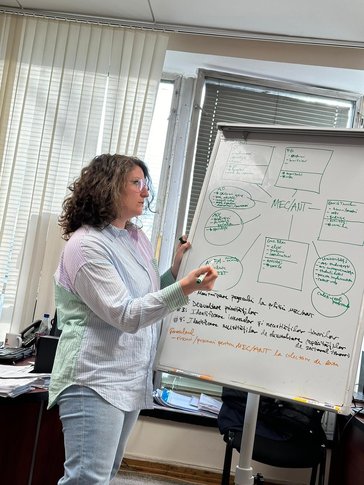
I am currently working at the Ministry of Education and Research and the National Agency for Youth, helping my partners develop youth policies and programming. Specifically, I am working on a community organizing initiative, developing policies and procedures for monitoring and evaluation of youth programs, and leading a project to develop an information system to support evidence-based decision making.
3. How have you leveraged your previous professional experience in your service?
My previous work experience is in the federal government administering community and affordable housing grant programs. Even though I am inexperienced in the realm of youth development, work at the Ministry seemed like a good fit because I can support the team from an administrative point of view through my experience in government. For example, I am incorporating a lot of the processes and concepts for monitoring and evaluation that I used in the federal government into the youth programs here. The programs are completely different, but my experience gives me a good blueprint to start from, and, with my partners, we can change things based on their needs.
4. What is a highlight of your time in service so far?
The highlight is always the relationships I build with the people I work with and meet on a day-to-day basis. Response is different in that I’m not living and working in a small community, but my partners and team have become close friends even in just the few months we’ve known each other. Sometimes my partner will get bored with whatever he is doing, and he will say “Hey, let’s brainstorm a new idea!” Those are moments when we can relax and be creative, and I think it’s been really important to my own integration and to the performance of the team overall.
5. What strategies have you used to meet the challenges of a Response Volunteer experience?
The main challenges I have faced is loneliness, due to living in the capitol city, and difficulty prioritizing my projects, due to the shorter time frame of service. To help with the loneliness, I found a boxing gym to workout at, which is something I do in the States. This helped me establish a routine and some people I see outside of work, and it’s been helpful to do something that feels familiar.
When I initially came into the Ministry, it was evident that there were lots of things I could work on, and it was difficult to see a clear path to accomplish anything. However, I listened to my colleagues, and the projects that I have landed on are ones that I kept hearing over and over again as priority needs.
6. How will the skills you're developing help you in the future?
I had an initial idea of what skills I wanted to develop while I was here, but as my projects evolved, so did those opportunities. Now, I am developing more project management and organizational management skills, which I didn’t expect. My partner and I often brainstorm ideas on how to communicate better with the team, what tools he can use for collaboration, etc. I’m also helping him develop specific project management tools. I have always enjoyed management roles, so I am excited about the opportunity to develop some hard skills and tools related to that.



