 An official website of the United States government




Featured Volunteer Profile
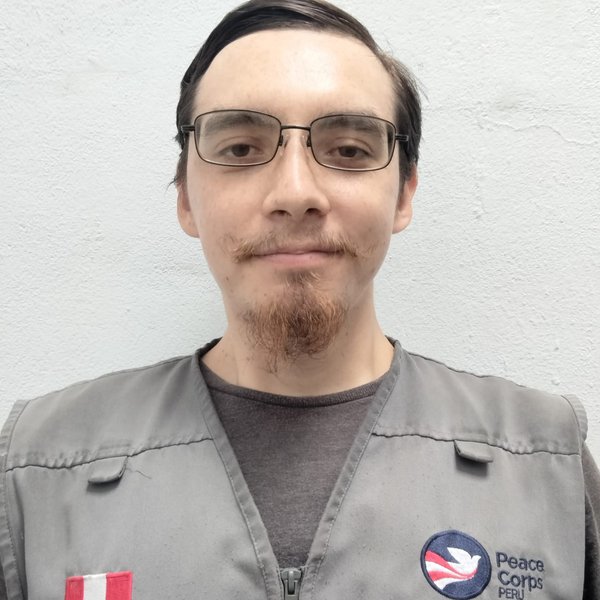
Kevin J.
“The most important thing I’ve learned is that in my community here in Peru, in the U.S.—or in my opinion anywhere—we have more in common that connects us than separates us.”
1. What got you interested in the Peace Corps?
The first time I heard about the Peace Corps at the end of high school. It sounded like a way to get to work abroad and help people but I wasn’t sure if it was for me. After graduating college, I moved across the country for a new job and worked for a bit hunched over a computer all day. I was soon looking for a new job. At that point I remembered the Peace Corps, went to the website, saw Peru as an option, and started checking the programs and details. From there the opportunities listed got me interested in signing up for service.
2. What projects are you working on?
During the summer I work with the police and city hall to provide English workshops. Aside from that, my school counterparts and I are preparing for the new school year with a Ministry of Education (MINEDU) grant. For the grant, students choose a public issue, like gender discrimination, and then produce creative productions on that theme during the first half of the school year. In the latter half of the year MINEDU has a contest where “Ideas en Accion” teams of about six students pick a public issue for their team and then plan objectives and activities to put their ideas in action. Both MINEDU activities are part of the national strategy. A third is student government. I will work with them to hold vocational activities during the school year.
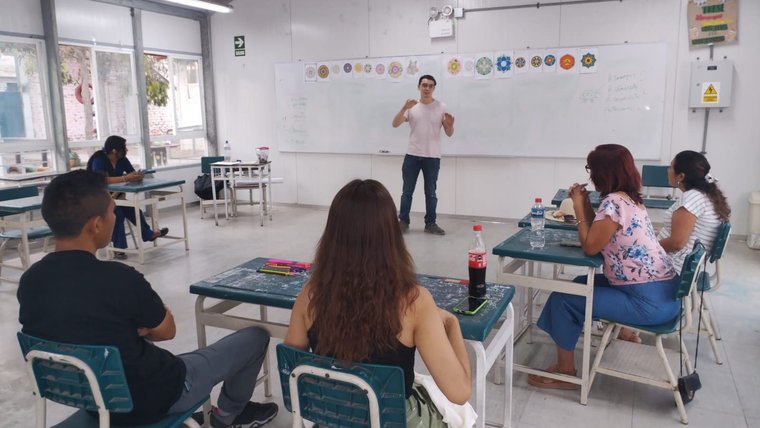
3. What strategies have you used to integrate into your community?
Living with a host family definitely helped me get my bearings when I first arrived, as they are all from this community. At my school most of the teachers are from the regional capital and some of the teachers and all of the students are from the community.
Through talking and asking a lot of questions you figure out what's going on in the community. Sometimes there are things that are completely foreign to me but thankfully my family and counterparts are very good at helping me understand how things are here.
Throughout the year there are various Peruvian celebrations and local events that I attend, mostly with my host family.
4. What is a highlight of your time in service so far?
My highlight is the “Ideas en Accion” teams in the last school year. While only one made it to the national level I am very proud of the work they all did. Working with the advisor teachers and their students on project design management and then seeing them put it into practice was great. It was clear that the teams were dedicated to what they had planned and the other students who participated enjoyed their projects as well. There were some tough times and late nights to finish submissions for the deadlines but throughout it the teams were motivated to finish. I look forward to more youth projects like this in the future and hope that in addition to the sense of accomplishment it will be possible to recognize the volunteerism of the youth beyond the certificates they receive.
5. What have you enjoyed most about the community where you are serving?
The most enjoyable part of this community is the people because without them there is no community. My host family are great people. I’m the first Volunteer they've ever had and they continue to be great support across the board. The town itself provides various great services and hospitality to me as well as other Peace Corps folks. It’s certainly a lot different from where I grew up but I have always felt comfortable and safe. Also, this is my first time living anywhere near the coast there are some great beaches nearby and very delicious fresh seafood.
6. What are some of the most important things you’ve learned from your community?
The most important thing I’ve learned is that in my community here in Peru, or in the U.S.—or in my opinion anywhere—we have more in common that connects us than separates us. There are many differences in language, norms, opportunities, opinions, etc., but in general people want to see themselves and others succeed and want to take care of each other.
Another lesson is the value of thinking things through in advance can help you brace for the unexpected. The successes and failures I’ve had on my own and with my partners have helped me learn how to manage future events.
7. How do you spend time when you are not working on a project?
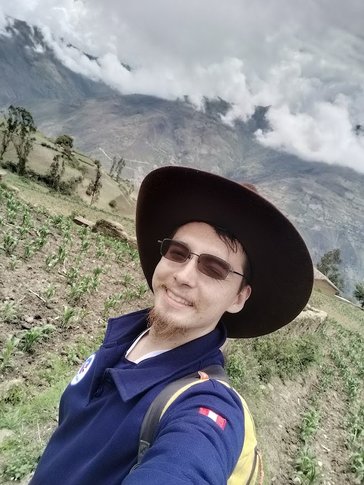
Mostly relaxing at home with my host family and their dog. Keeping in touch with my friends and family back home—mostly hearing them complain about winter while I’m sweating all year long. Exercise, cleaning around the house, keeping track of what I’ve done and what I plan to do later on. Sometimes I go with my family to the beach, the regional capital, or their farm. Mainly just relaxing in the shade, enjoying something cold, and scrolling on my phone.
8. What are you looking forward to in your remaining time as a Volunteer?
To continue planning with my counterparts for the new year and then actually doing what we have been talking about. Working with the students is usually a good time, but I didn’t get to work too much with teachers in my first year. With our grant and other projects I should be able to do that for the first time, and hopefully they and their classes enjoy what we cover.
Something we’ve discussed among my counterparts is to develop a kind of registry for schools or other local institutions that want to host community service or volunteer projects, specifically for adolescents. If the volunteers reach the necessary days of service they improve their chances of receiving a scholarship for university. It would be amazing to at least try it.
9. Once you finish your service, what will you do differently when you return to the U.S.?
I will be more appreciative of what I have, things I previously took for granted. Flexibility is definitely something that will persist in the work I seek and provide. I want to better understand my family from South America. Struggle to stop introducing myself as the gringo del cuerpo de paz. I will keep in touch with the connections I’ve made here and try to support them from afar like they did while I was here.



