 An official website of the United States government


Featured Volunteer Profile
Kelcey F.
“Life doesn’t drag its feet. Don’t let fear or unknowns stop you. Trust in yourself and your capabilities. Open yourself up to a new and amazing experience. Life is for living.”

1. What inspired you to apply for this Peace Corps position?
I’ve always had a desire to serve overseas and life wasn’t waiting around for me to go for it.
2. How has your education and experience shaped your approach to service?
I was hesitant to apply for the position, knowing I only have an associate’s degree in photography. However, I applied regardless and was delighted to discover that the Peace Corps was more interested in my life and career experience than the degrees I hold.
3. Tell us about a moment that sticks with you from the first week at your site.
I was pleasantly surprised to discover how playful community members are with each other. They are lighthearted, joyful and often joke around and tease each other. I remember thinking, “Okay, this is the village for me.”
4. What projects are you working on?
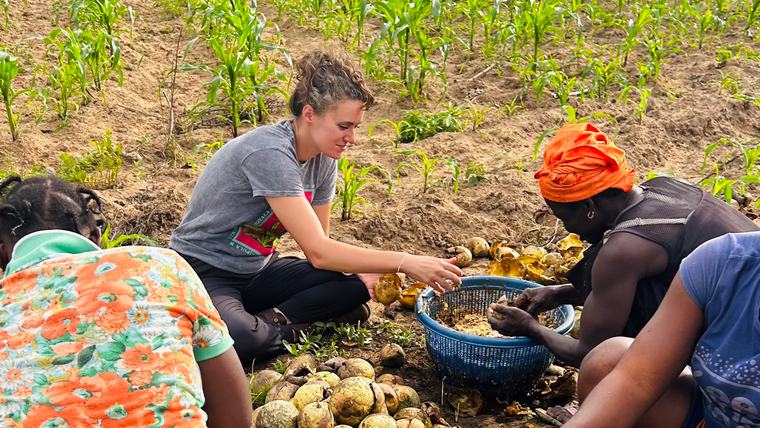
I am an Agriculture Volunteer but find myself working on many other projects as well. I teach an English Club at our high school as well as a kid’s club every week at my house, where we do a variety of activities and discuss important life topics relevant to their ages. I also work with a couple of small women-owned businesses weekly to expand their knowledge of marketing, financial management and other concepts to expand their businesses. I regularly go to the farms of the farmers in my village and am also beginning a small home gardens project.
5. What strategies have you used to integrate into your community?
I have focused on being present with my community as much as possible, whether that’s sitting with people and enjoying the coolness of the evening, dancing together during cultural holidays, sharing a meal together, or walking to the market together. Being present and embracing humility while also making time to recharge are three keys to my success.
6. What’s a typical day like for you?
It depends on the day of the week, but every day starts with drinking a bunch of water then having a cup of coffee and something to eat. Beyond that there’s usually a variety of meetings, clubs, language tutoring, farming, neighborhood children paying a visit to my porch to giggle, going to the market, and possibly a bit of computer work. The day ends with preparing dinner, a bucket bath, and talking with family and friends back home.
7. What is a highlight of your time in service so far?
I really enjoy having heart-to-heart conversations with the young people in my village. Knowing that they feel safe and seen during moments we have together and are open to sharing their hearts with me means the world to me.
8. What have you enjoyed most about the community where you are serving?
The people. Togolese people are the most joyful, generous, welcoming people I’ve ever met. Their smiles and positive attitudes are contagious. They are absolutely my favorite part of service.
9. What are some of the most important things you’ve learned from your community?
No matter what struggles you face, you must always make time to laugh together. That the joy and richness of experiencing life together trumps anything else we might desire. Happiness does not depend on what material possessions you own.
10. How do you spend time when not working on a project?
When not working, I spend time listening to music, reading, watercolor painting, talking with my family and friends, or cooking. I also enjoy sitting with people in my community and passing the time together or hanging out with neighborhood children on my porch.
11. Tell us about the strongest relationship you’ve developed while in country.
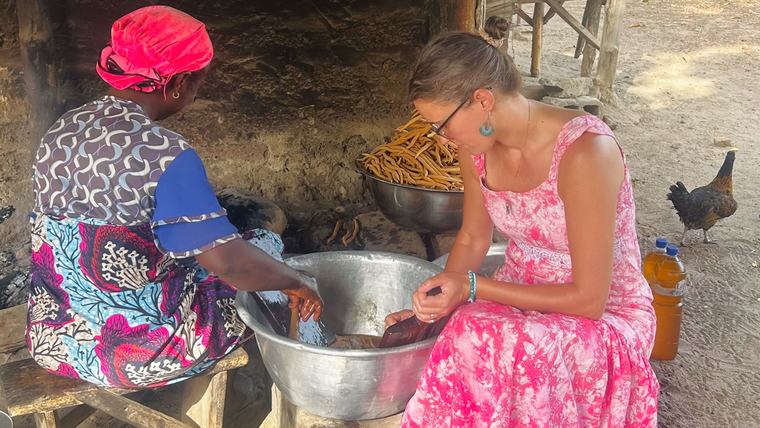
The strongest relationship I’ve developed has been with one of the women I work with. We share meals together (Togolese and American), talk about life’s ups and downs and laugh together. We also go to our local market together or adventure to nearby villages for day trips. The relationship is uplifting and supportive for me and I expect also for her.
12. What are you looking forward to in your remaining time as a Volunteer?
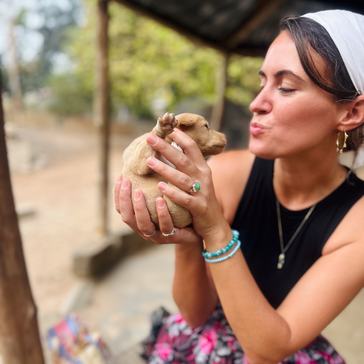
I’m looking forward to continuing to build relationships with the people in my community, laughing with the kids, and having authentic conversations with the young people. I’m looking forward most to those precious little moments that make time stand still—the way a child smiles at me or a woman giggles when she tastes a new American food that I’ve prepared. The way an older man gives me the thumbs up when he walks by just to say “it’s good that you are here.” How a newborn’s little hand wraps around my finger after her tired mama hands her over to me so that she can take a moment to breathe. It’s those little moments that I’m looking forward to the most.
13. Tell us your favorite phrase in the local language.
There’s a phrase in Kabiye that’s pronounced “woh-lung-goht,” and it means “go and come back.” It’s often said to someone leaving somewhere or someone walking past a group of people and heading somewhere else. When someone says it to me it makes me feel like they’re essentially saying “Hey! Hurry up and come back, we want your presence with us here.” It encourages the sense of community that is so strong and makes the receiver feel like they matter and their presence is wanted.
14. What will you do differently when you return to the U.S.?
I will be a more conscious consumer—wanting less, wasting less. I will place more importance on time with my people in my community, and less importance on other trivial things life likes to distract us with.
15. What would you say to someone thinking about joining the Peace Corps?
I would say, go for it. Life doesn’t drag its feet. Don’t let fear or unknowns stop you. Trust in yourself and your capabilities. Open yourself up to a new and amazing experience. Life is for living.
Learn more about serving as a Peace Corps Volunteer in Togo.



