 An official website of the United States government


Featured Volunteer Profile
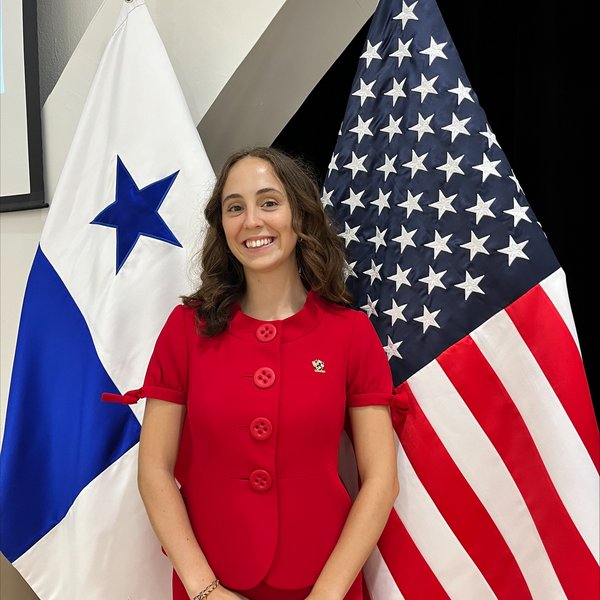
Isabel B.
“To integrate into my community, I embraced two central aspects of local life: soccer and church. Although I hadn’t played soccer in years and don’t consider myself very religious, I recognized that these spaces were important gathering points.”
1. What got you interested in the Peace Corps?
I was first inspired by my research methods professor, a Returned Peace Corps Volunteer, who spoke about the valuable skills and perspectives he gained through his service. After undergrad, I knew I didn’t want a typical 9 to 5 job. I wanted an opportunity to travel, learn from other cultures, connect more intimately with people, and challenge myself. The youth leadership program in Panama aligned perfectly with my background in leadership studies and my passion for sharing those lessons. I was also looking for an experience that would set me apart and foster personal growth, and Peace Corps has given me exactly that—transformations and insights that no conventional job could offer.
2. What projects are you working on?
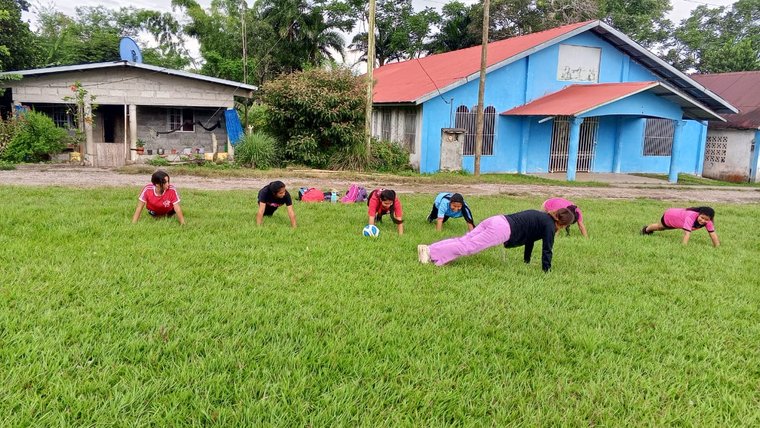
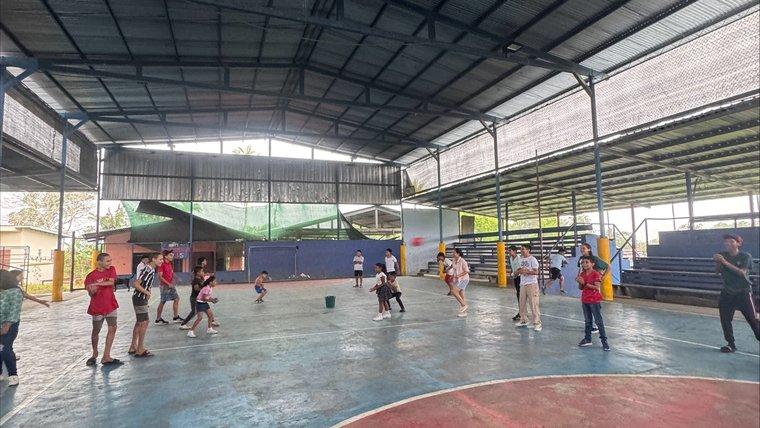
I am developing a youth leadership club, similar to a student government, made up of high school students and focused on organizing community service and social events for local youth. The goal is to host one philanthropic event and one fun social event or outing each semester. The purpose of the project is to help students learn how to become service providers themselves, strengthen self-esteem, and take ownership of improving opportunities within their community. Other projects include creating school soccer and volleyball teams, forming a community girls’ soccer team, and advocating for more recreational spaces for children in the area.
3. What strategies have you used to integrate into your community?
To integrate into my community, I embraced two central aspects of local life: soccer and church. Although I hadn’t played soccer in years and don’t consider myself very religious, I recognized that these spaces were important gathering points. Attending different church services gave me valuable insight into community values, interests, and ongoing initiatives. Meanwhile, joining in on local soccer games at the field—one of the few social spaces available—allowed me to connect more personally. Conversations after games about people’s daily lives, interests, and even their curiosity about English helped me build stronger relationships. These two strategies have deepened my connections with both youth and families across the community and increased participation in my events.
4. What is a highlight of your time in service so far?
One of the most memorable highlights of my service so far was hosting my first intercultural event on the Fourth of July. I invited youth from the community to learn about how I celebrate Independence Day in the U.S., especially focusing on some outdoor traditions like games, sweet treats, and friendly competitions. What made the event so special wasn’t just the theme, it was the energy and enthusiasm from the kids, including many locals who don’t typically attend my activities. Locals were fully engaged, laughing and competing with one another, moving seamlessly from learning-focused activities like a history-centered scavenger hunt to lighthearted games like a water balloon toss. It was one of the first times I saw such a wide range of youth come together and genuinely enjoy something I facilitated. To top it off, I got to share the experience with fellow Volunteers who helped facilitate the event and connected with various members of my community. Hearing them exchange stories about American culture added depth to the experience as community members weren’t just learning from me, but from others as well. The sense of shared culture and genuine connection over my home-made apple pie, made the day feel especially meaningful.
5. What have you enjoyed most about the community where you are serving?
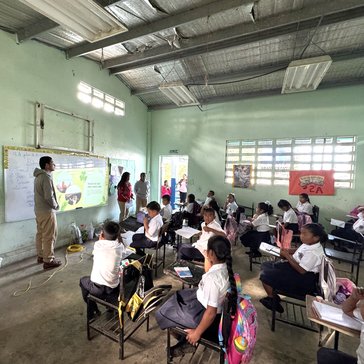
Watching local youth—and especially my students—grow into confident, autonomous individuals who pursue their passions has been the best local treasure. Initially, I was nervous about working with teenagers, but I’ve seen even the shyest students become more confident, unmotivated students more engaged, and independent students more collaborative. For instance, Maicol, once timid and content to work behind the scenes, has flourished as club president—leading discussions, making decisions, and sharing ideas without hesitation. The lovely youth that I get to interact with every day, seeing their transformations and excitement, is what makes my community so special.
6. What are some of the most important things you’ve learned from your community?
The most important takeaway for me has been “comparison is the thief of joy.” As a Peace Corps Volunteer, you’re given a great deal of flexibility and creative freedom to pursue projects that align with the needs of your specific site. But with no single definition of what a “successful” service looks like, it’s easy to fall into the trap of comparison—looking at what other Volunteers are doing and questioning whether your own efforts measure up. Over time, I’ve realized how damaging and unproductive this mindset can be. Each community is entirely unique—its needs, pace, traditions, and values—all shape the direction and impact of the work being done. What makes sense or is effective in one site might be completely irrelevant in another. Similarly, every Volunteer brings different skills, perspectives, and passions to their service. So why would I ever expect the paths—or outcomes—of two Volunteers to look the same? They are nowhere near the same and it makes no sense to think they are.
True success in this work isn’t about checking boxes or completing outcomes. It’s about being present, listening to your community, and celebrating the progress—big or small—that comes from patient and immersive collaboration. The achievements I’ve witnessed here are like uniquely crafted butterflies: delicate, inspiring, and entirely their own. Each one is a product of collective effort and intentions, and that in itself is something worth celebrating and cherishing.
7. How do you spend time when you are not working on a project?
When I am not working on a project I play soccer, teach English to local kids, visit families close by, visit other Volunteers, do Pilates in my house, bake desserts, and go on long walks. The most rewarding activities that I do in my free time are journaling and listening to music.
8. What are you looking forward to in your remaining time as a Volunteer?
I look forward to seeing how my leadership club flourishes, as I just started it and already see a lot of potential. The students thoroughly enjoyed the field trips I planned, which served as examples of what they can achieve in the coming semester. A few students in particular are eager to create change and actively support their community. Watching who steps up in the next year will be especially rewarding, as I have full confidence in their abilities. One project they’ve proposed, a school soccer team and league for both boys and girls, has generated the most local excitement and will serve as a great student-driven goal moving forward.
9. Once you finish service, what will you do differently when you return to the U.S.?
I would like to think that I will embrace a simpler lifestyle based on minimalistic principles, be more aware of the local challenges that surround my community, and more resourceful. I have obtained a greater understanding of what is necessary in order to start projects from the ground up, cultural sensitivity, and how to effectively adapt when including various inputs.
Learn more about serving in Panama.



