 An official website of the United States government


Featured Volunteer Profile
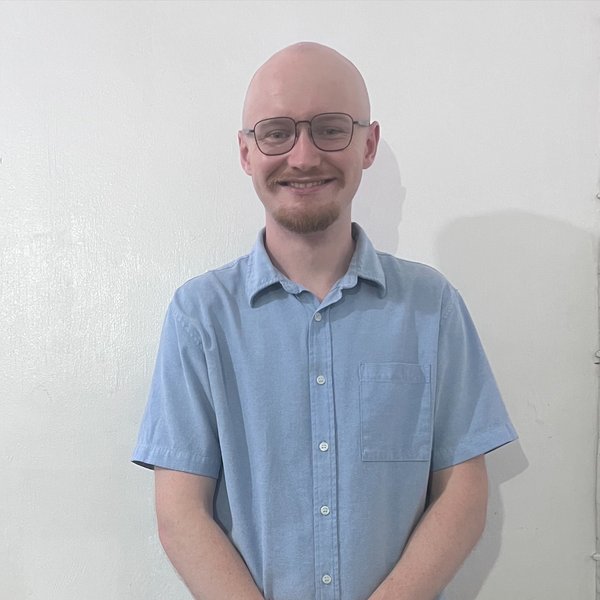
Gerald B.
“My school community will often hold cultural programs that feature traditional Filipino dance and music. I am always amazed by these programs and the sense of importance and pride that even adolescents place in their shared cultural background.”
1. What got you interested in the Peace Corps?
I have an uncle who served as a Peace Corps Volunteer in the Philippines during the 1980s. Growing up, I heard the stories of his service, and like so many Americans, I developed my own romanticized and exotic notion of what Peace Corps service was. As I got older, I reflected more on what the Peace Corps stood for and the values that it promotes in countless communities throughout the world. I felt that joining the Peace Corps satisfied the combination of my desires to advance professionally, serve other people, see the world, and also fulfill a patriotic duty to serve my country and stay true to its values. After I graduated college and had a year of professional teaching under my belt, I decided that it was the perfect time to serve in the Peace Corps.
2. What projects are you working on?
I am currently assigned to a high school in the Philippines. As my main project, I co-teach English and conduct remedial reading classes along with my Filipino counterparts. The relationships I have developed with my Filipino coworkers have consistently been eye-opening for me. Since I am a professional teacher myself, I find it fruitful to exchange strategies and techniques with my co-teachers and share experiences. I am grateful every day for these relationships and the unique opportunity the Peace Corps gave me to foster them.
For my secondary project, the school community and I are currently in the process of renovating a space to turn into a functional reading center on our campus. I am fortunate that my school community prioritized creating a reading center on campus since it aligns with something that I am also passionate about, which is teaching students the importance of reading and giving them access to greater educational and personal opportunities.
3. What strategies have you used to integrate into your community?
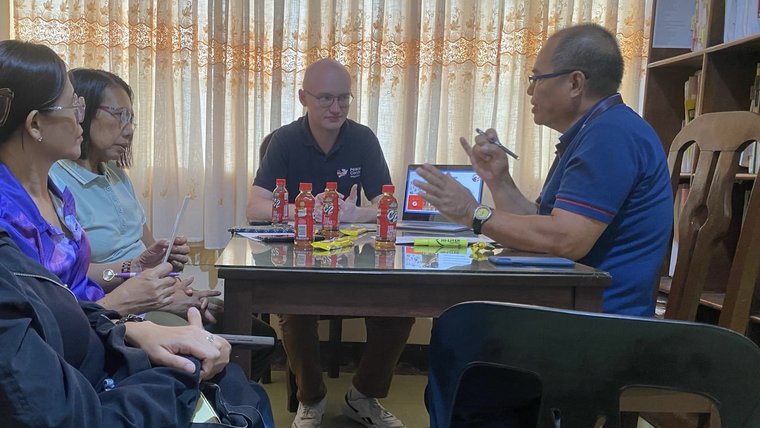
Thankfully the world-famous Filipino hospitality has made community integration such an easy process for me. It seems like every week there is a birthday party, a wedding, a holiday, a fiesta, or a private family dinner that I am invited to. It is also very fortunate that I am not too shy to sing at these events because singing karaoke is a sure way to integrate into any Filipino community. I am also a Catholic, and so much of Filipino social life revolves around the Catholic faith that is shared among the majority of the population here. Attending weekly Mass and the various Catholic celebrations throughout the year has made me feel a deeper spiritual connection to my community. Taking time to learn the local language has been another successful strategy for me. I have never had a knack for languages but actively listening to conversations and not being afraid of making mistakes when I speak has helped me improve my local language skills and made me feel more comfortable in my community.
4. What is a highlight of your time in service so far?
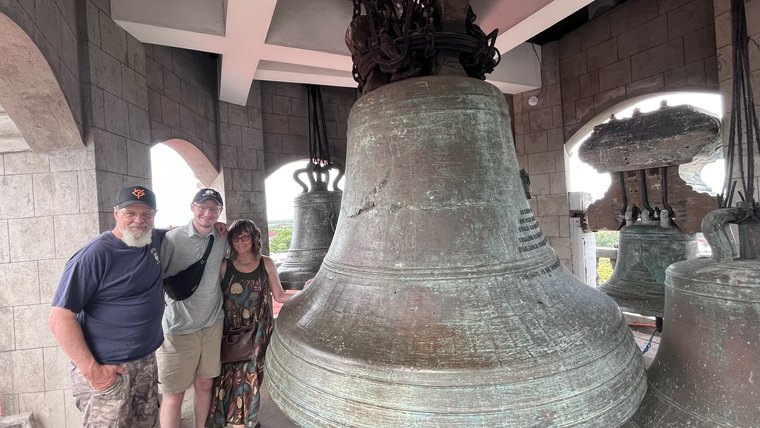
My aunt and uncle visited me for a week at my site in June of 2024. This was the same uncle who had served in the Philippines as a Peace Corps Volunteer in the 1980s. I saw the emotional impact that this trip had for him, returning to the same country he served in almost 40 years later, and how special it was that he got to share that experience with my aunt. As his service directly inspired me to become a Peace Corps Volunteer, their visit reminded me of the reasons I decided to serve.
5. What have you enjoyed most about the community where you are serving?
History, and our sense of connection to it, is something that can be easily overlooked as we go about our daily lives. As someone who was a history teacher and has a deep passion for the subject, I love that my community has an appreciation for their own local history and customs. The town where I am assigned was founded by the Spaniards in 1572, and there is a deep sense of continuity in the community from the town’s early founding up until today. My school community will often hold cultural programs that feature traditional Filipino dance and music. I am always amazed by these programs and the sense of importance and pride that even adolescents place in their shared cultural background.
6. What are some of the most important things you’ve learned from your community?
My community has taught me a lot about patience and hospitality. I occasionally do a thought experiment where I ask myself, “If a foreigner was placed in my community in the U.S., would the same welcome and outreach be given to them? Would that foreigner be invited to meals and birthday parties? Would they be able to work with others as easily as I do?” My community certainly extended those courtesies to me even though they didn’t have to, and it taught me an important lesson about human compassion and connectedness.
7. How do you spend time when you are not working on a project?
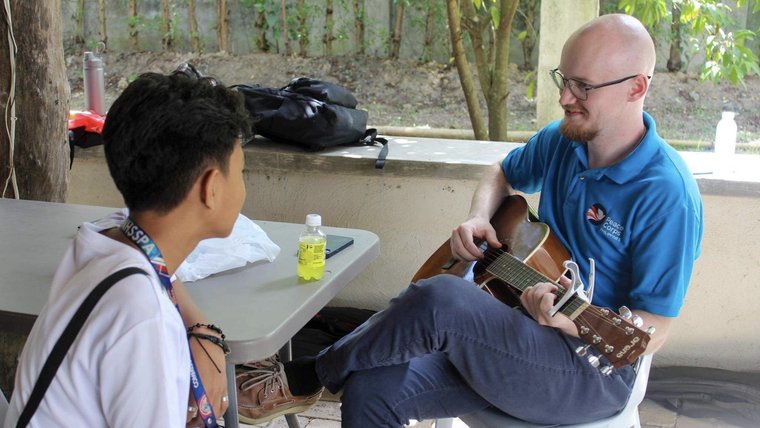
When I am not co-teaching, I like to keep myself busy with different hobbies. I love reading novels and nonfiction books (mostly history). I also love movies, so I gave myself a challenge to watch 250 movies before I end my service. Music is another passion of mine, so I take a lot of pleasure in both listening to it and playing it on guitar. Depending on the season (and what time the games are on), I also try to watch Philadelphia sports teams and Notre Dame football. Being in the Philippines has also helped me check off some nearby Asian countries from my travel wish list, and I’ve also been fortunate to travel to many wonderful places within the Philippines.
8. What are you looking forward to in your remaining time as a Volunteer?
In the remainder of my Peace Corps service, I look forward to seeing our project of refurbishing the school reading center come to fruition. We have planned out the project timeline to be completed before I close service, but I also hope to be here to see the reading center in full use. We are just about to begin the school year, so I am looking forward to spending time with my students and co-teachers again after our long break. Most of all, I look forward to spending time with the friends I have made here and the families that have welcomed me with open arms and made me feel like one of their own. I won’t remember all the English lessons I taught or the days I spent working on our reading center, but I will always cherish the relationships that I have made during my Peace Corps service.
9. Once you finish service, what will you do differently when you return to the U.S.?
Over a year of service has given me a lot of time to reflect on my future and what I would like to do going forward. Peace Corps service has taught me a lot about what it means to be human. When I first came to the Philippines it seemed that the people here had such a vastly different life experiences than my own, and it would take a long time and much effort to build relationships. What I discovered over a short time was that I couldn’t be more wrong. People all over the world laugh at the same things, enjoy the same flavors in their food, like to sing, like to dance, cry when life is sad, and smile when life is good. When I go back to the U.S., whatever I decide to do and wherever I decide to go, I want to carry this lesson with me: “We can always find superficial differences with other people, but we see the world as a better place, and can work to make it so, if we focus on the shared things that make us all human.”
Interested in learning more about serving in the Philippines? Connect with a recruiter today.



