 An official website of the United States government




Featured Volunteer Profile
Brian S.
“Whether it's trying every noodle shop in town, picking up some veggies and sticky rice from the neighbor down the street, or inquiring about mysterious grilled items at a celebration, food always provides a chance to learn.”

1. What got you interested in the Peace Corps?
After graduating university, I considered Peace Corps service but could never quite bring myself to do it. A few years later I finally committed to applying after chatting with several friends who were Returned Peace Corps Volunteers (RPCVs). They shared their experiences from countries like Cameroon, Benin, and Zambia, with a common theme of a high regard for service, which really persuaded me.
I take pride in contributing to the people and community where I was born and raised, but feel a pull beyond that, too. Some of it may be influenced from a multinational family background, and perhaps from growing up during an era where the world seemingly became much smaller and dramatically more interconnected. Regardless, I do believe Peace Corps is an example of how we can coexist, connect, and contribute across the world in a positive, productive manner that benefits all.
2. What projects are you working on?
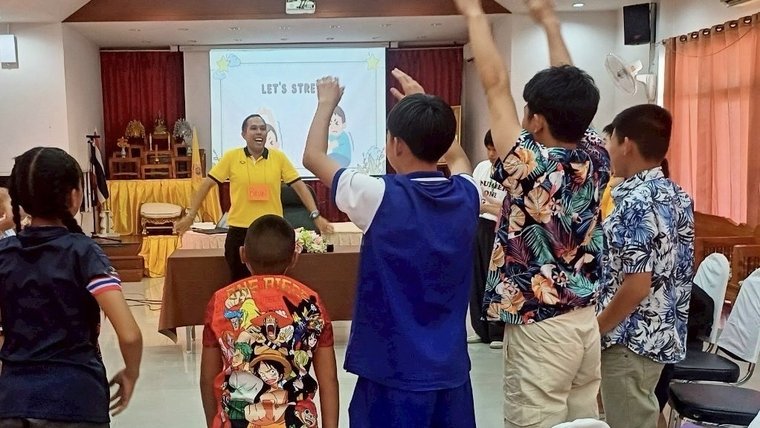
A large aspect of our work is supporting youth educators in rural Thai communities. When school was out of session, my counterparts and I held an English camp for youth. This was a chance to expand the English vocabulary of primary school youth, as well as provide some of the older youth an opportunity to help facilitate. For the older youth this was a good experience in the trials of working through language and cultural barriers with a Volunteer! When school is in session, I'll support the English teachers in increasing the conversational capacities of the students. The goal is to integrate school camps, clubs, and other outlets alongside the traditional classroom environment, so that the youth can become engaged in community efforts like civic responsibility, environmental stewardship, and volunteerism as well as developing their own abilities to communicate effectively and confidently.
3. What strategies have you used to integrate into your community?
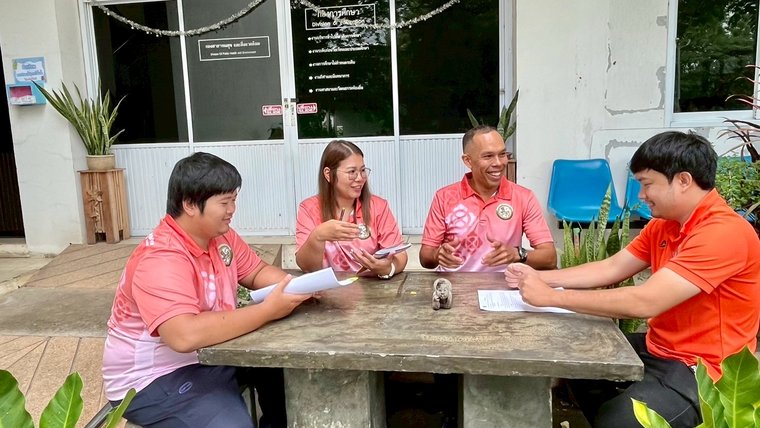
Food is my go-to when it comes to becoming a part of the community! I am no chef but am always open to new dishes and flavors. Whether it's trying every noodle shop in town, picking up some veggies and sticky rice from the neighbor down the street, or inquiring about mysterious grilled items at a celebration, food always provides a chance to learn. With host families, meals are often a communal experience, especially when extended family is visiting. So, whether it's breakfast, or just sitting around the dining table drinking coffee, it's an opportunity to listen and chat with others in a relaxed setting where you can really get to know one another.
4. What is a highlight of your time in service so far?
I absolutely love that no matter where I go, there is bound to be someone that has some connection to the Peace Corps. Maybe they worked with the country post 30 years ago, or maybe they were a counterpart to another Volunteer in recent time, or maybe they had relatives that served as a host family, or maybe they just exclaim "Peace Corps?! You guys are everywhere!" These small moments reassure me about our positive impact in the most unexpected moments. It's great to chat with these individuals and listen to their thoughts and impressions of Peace Corps, as well as update them on our current projects and sectors.
5. What have you enjoyed most about the community where you are serving?
I really enjoy the small town feel of my community. I appreciate how my counterparts and co-workers may also be my neighbors. I had a flat tire on my bicycle on the way home after only a few weeks at this site, and there were several individuals that did not know me, but did know of me being the new foreigner. They offered to escort or even haul my bicycle home. Seemingly random people that pass me by on the roads will know my name because maybe we met briefly at Songkran festivities or municipal events. The sense of community is strong, and the interconnectedness is very apparent through my day-to-day interactions here.
6. What are some of the most important things you’ve learned from your community?
Whether the community is defined as some kind of district, municipality, village, or any other official delineation, there will always be other unique strands connecting people in a given area. Relatives, family friends, and work partners may have all played a part in influencing where and why people are situated around the community. This is valuable context and history that you will not find documented on any map of the community "boundaries." We, as the Volunteers learning about our communities, can contribute to uncovering and maintaining this history simply through our inquiry with community members.
7. How do you spend time when you are not working on a project?
I love to ride my bicycle everywhere! There are so many small farm-to-market roads weaving throughout the longan orchards, Buddhist temples, irrigation canals, and homes. It's beautiful, pleasant, and quiet in the early mornings and late afternoons. Occasionally, youth will spot you coming and say "Hello!" with a grin. Also, there are bound to be various sellers or small markets along the way with stalls of snacks, desserts, fresh vegetables, or seasonal fruit when you need a break. It's a good way to still be present in your community, all while doing some sight-seeing!
8. What are you looking forward to in your remaining time as a Volunteer?
We have a strong agricultural focus in the community, with numerous orchards and farms as well as processing facilities. After a student offered me some locally produced fermented garlic I realized how little I know about agriculture here. I am curious what kind of involvement and ties there are with youth in the community. It'd be interesting to learn more of the youth perspective on the local industry, because it could open the doors to collaborations that could preserve community culture, educate youth on resource management, and offer opportunities to design and implement youth projects.
9. Once you finish service, what will you do differently when you return to the U.S.?
Larger entities and organizations can sometimes lose some of the humanity in their operations, when face-to-face interactions disappear through too much focus on efficiency, streamlining, or technology adoption. Not to say it's not beneficial, but I feel there are occasions where technology can create unnecessary barriers and shift focus away from directly engaging with the people and communities we are a part of. It can distance friends and family from each other even when they still live and work together. I've realized there is so much intangible value to reinforcing connections among ourselves in our communities, how readily these bonds mobilize people to help others, and how we must work toward a healthy balance of maintaining our community and humanity, while still keeping up with modern technologies.
Want to learn more about serving in Thailand? Connect with a recruiter today.



