An official website of the United States government

Official websites use .gov
A
.gov website belongs to an official government
organization in the United States.

Secure .gov websites use HTTPS
A
lock (
) or https:// means you’ve safely connected to
the .gov website. Share sensitive information only on official,
secure websites.

Search
Connect with the Peace Corps
If you're ready for something bigger, we have a place where you belong.
Apply to the Peace Corps
The application process begins by selecting a service model and finding an open position.
Let us help you find the right position.
If you are flexible in where you serve for the two-year Peace Corps Volunteer program, our experts can match you with a position and country based on your experience and preferences.
Serve where you’re needed mostYouth Development Facilitator
 Youth in Development
Job highlights
Applications are now closed. View current openings.
Apply by
January 1, 2026Know by
April 1, 2026Depart on
August 31, 2026Duration
2 years, plus 3 months trainingAbout the project
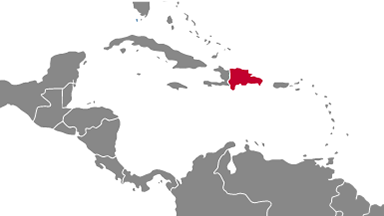
Youth Development is a critical need in the Dominican Republic with one of the highest teenage pregnancy rates in the region, almost half of the population under the age of 25, and youth unemployment rates around 30%. As a Youth Development Facilitator in the Dominican Republic, you will contribute to national priorities by collaborating with local counterparts in guiding youth to transition into healthy, productive, civically engaged citizens and building the capacity of host country service providers, groups, and communities to prioritize positive youth development. The Youth Development project works in collaboration with local counterparts to reach youth 10 – 24-year-olds and adults by co-facilitating life skills, employability skills, and sexual and reproductive health education.
Volunteers and their counterparts encourage regular participation in clubs and mentor youth. Volunteers will work in upper elementary schools (US equivalent of 4th - 6th) and secondary schools (US equivalent of 7th – 12th grades, Municipal Councils, and with the Provincial Offices of the Ministry of Women and parents when possible. Peace Corps Volunteers provide regular, consistent support to youth in underserved communities, working together with service providers and young people as a trusted friend and mentor. This daily contact and mentoring are Peace Corps’ niche Peace Corps Volunteers enhance existing school or community-based programs by building up local capacity to support youth development activities. In some cases, Volunteers support and coach counterparts to develop new programs that help empower young people and give them the opportunity to reach their full potential. These programs build skills, harness positive energy, encourage ambitions and healthy decision making, and urge youth to further their education, all providing sound bases for young peoples’ transition into healthy, productive, civically engaged adults, capable of intentional life planning.
Learn more about what Volunteers do in country by visiting our Dominican Republic project page.
Required skills
Qualified candidates will have one or more of the following criteria:
Qualified candidates will have one or more of the following criteria:
• Bachelor of Arts/Bachelor of Science degree in any field
OR
• 5 years professional work experience
Language: Spanish
A. Completed 4 years of high school Spanish coursework in the past 8 years
B. Completed college-level Elementary II Spanish semester (Elementary III in quarter system) within the past 6 years
C. Score between 50-62 on the Spanish College Level Examination Program (CLEP) exam in the past 6 years
D. Score Novice-High or Intermediate-Low on official American Council on the Teaching of Foreign Languages (ACTFL) Oral Proficiency Interview (OPI) in Spanish within the past 6 years
Required behavioral competencies
These competencies are essential for all service assignments and are assessed in the application and interview process:
Motivation for and commitment to service
Adaptability and open-mindedness
Problem solving and resourcefulness
Behavioral maturity and professionalism

Photos from Dominican Republic



How you and the community will make an impact together:
Volunteers will live with a host family during the 9-week Pre-Service Training in a community near Santo Domingo. Volunteers will live with a second host family for the first 4 months of service in their assigned community to facilitate language acquisition and community integration. Although most Volunteers are able to move out on their own after the obligatory 4-month homestay (in addition to the training homestays), there is no guarantee that independent housing will be available.
Volunteers are assigned to both rural communities and towns. Living conditions and transportation limitations can be physically demanding. Volunteers will have to use the available transportation in their assigned community. Generally, local transportation includes regular or semi-regular service by pick-up trucks, vans, and/or collective taxis. In some cases, Volunteers may have to walk long distances to work engagements. Houses usually have corrugated steel or cement roofs, walls of wood or cement block, and cement floors. They may or may not have amenities such as running water, electricity, or reliable cell service. Although most communities have electricity, power outages are common.
Personal appearance is important for Volunteers representing the Peace Corps and Dominican partner agencies, particularly the Dominican Ministry of Education. Dominicans consider personal appearance to be an important indicator about a person, and a Volunteer’s appearance will influence their relationship with the community. Volunteers are expected to dress to Dominican standards for teachers, which is at minimum a clean polo shirt, dress pants or skirt and closed toed shoes.
Peace Corps Dominican Republic provides support to a all Volunteers. Volunteers use their experiences as members of different underrepresented groups to support their peers as they may navigate social, cultural, political, religious, personal, and other challenges. Current support networks include Peace Corps Volunteer Leaders (PCVLs) and Peer Support Network (PSN). Please see below for additional considerations.
LGB : The country has a Roman Catholic constitution, and a large portion of the population is either Catholic or Evangelical Christian. While same-sex relationships are not illegal in the Dominican Republic, many people reject homosexual relationships. However, LGB Volunteers find spaces within Peace Corps Dominican Republic network and when visiting larger metropolitan areas.
Ethnicity: Different ethnic, racial or national minority American Volunteers are often not viewed as “American.” Volunteers may thus experience negation of their American nationalityy due to local assumptions of what an American looks like. While some Black/African American Volunteers may blend in with the local Dominican population, others including those who choose to wear their hair in its natural state or braided hairstyles, or who have darker skin tones, may be perceived as Haitian. This may lead to one’s citizenship being questioned and ultimately differential treatment. Volunteers find support and representation within active Dominican natural hair movements in larger cities. Similarly, with an increased focus on migration issues around the world, Volunteers of Latin American decent may also have their identity questioned and/or mistaken for Central and South American migrants. Many Volunteers have been able to turn these encounters into learning experiences on the unique dynamics of American culture and successfully complete their services with support from the Peace Corps Dominican Republic network and certain community members.
Learn more about the living conditions, including detailed information on culture, communications, housing, and health/crime statistics on our Dominican Republic country page. You can also delve into stories about local communities by reading our blog or Volunteer stories.
Meet a Volunteer in Dominican Republic
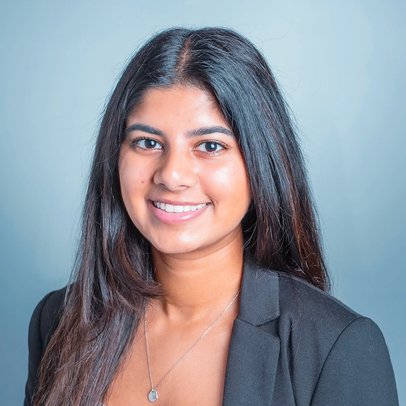
Palak W.
Community Economic Development Facilitator
"Most Dominicans have never encountered a person of my ethnicity before. It is truly a unique opportunity to see how locals perceive me and to teach them more about India."
See full Volunteer profile
To learn more about serving as a couple in Dominican Republic, visit the country page.
Application process
From application to departure takes around nine months. Learn about the application process for Volunteer opportunities.
Medical/legal clearance
You will need to be cleared medically and legally in order to serve in Dominican Republic. Review information on medical clearance and legal clearance to learn about the process.