An official website of the United States government

Official websites use .gov
A
.gov website belongs to an official government
organization in the United States.

Secure .gov websites use HTTPS
A
lock (
) or https:// means you’ve safely connected to
the .gov website. Share sensitive information only on official,
secure websites.

Search
Connect with the Peace Corps
If you're ready for something bigger, we have a place where you belong.
Apply to the Peace Corps
The application process begins by selecting a service model and finding an open position.

Let us help you find the right position.
If you are flexible in where you serve for the two-year Peace Corps Volunteer program, our experts can match you with a position and country based on your experience and preferences.
Serve where you’re needed mostEnglish Education Teaching
 Education
Job highlights
Applications are now closed. View current openings.
Apply by
October 1, 2025Know by
December 12, 2025Depart on
April 29, 2026Duration
2 years, plus 3 months trainingAbout the project
Peace Corps operated in Palau from 1966 to 2014 as part of the Federated States of Micronesia and Palau program. The last Volunteers left in 2018, and in 2024 Palau welcomed the Peace Corps back. English Literacy in elementary schools has been identified as the primary area of support for Volunteers. Volunteers will be placed in elementary schools (grades 1-8) throughout the country to support students’ English literacy and academic abilities. In addition to their primary projects, Volunteers in Palau will have opportunities to work on secondary projects where they can support community defined priorities such as environmental awareness, food security, community health, or other areas.
Peace Corps has left a strong legacy in Palau. Most Palauans have a story of a Volunteer who has touched their lives in a meaningful way. They remember how Volunteers spoke Palauan and integrated into the community. You’ll be joining a new program which means the communities where you work will have high expectations of you. Peace Corps is counting on you to help shape the new program and be a good representative of its legacy here. As a very small island nation, everyone will know you are a Peace Corps Volunteer and will expect you to behave accordingly. Your service here will be seen and has the potential to have a lasting impact on your students, school, community, and the country.
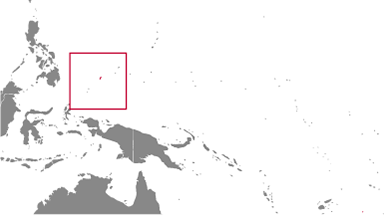
Palau is a small island country in western Micronesia, one of three regions in the Pacific Islands. It is located east of the Philippines and north of Australia; and is made up of nearly 300 islands. Palau is home to about 18,000 on-island residents and diaspora of nearly 8,000 people across the United States, Asia, and other parts of the globe. Palau’s largest island, Babeldaob, stretches up to the north while Eouladob refers to a group of islands (Peleliu and Angaur) that stretch down south. Koror is Palau’s most populated state and is considered to be the main urban area. It is also where the Peace Corps Palau office is located.
For Peace Corps Palau’s re-opening year, Volunteers will be placed in Babeldaob and Koror. These are areas accessible by vehicle transport. Eastern Babeldaob, mainly Ngiwal and Melekeok, are coastal villages lined by sandy beaches that are a few miles away from the reef. Western Babeldaob, mainly Ngardmau, Ngeremlnegui, Ngatpang, and Aimeliik, are inland and mountainous/hilly villages lined by mangrove forests along its coast. In each state, there are subdivisions of land/territory referred to as “hamlets”. When living with host families, Volunteers will most likely be integrated with their hamlet community. Volunteers committed to their community integration and work can be build meaningful relationships with community members, a key component of having a successful service. Community integration helps in creating trust and a meaningful learning experience.
Learn more about what Volunteers do in country by visiting our Palau project page.
Required skills
Qualified candidates will have one or more of the following criteria:
Qualified candidates will have a Bachelor of Arts/Bachelor of Science degree in any discipline and a strong desire to teach English
Language: There are no pre-requisite language requirements for this position.
Required behavioral competencies
These competencies are essential for all service assignments and are assessed in the application and interview process:
Motivation for and commitment to service
Adaptability and open-mindedness
Problem solving and resourcefulness
Behavioral maturity and professionalism

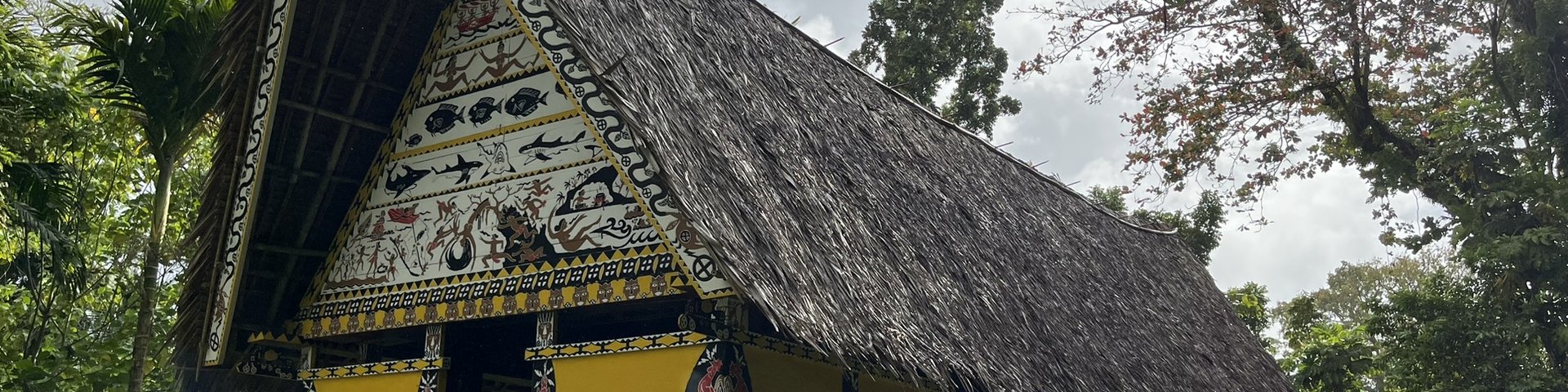
Photos from Palau

How you and the community will make an impact together:
Weather
Palau's weather is generally hot and humid, with rain throughout the year. January to April are typically dry months where rain is infrequent. Rainfall is generally increased in the months of June to September. In times of bad weather, power outages are likely to happen, especially in Babeldaob. They usually last anywhere between 30 minutes to several hours, depending on the cause and severity of the damage and how fast PPUC (Palau’s primary utilities provider) can mitigate damage and restore power. In Babeldaob, most residential areas have access to a public water source and sewer system. If a public water source is unavailable, homes will have a reliable water catchment tank that supplies the residence. The water is clean and safe for hygiene and cooking purposes. Drinking tap water is not recommended unless boiled; however, for general health and safety, drinking bottled or rainwater is advisable.
ClothingDuring Pre-Service Training (PST) and workdays in the school community, the dress code is business casual a.k.a. “island formal”. Men are recommended to wear collared shirts (e.g., polos or buttoned-down shirts) with dark jeans, semi-formal pants, or chinos. The Ministry of Education School Handbook addresses expectations for teachers and adults in the school community stating; All teachers, including substitute teachers, must dress appropriately and be well groomed for work every day. Informal attire such as T-shirts, tight pants, mini-skirts, short shorts, spaghetti tops, tank tops and/or slippers are not allowed. Volunteers must adhere to the same expectations. Dressing appropriately helps Volunteers gain respect in their home and school communities as well as establish trust and credibility.
Housing/Transportation
Volunteers live with host families during the PST and year(s) of service. Volunteers live in a room in a family’s house. Transportation to and from the villages is usually by family vehicle. Within the hamlets, Volunteers get around on foot or bicycle.
Food/Diet
The diet in Palau consists primarily of Ongraol [rice, taro and other forms of local starch], with Odoim [recipes made of fish, beef, pork, chicken, canned foods, cooked with/without vegetables] and fruits. Pescatarians do well in Palau due to availability/access to fresh fish and other seafood. For strict vegans, it’s a bit harder and expensive, but doable.
Connectivity
The quality of network connection on island is decent. Cellular connection (e.g., 4G, 3G, and 2G data) and home internet coverage in Babeldaob exists and varies in strength, although, it is generally weak. The general idea is that the more rural an area is or the farther away one is from Palau’s urban center (Koror), the worse the network coverage gets. Cellular data coverage is available yet slow in Babeldaob’s eastern villages, compared to western villages. There is no guarantee that Volunteers’ homes will have Wifi connection. Most homes in Koror home Wifi but not all. In Babeldaob, most homes will rely on personal cellular mobile devices for 3G/4G data connection to access the internet. If homes have Wifi, there is no guarantee that the connection is strong.
Culture/Religion
Palau’s culture is matrilineal, meaning that lineage, inheritance and family bonds are traced through the female line. A culture centered on respect for its traditions, nature and history. The majority of Palauans are Christians [Catholic, Protestants, Seventh Day Adventists and other forms of religions].
Several of the traditional ceremonies, such as Omesurech- first birth ceremony, Ocheraol- first house ceremony, and the Kemeldiil- Funeral are widely practiced and the codes and beliefs adopted by Palauan forefathers are still revered today.
Learn more about the living conditions, including detailed information on culture, communications, housing, and health/crime statistics on our Palau country page. You can also delve into stories about local communities by reading our blog or Volunteer stories.
No couples are accepted for this position.
Application process
From application to departure takes around nine months. Learn about the application process for Volunteer opportunities.
Medical/legal clearance
You will need to be cleared medically and legally in order to serve in Palau. Review information on medical clearance and legal clearance to learn about the process.