 An official website of the United States government



Living Conditions in Sri Lanka
General considerations
To learn more about living and working in Sri Lanka, applicants are encouraged to connect with a recruiter to discuss any specific considerations that could affect their service. In addition, please visit the U.S. Department of State's Sri Lanka travel information pages for the latest on travel advisories, local laws, and special circumstances.
Applicants who undergo an interview will have additional opportunities to raise questions or concerns. If, upon learning more information, an applicant would like to be considered for a different assignment from the one they have been assigned to serve in, the Peace Corps can often find an alternate option that may be a better fit.
Communications
During your first three months in the country, you may have mail delivered to the Peace Corps office at the following address:
[Your Name]
11 Kinross Avenue
Colombo 04
Sri Lanka
When you move to your assigned site, you will have a local mailing address for the duration of your service. Mail sent through the U.S. Postal Service will take several weeks to reach Sri Lanka. Packages may be opened by Sri Lankan Customs, but items rarely go missing.
Telephones
There are a number of cell phone companies in Sri Lanka with cell service coverage throughout most parts of the country. Usage fees associated with mobile phones are lower than in the United States. Most communities where Volunteers will be placed have reasonable cell phone coverage, though in some areas the coverage may be spotty and require making calls from nearby locations.
Please note: In emergencies, your family can call the Behavioral Health and Outreach Unit's 24-hour duty phone in Washington D.C. at 855-855-1961, Option 1, Extension 1470. The Behavioral Health and Outreach Unit will notify a Volunteer of an emergency (e.g., critical illness or death of a family member), respond to family questions about a Volunteer's status, and/or provide an update about civil unrest or a natural disaster in the host country.
Internet
Internet service is widely available. Phone plans and data are inexpensive, however internet service may be unreliable and slow. You should not expect internet service to work consistently or at high speeds during training or at your site. When it does work, you may not be able to stream or download content. Video calling on applications such as WhatsApp are possible from some, but not all, sites and in some Volunteer houses, but not necessarily in all rooms.
Housing and site location
Volunteer sites will be located in rural areas with the greatest need for Peace Corps Volunteers. Volunteers will not be assigned to Colombo or areas frequented by tourists. Unless you are part of a couple, you will be the only Volunteer assigned to your site. Most Volunteers will be within one or two hours of another Volunteer and between four and ten hours by public transportation to the Peace Corps office in Colombo. You will be expected to immerse yourself in your community and commit to staying in your community for the majority of your service. Volunteers live where they serve and at the level of the people with whom they work. This means you may need to do without many of the amenities that you may be used to. Living conditions will be simple and probably unfamiliar. Being flexible, non-judgmental, and remaining curious will be essential as you settle into your new home.
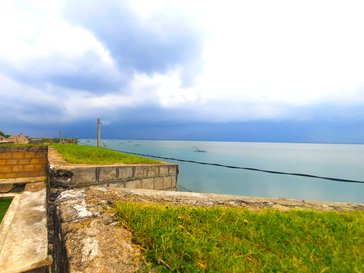
You will live with host families for your entire service. Many Volunteers cite host family living as one of the most positive aspects of their Peace Corps service. Given the hospitality and warmth of Sri Lankans, those who are open to new experiences will enjoy host family life.
Aspects of living conditions in Sri Lanka that may be new to you include:
- Personal space and alone time is not common; you may be accustomed to more privacy than you will experience in your new home;
- Sri Lankan family members often relax together, talking and watching TV, and may expect Volunteers to join them. In many homes, the TV is kept on during waking hours at a volume that you may consider loud;
- Typical homes are made of cement blocks; they do not have air conditioning, hot water, ovens, or refrigerators; gas burners and fire-heated hearths are used for cooking; fans are used for cooling;
- All homes will have electricity but outages occur often;
- Water is likely to come from a well or tap located in the yard; a minority of homes have inside taps;
- Squat toilets rinsed with water from a bucket are common;
- All homes have private bathing areas; "bucket baths" are how you will likely bathe;
- Laundry is done by hand;
- Mosquitos, cockroaches, spiders, lizards, ants, and snakes are common in Sri Lanka; Volunteers will sleep under mosquito netting;
- Depending on your site, temperatures can range from 50F to 95F; lower elevation sites remain on the warmer side of this range while higher elevation sites remain on the cooler side of this range; during the monsoon season you can expect heavy rain, as well as occasional flooding and landslides.
- All housing adheres to Peace Corps global standards for safety and security.
Living allowance and money management
Volunteers receive a monthly allowance in Sri Lankan currency (rupee) that is sufficient to live at a level comparable to host country counterparts. The allowance covers food, housing, household supplies, clothing, transportation to and from work, utilities, recreation and entertainment, and incidental expenses. The Peace Corps discourages Volunteers from supplementing their living allowance with funds from home. Credit and debit cards can be used in major cities and tourist areas. There is a risk for credit card fraud and potential identity theft. Volunteers who travel while on vacation, however, may find having a credit/debit card useful during their travels.
Food and diet
Sri Lankan food is characterized by fragrant spices, all forms of coconut, and rice. Rice and curry is the main cuisine and can be served at breakfast, lunch, and dinner. Sri Lankan foods tend to be quite spicy. Additionally:
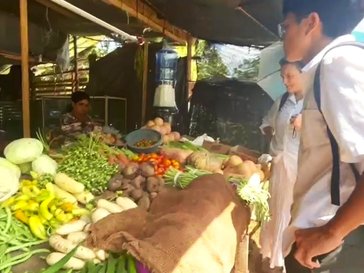
- Curries can be made from fish, shellfish, meat, and/or vegetables such as lentils, chickpeas, beans, potatoes, and peppers; even fruit can be curried;
- Seasonal fruits and vegetables are plentiful in all parts of the country; organic options may not be available;
- Chicken is the most common meat served; fish and shellfish are also widely used; you are likely to be served meat and fish with bones and skin;
- Markets and homes in rural areas do not have refrigeration; expect to see animal butchering in public spaces;
- Vegetarians will have many options available, however, as an honored guest, you are likely to be served curry with meat or fish as a sign of respect;
- Due to the prevalence of fish, fish products, and ghee (a form of butter) in many dishes, host families will be challenged to provide exclusively vegan dishes;
- Sri Lanka produces the best tea in the world; it is prepared with milk and plenty of sugar; you can expect to be served tea frequently. Coffee, if available, is likely to be instant;
- Sri Lankans eat food using one hand and no utensils; you will be expected to do the same when you eat in public or with your host family;
- Peace Corps will provide you training on how to treat drinking water.
Transportation
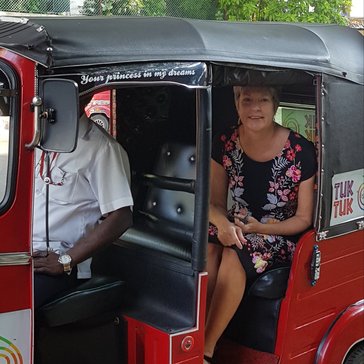
Public buses and trains are the primary modes of transportation for long-distance travel in Sri Lanka. Bicycles, buses, tuk-tuks (three-wheeled motorized vehicles), and walking are the modes of local transportation. Volunteers are not allowed to operate cars and motorcycles, but some may choose to ride bicycles which will be provided by Peace Corps if needed for transportation at your site. Wearing a helmet while riding a bicycle is required; Peace Corps will also provide bicycle helmets. Travel in Sri Lanka, whether by foot, bicycle, tuk-tuk, bus, or train, is potentially hazardous and stressful. Buses may be crowded and unreliable, and roads in poor condition are made more dangerous by the chaotic mix of vehicular, pedestrian, and animal traffic. Delays and cancellations due to bad weather, mechanical failures, or lack of personnel are to be expected. More information on transportation within Sri Lanka will be given during pre-service training.
Social activities
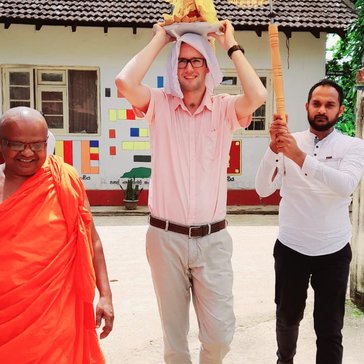
You will spend much of your free time eating, attending Sri Lankan festivals and cultural events, playing sports, and socializing with your colleagues and neighbors.
Professionalism, dress, and behavior
Educators in Sri Lanka are revered and are expected to align their dress and behavior with the high esteem granted to the profession. You will be a member of one of the first cohorts of Peace Corps Volunteers to serve in Sri Lanka since the 1990s and carry the duty and privilege to set high standards for yourself and for Volunteers who follow. Peace Corps’ presence in Sri Lanka is predicated on the agency’s ability to provide technically competent and culturally sensitive Volunteers.
Expectations are high for Volunteers to establish strong relationships with neighbors and colleagues that characterize Peace Corps’ community-based approach to development and demonstrate a steadfast commitment to being a classroom teacher. In addition to being a dedicated educator, professionalism means being aware of how your appearance and behaviors affect others and adjusting accordingly. A lack of professionalism can damage your reputation and alienate you in your community.
Applicants should consider carefully whether or not they are willing to adopt the changes to dress, appearance, and behavior needed to integrate and serve in a rural Sri Lankan community.
Although you will see some local people in Sri Lanka dressed less conservatively, particularly in the larger cities and tourist areas, teachers adhere to a dress code required by the Ministry of Education. Following the dress standards of teachers will help you avoid unintentional offenses and incorrect assumptions on the part of local population.
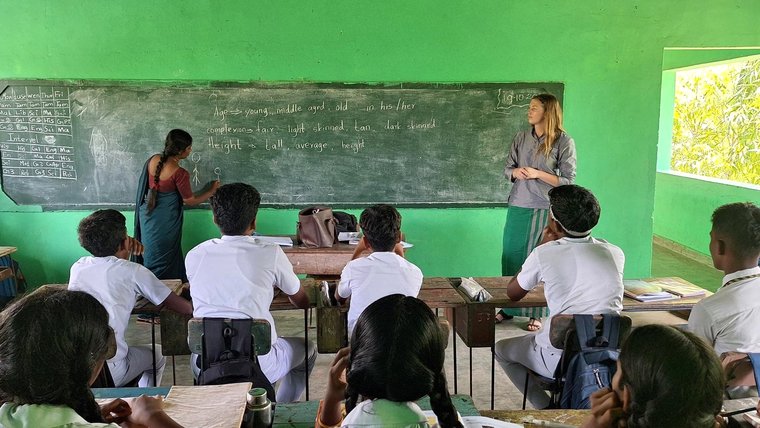
Dress and appearance for men
- At school, male teachers wear pressed, solid-colored, long pants with a belt; clothes should be fitted, not baggy;
- Shirts, whether long- or short-sleeved, must be collared and buttoned all the way down. Pullovers (such as polo-type shirts) are considered T-shirts in Sri Lanka and cannot be worn to school;
- Lace-up or loafer-type shoes are required; sandals, sneakers/running shoes, moccasins, flip-flops, etc., cannot be worn to school;
- Outside school, longer shorts and T-shirts are acceptable for males;
- Hair should be short and neat; asymmetrical or partially shaved haircuts are not acceptable; a fully shaved head means you are becoming a monk;
- Neatly groomed facial hair is acceptable;
- Tattoos are not acceptable in professional settings and schools and must be covered at all times in the classroom and as you are integrating into your community; tattoos with religious symbols may be particularly sensitive;
- Piercings should be removed; heavy/chunky necklaces are not worn by males in Sri Lanka;
- Clothing with religious or offensive images should not be worn.
Dress and appearance for women
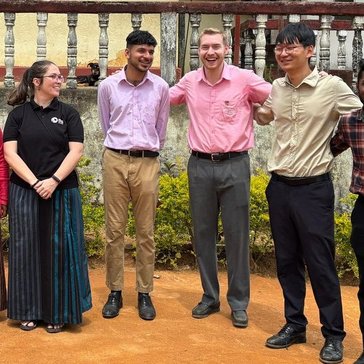
- At school, female teachers wear saris to school; female Volunteers will also wear saris (you will get and learn how to wear a sari once you arrive);
- Acceptable shoes include heels, flats, and sandals. Sneakers/running shoes, moccasins, and flip-flops cannot be worn to school;
- Outside school, female volunteers can wear loose pants or leggings with longer shirts that reach mid-thigh or more, long skirts or long dresses (below the knee at a minimum);
- Shorts, yoga pants, tight-fitting, transparent, or revealing clothes are not worn by females in rural communities;
- At school, female volunteers with long hair must contain it in a bun or ponytail; loose hair is not acceptable in professional environments;
- Tattoos are not acceptable in professional settings and schools and must be covered at all times in the classroom and as you are integrating into your community; tattoos with religious symbols may be particularly sensitive;
- Female Volunteers can wear modest jewelry – big, dangly earrings or large chains and medallions are not worn in professional settings;
- Pierced ears and/or single nose piercings are acceptable.
- Clothing with religious or offensive images should not be worn
Community integration and leave
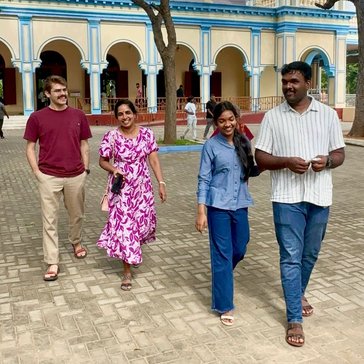
Professionalism in Peace Corps/Sri Lanka also means making intentional efforts to integrate into your school community and to foster productive and supportive relationships with Sri Lankan community members. When Volunteers choose to travel away from their community frequently, or for extended periods, these relationships will not develop. You will be expected to be at school when it is in session and to spend most weekends in your community. Schools operate year-round with breaks in December (one month), April, and August. Volunteers are welcome to take annual leave during school breaks. Excessive absence from site is inconsistent with Peace Corps/Sri Lanka’s philosophy or policies.
Please note that annual leave and hosting visitors are allowed only after the first three months of service. For the first three months after swearing-in, Volunteers must request permission to leave their sites.