An official website of the United States government




Fostering Knowledge Exchange through Care Groups
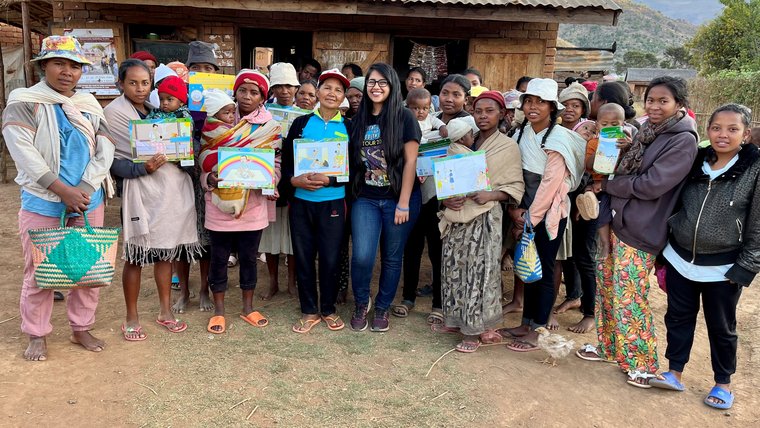
Being a part of the first cohort of Health Volunteers to return to service in Madagascar since COVID-19 has added a little pressure to our group along with an added sense of purpose. During our first three months of training we learned about the main health concerns in this country and ways that we can share information with others on topics including malaria, malnutrition, safe pregnancy and hygiene. With this goal in mind, we also had to consider the importance of sustainability in our work. Care groups (groups of mothers willing to help teach their peers about best health practices), are a well-established method of achieving sustainability. Once we all arrived at our sites, we saw these challenges first-hand; such as under nourished children, improper feeding and unsanitary living conditions.
I live and work in the Southeast of Madagascar, in the Ifanadiana district. In total there are nearly 12,000 people who go to the hospital (where I volunteer) for their primary health care. However, they live in ten separate villages which can be as far away as 27 kilometers; with some traveling to the community health center by boats carved out of tree trunks and by foot on dirt paths with babies on their backs.
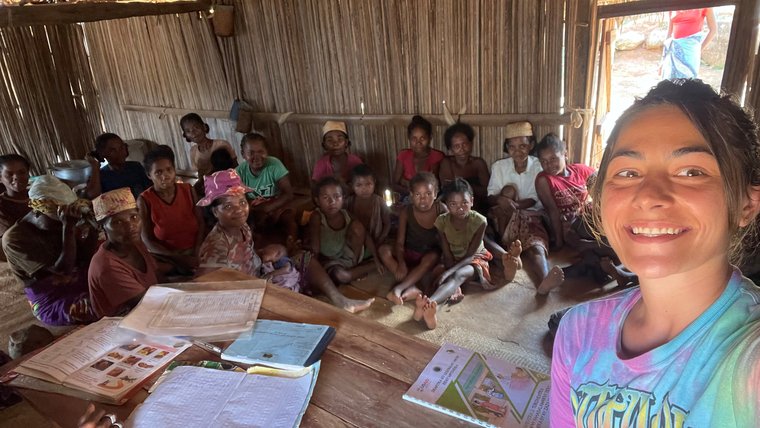
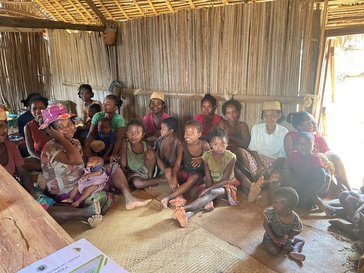
Recently I met with a healthy young mother from one of the villages to plan a lesson for a care group in her home-community. We planned to discuss warning signs during pregnancy, breastfeeding, and the importance of birth plans. I was excited to go somewhere new. Little did I know that it would be a whole day adventure! Two days later, despite sporadic torrential downpours, the lead mother came to my house in the morning and we made the long trek toward her village. The first hour we were able to walk on the one paved road that cuts through the Southeast of Madagascar. Then we had to diverge into the jungle, on a footpath which led us through mountains and rice fields. Three hours later, when we finally arrived in the village, I conducted my first care group lesson. I was happily greeted by over 20 mothers. A few fathers and children attended the session as well. The audience was attentive and receptive of the topics.
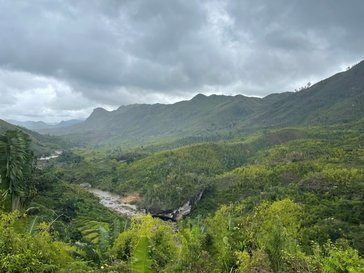
I didn’t realize how important this visit was until I asked the mothers how often they go to the hospital to receive vaccinations and medicine during their pregnancy. They responded, “Hardly ever.” This answer helped me really understand the value of sharing information with people about health practices in such rural areas, and the effort it will take to truly make a difference in not only my community, but all of Madagascar. I am invested in knowledge exchange and working in partnership with my community to fulfill my commitment to serve here for two years. Up to this point, the volunteers in my cohort and I have been focusing on maternal and child health, working to implement these care groups at all of our sites. Soon we will do the same with youth health by creating clubs specifically focused around developing life skills and reproductive health.