An official website of the United States government


A Journey of Volunteering, Community, and Cultural Enrichment in Guyana
"How do you like volunteering in Guyana?"
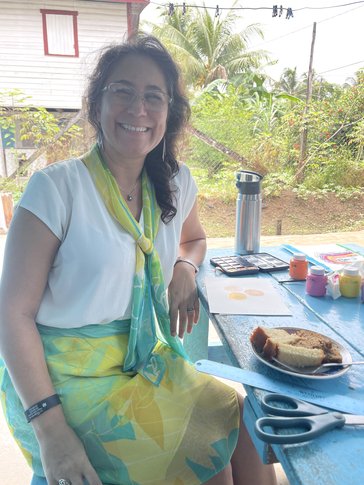
A teacher in Guyana asked me this question recently while a few teachers, including me, were working together in my classroom to complete life-size board games made of cardboard and colorful, shimmering foam for a “Book Day” event coming up that weekend. They laughed and cheered as I named everything that resonated with me about Guyana.
"I think the food is great!” was my immediate first answer.
Delicious pepperpot (an aromatic meat stew) was one of the first meals I enjoyed after arriving in Guyana. I don’t eat meat, which the dish usually contains, but I appreciate the rich flavor of cassareep, a main ingredient of pepperpot. It is a juice made from bitter cassava (and potentially poisonous if not processed correctly).
Cassareep is used in other dishes in Guyana, too. Last year, I was invited (along with my husband Michael, who is serving with me) by an Amerindian family in our community to observe the weeklong process of making cassava bread for Indigenous Heritage Day that is celebrated in September. The family used traditional tools like a matapee (a woven sieve) to squeeze the cassareep juice out of the bitter cassava. The juice is used to make bread and can also be fermented and made into piwari, a traditional drink made of cassava scraps.
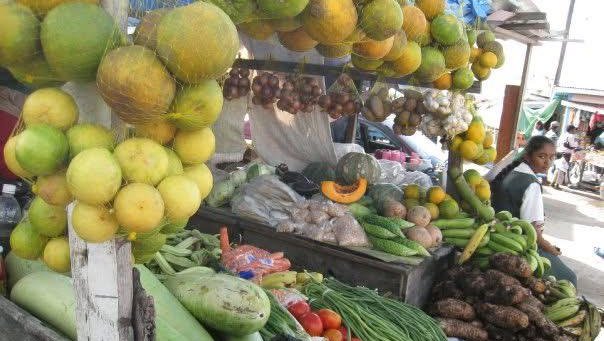
Our landlord and neighbors frequently bring us food, including "cook-up rice" (a one-pot meal of rice and various meats and/or vegetables cooked in coconut milk), roti (flat bread), and fried chana (chickpea). During the Christmas holidays, we receive food gifts of black cake, pepperpot, and sorrel—a drink I have learned how to make myself!
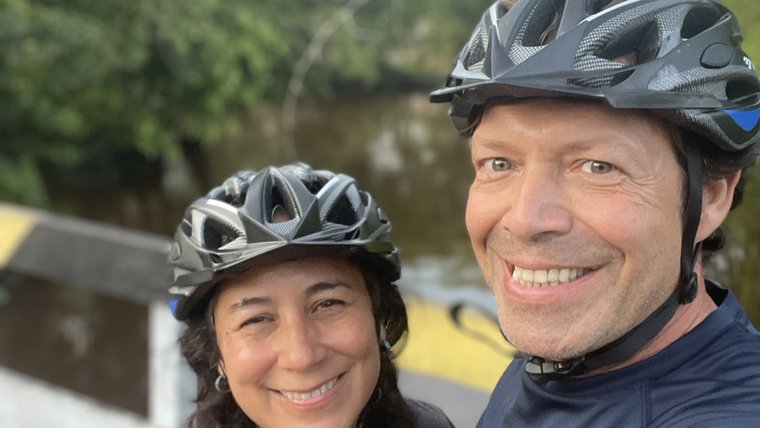
I enjoy the sights and sounds of Guyanese nature and value people’s community spirit. Neighbors chat outside in the hot, breezy afternoons while their children swim in the creek or play soccer in the community field. Observing toucans attempting to steal eggs from other birds' nests and being chased by smaller but very territorial birds never fails to amaze me. I find joy in seeing our garden thrive, providing us with enough callaloo (spinach), tomatoes, and bora (long bean) for fresh veggie omelets in the morning. Witnessing over a dozen iridescent lizards scatter as soon as I step outside to hang clothes has become a familiar and delightful sight. We take bike rides to cool off in the creek and go swimming or kayaking in the blue lake. The latter are some of my favorite pastimes.
But most of all, I love the kids.
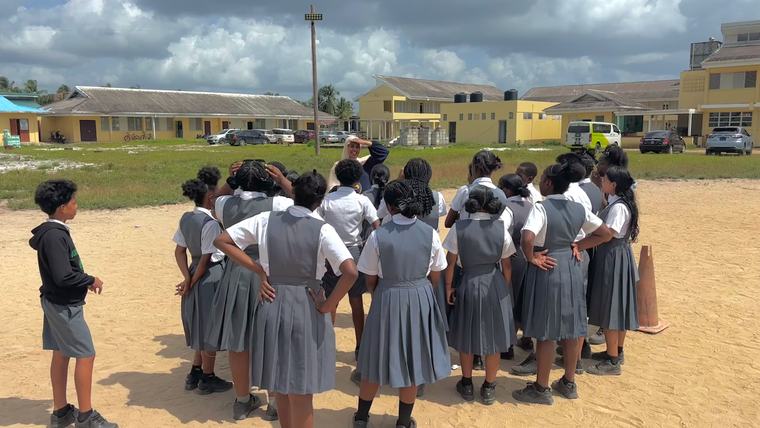
I have been a Peace Corps Literacy Specialist for over a year and a half now at a primary school in the Upper Demerara-Berbice region, and these little ones have captured my heart. I have never worked with children before, and the experience, even though all new for me and a little overwhelming, has also been rewarding, especially when I am able to witness a smile from a child who just learned to read a new word or just understood a concept. I treasure their smiles, their hugs, and their personalities.
My husband and I have been serving as a couple here in Guyana, although in different schools and sectors. Together we decided to organize a Saturday morning story time for our area at the children’s reading room in the national library. Often, Mary and Griffin, other Volunteer colleagues in our region, help. We usually choose a book and organize several activities for the children. Initially, just a handful of children attended; however, with time and through word of mouth, the group has gradually grown to about 30. Occasionally, we go outside for activities like kite-making (after reading Nick and Nack Fly a Kite by Brandon Budzi), or a youth-produced play based on The Boy Who Cried Wolf. All these books and activities have enriched not only the children’s lives but ours as well.
During our ongoing search for new books and topics, we were able to connect online with a couple of children's book authors, and went on to collaborate with them. One was Canadian-Guyanese author Yolanda T. Marshall, who generously donated her Caribbean children’s books to the National Library, but also read a couple of her books to the children via Zoom. I also connected with authors Tony Piedra and Mackenzie Joy, who provided us with additional information and worksheets for their book, One Tiny Tree Frog.
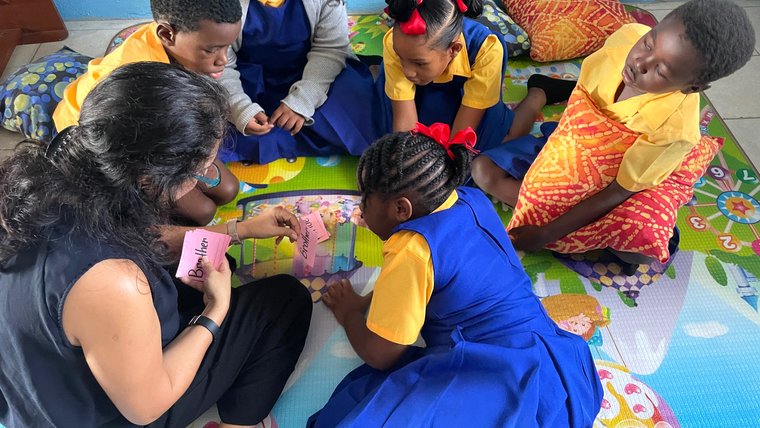
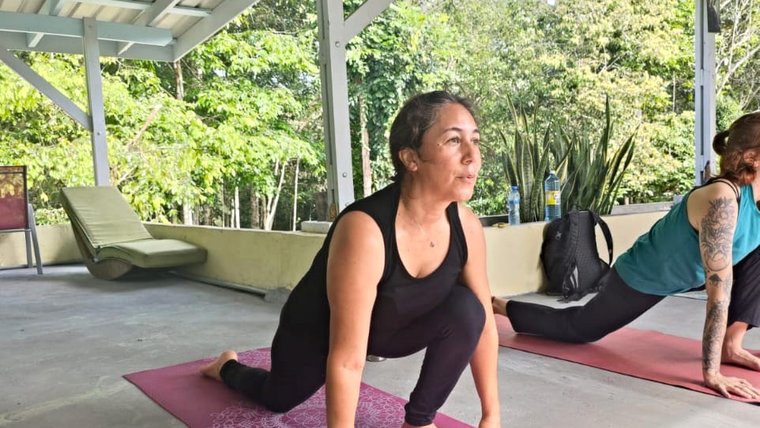
In addition to the students, other Peace Corps Volunteers (especially in my region) have been an amazing source of support and friendship. Through Volunteer Angel, I discovered a beautiful sustainable farm close to my town where I do yoga once a month. It's like being at a retreat! Each time we ride a taxi with the same driver who now, instead of waiting in the car, joins us in our yoga practice. He also now practices regularly with his wife and teenage child.
I’m part of the team responsible for our monthly Volunteer newsletter, which includes articles on topics like health, food, education, travel, nature, and more. The newsletter keeps our cohort connected and provides our families with a glimpse of our lives while serving.
After many months, I’m finally able to understand and laugh with the teachers and other people in my community while they converse in Guyanese Creolese. I realize that integrating into a community takes time and effort, and curiosity goes both ways.
Guyana has presented many challenges, but I am grateful that the Peace Corps afforded me the opportunity to experience this beautiful country, and I hope that I have contributed something positive to my community.