An official website of the United States government


Volunteering gives purpose
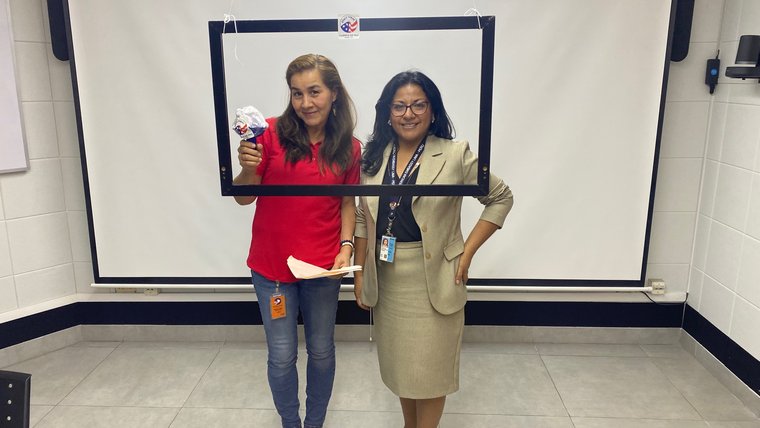
The Peace Corps Response (PCR) experience provides Volunteers with an opportunity to foster intercultural connections and experience a different way of life. It also helps American Volunteers and host country community members transcend cultural and linguistic barriers to build strong bonds and common understanding.
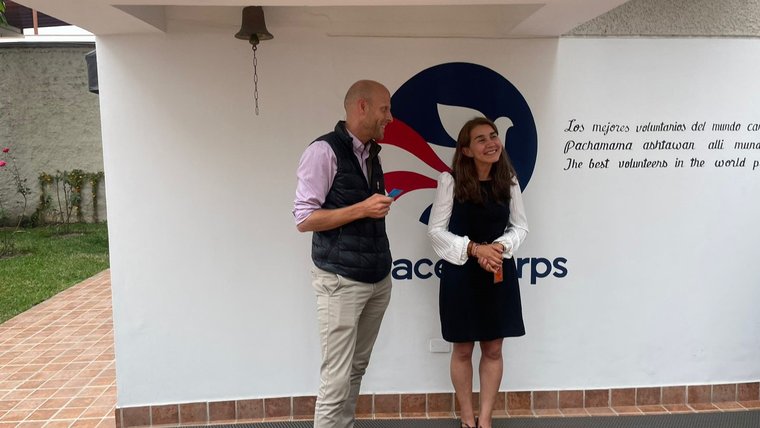
Lidia B., who served as a Peace Corps Response Volunteer (PCRV) for one year in Peru (2022-2023), recalls hearing Returned Peace Corps Volunteers (RPCVs) speak with passion about their service, which ultimately convinced her to join.
“The first person was the executive director of an organization I was working for. He always referred to his Peace Corps experience as something very special,” she remembered. “He would often mention it when introducing himself to different audiences, so I thought it must have impacted him so much, because [it was] a constant in his narrative.”
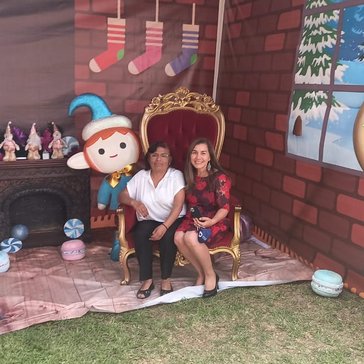
Lidia, a native-born Salvadorean, found she was also able to connect with RPCVs through a shared identity. “I was at a job interview and the interviewer was a Returned Volunteer from Nicaragua who was curious where my country of origin was,” she recalled. “We managed to connect over the Central American experience; I was born in El Salvador, and she lived in Nicaragua. The conversation we had brought me back to the same train of thought: Peace Corps!”
Lidia’s country of birth motivated her to serve in Latin America, specifically Peru, as an At-Risk Youth Social Reintegration Specialist. This role allowed her to apply her decade of experience in child welfare and social work counseling.
As a Response Volunteer in Peru, Lidia was tasked with training permanent care personnel (staff who work directly with youth under the age of 18) at a facility in Lima. In this way, she strengthened the support provided to local, at-risk children through social work and psychological intervention.
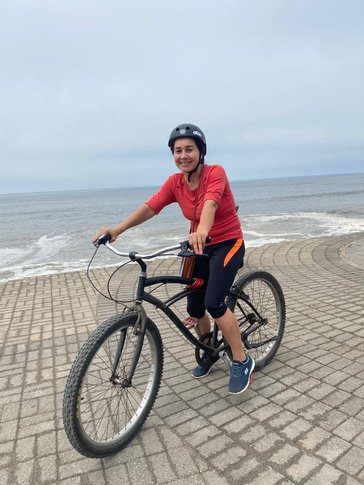
Lidia’s Salvadorean background and Spanish language skills were particularly useful during her Volunteer service. “I grew up in a country with a lot of similarities to Peru,” she said. “Speaking Spanish helped me understand the vocabulary, the culture, the traditions, as well as the dreams and challenges of Peruvians I met.”
She went on to add that while her background may have initially caused confusion, it was an opportunity to grow awareness of America’s true diversity. “Trying to explain that I was born in El Salvador but lived in the U.S. was confusing. Kids at my site used to tell me they knew I was not from Peru because of my different accent (kids are very honest!). I would reply that when they [hear] someone speaking [in a different] Spanish accent, it only means they are coming from another country. Life would be boring if everyone spoke in the same accent!”
In her job with the youth, she observed that some exhibited challenging behavioral issues given their past adverse family dynamic, neglect, and lack of a caring, social environment. Lidia said that words from Russell Barkely, a retired clinical neuropsychologist who studied learning disabilities in adolescents, proved helpful: “The children that need the most love will ask for it in the most unloving of ways.”
She shared this quote with the staff she worked with to reinforce the concept that “the family of origin trauma is one of the underlying aspects to understand the difficult behavior of a child.” Lidia hoped the staff would view each day as an opportunity to make a difference in young lives by better understanding the issues the children faced from a trauma approach perspective. She also hoped to diminish or eliminate the traditional misconceptions and stigma tied to behavioral crisis situations or related care.
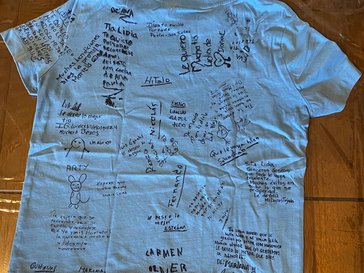
Lidia emphasized the importance of being thoughtful when it came to working and training local staff, stating, “If I could support their efforts, listen to their questions, or just let them vent on how the day went, I was sending the message that I was there for them; I was a resource they could use. In this type of work, I believe everything is important, even your demeanor. A worker may forget the words you said, or the content read on a specific topic, but they will not forget the way you made them feel.”
It's no surprise that Lidia’s positive relationships with the staff greatly impacted their work. Mutual trust made it easier to adapt or try new approaches when working with at-risk children, as well as when conducting related training.
Like the RPCVs who inspired her to serve years ago, Lidia often shares stories of life abroad. She’s hopeful that in doing so, others will feel inspired to apply for a once-in-lifetime experience to exchange knowledge and build intercultural friendships. “Living and volunteering in Peru taught me so much and gave me a sense of purpose for sure.”