An official website of the United States government




Two women who taught each other something in Albania
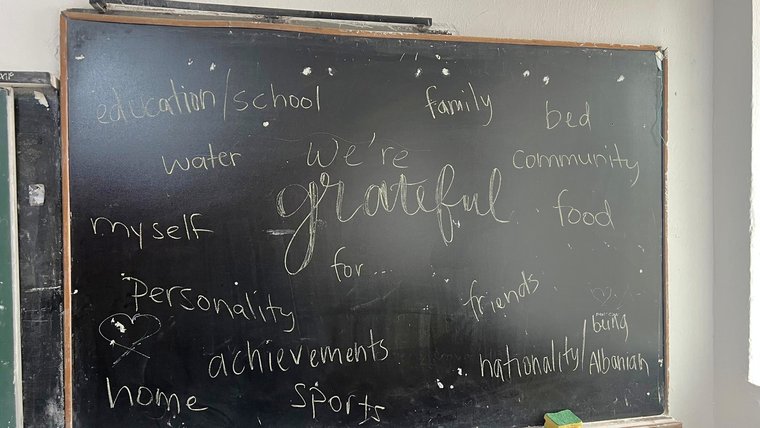
“It’s too late for you to go out now,” my host mom said, gently but firmly. “I wouldn’t be a good nënë (mother) if I let you. What if you get lost?”
Get lost, at my small site? I stood in the doorway, frustration rising. I just wanted to take a short walk to clear my head and explore my new site. I was 21 years old and not used to being told what to do. I felt like I was once again a teenager with a curfew, rules, and a helicopter mom to monitor my every move. I missed being able to walk out the door without explaining myself.
A new community and host mom
I had just arrived at my permanent Peace Corps site in southeast Albania. After three months of pre-service training with fellow Volunteers and living with a temporary host family, I was now in a new town, living with a new host mom, and far from my friends. For the next six months, I was going to be living under someone else’s roof and obeying someone else’s rules.
As I struggled with this new situation, I promised myself that in six months I would be able to move out and live on my own. I told my host mom exactly that when we signed the six-month host family contract; I had closed my mind off to any other possibility.
But over time, things shifted.
Becoming part of the community
In a small town where a young, single woman living alone might raise eyebrows or be unsafe, living with a family helped me integrate more easily. People in the community saw me not as a stranger, but as an extension of someone they already knew and trusted.
I also got immersed in Albanian life in ways I hadn’t expected. From my host mother, I learned to cook traditional dishes like byrek and baklava, mastered the intricate steps of folk dances native to the region like Vallja e Rrrajces, and improved my language skills by speaking Albanian every day at home.
One day, I met my host mom’s mother, the family matriarch.
She was a tiny woman, dressed completely in black, with a headscarf and a voice that didn’t stop. She’d launch into these long monologues in a dialect I could barely understand. I tried to respond, but she was so hard of hearing that she couldn’t make out anything I said. But as we sat together on the porch, admiring the garden with its softball-sized tomatoes, sharing olives and bread—my host grandmother’s preferred meal—something clicked.
I realized I wasn’t just staying in someone’s house. I was part of a family.
Two kinds of identity
I began to reflect on what it meant to be living in a different culture where identity is less about individual desires and preferences and more about a web of family and community relationships.
I love that in the U.S. we’re encouraged to define our own identities and to be independent. But I began to see the beauty in being defined by connections to others. There’s a different kind of freedom in knowing that there are people who care about you and that you always have someone to rely on.
The transformation wasn’t one-sided. Over time, my host mom began to relax, giving me more autonomy and trusting that I could take care of myself. She no longer worried every time I left the house or stayed out late.
Becoming a team
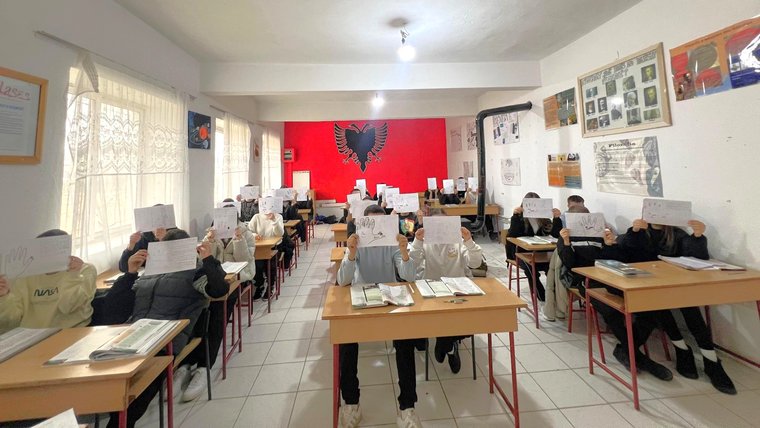
As my host mom’s trust grew, so did our partnership. As fellow teachers at the same school, we began to learn from each other. I helped her see that being a strong authority figure with students wasn’t the only way to manage a classroom.
One day, the washing machine broke at home and the floor got completely flooded. I crouched on the floor with my tablet, trying to figure out how to repair it. My host mom sat beside me, as we watched video tutorials online and disassembled the machine. There were parts everywhere. We ended up fixing the machine ourselves, step by step, without having to call a repair person. It was a small but powerful moment—two women, side by side, solving a problem together.
Collaborating at work
That moment marked another shift. From that point on, my host mom wasn’t just my caretaker; she became a collaborator. She helped me organize school events like WriteOn! (a national creative writing contest), Model EU, and GLOW Code (a coding camp for young women). She also offered advice on how to approach local leaders and even opened her home to other Peace Corps Volunteers, treating them like family.
We were a team at home and at work.
When the mandatory 6-month homestay ended, I didn’t move out. I chose to stay with my host mom for the full two years of service.
A true exchange
When I look back on my service, I won’t think about my early frustrations with my host mom. I will remember the times we teamed up and figured out problems together.
At those times, we weren’t host and guest. We were equals—two women, each with something to teach the other.