An official website of the United States government


Ties that bind: Service with Peace Corps Ukraine
Water, beets, meat, potatoes, bay leaves, carrots, onions, and dill. These are the ingredients that—when thrown together—go beyond a simple bowl of borshch; they symbolize culture, identity, freedom, individualism, community, and Ukraine.
My relationship with Ukraine began in the fall of 2005. Upon arriving at Kyiv Borispol with 115 other Volunteers, I wheeled my two suitcases over to the charter bus before grabbing a window seat, eager to take in the first views of my new home. I was young and hadn’t put much effort into using the CD-ROMs we were sent earlier to start learning the language. After a few days of training, I earned the nickname, “Amerikiki,” from my fellow Trainees, because I struggled pronouncing the phrase, “Ya Amerikanka” (I am an American).
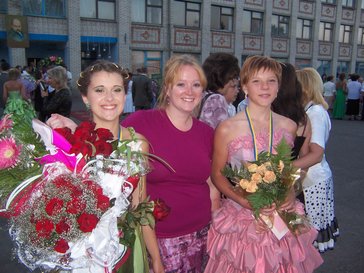
But two years living in a Ukrainian village, teaching English to students ages 11-17, hosting English club after school, and playing soccer and “durak” (a card game) with the fifth graders each week changed that; I was no longer just Amerikanka. My Ukrainian friends and family told me, “Sharece, ti nasha. Ti Ukrainka” (Sharece, you are ours. You’re Ukrainian.)
My host family, the Kytsiuks, are largely responsible for threading the needle of my now lifelong ties with Ukraine. From the first holiday meal when I ate only pickles and cheese to my time in the fields with them harvesting potatoes and planting an apple tree that still thrives in front of their house, my host family kept me grounded in Ukraine, weaving my story of culture and identity like a Ukrainian vyshyvanka, the delicately embroidered shirts that make up traditional outfits.
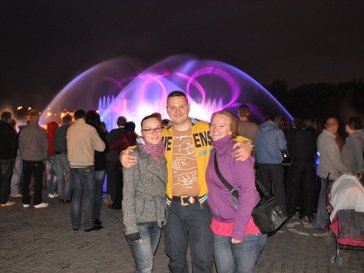
Even when I was invited back to Ukraine as a Response Volunteer, I visited my host family for the big holidays and shared stories about my students at the university in western Ukraine who taught me life lessons about their love for their country—a patriotism that continues to this day as many of them respond to the war in their homeland.
I returned to service again in late 2022, when I submitted my interest to participate in the Virtual Service Pilot (VSP) with Peace Corps Ukraine. My first engagement was a collaboration with a secondary school to raise students’ awareness against misinformation in the news. Each week, I would meet with my counterpart, Svitlana, an inspiring high school English teacher who was passionate about her students’ personal learning and growth during the war. Together, we encouraged students to engage in lively discussions about the difference between fact and opinion and the ethics of photo editing for the media. Even the one student who wasn’t particularly interested in the news informed us that he enjoyed having a chance to practice his English every week through our group lessons.
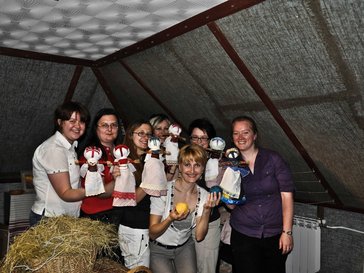
Last summer, I requested a second VSP engagement. This time I was assigned to work with an organization in Kyiv that supports out-of-school educational activities for Ukrainian youth across the country. Each week, I would gather with my counterparts, Iryna and Dmytro, to plan lessons to help high school students across Ukraine develop leadership skills. For one meeting, I invited my niece Maddie, a high school senior, to join us. Maddie spent the hour talking about real life: class schedules, college admissions, entrance exams, hobbies, and activities with friends. Not once did she hear about the war or how the bombs or power outages impacted her peers in Ukraine. It was a lesson in Ukrainian grit and resilience.
I recognize the privilege I’ve experienced to advance my personal learning and growth through my four service experiences. While Ukraine has been at war, Virtual Service connected me to the country and people I love in a new capacity, allowing me to contribute to the Peace Corps mission of promoting world peace and friendship.
I’m in awe of the various opportunities the VSP provides to U.S. citizens. It’s a chance to collaborate with communities around the globe, learn about new cultures, and grow our understanding of intercultural communication through technology. While I dream of a day that I can return to Ukraine to serve and have a warm cup of borshch with my host family or former counterparts, I am humbled by the opportunity to support Peace Corps’ mission connecting other RPCVs and global servants to communities abroad through the VSP.