An official website of the United States government




Passing on knowledge in Guatemala: a Peace Corps legacy
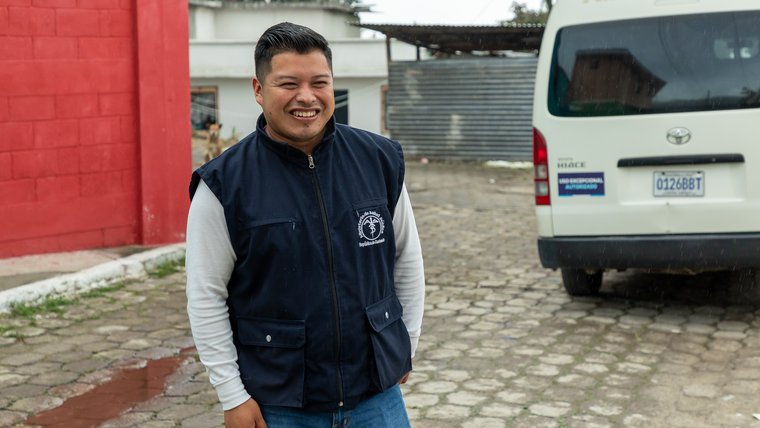
Miguel, a professional nurse, works as the coordinator of a municipal health district covering the entire municipality of San José Chacayá, Guatemala.
In 2015, he worked with a Peace Corps Volunteer who was assigned to the municipality. The Volunteer arranged for Miguel to attend counterpart training in other areas of the country, so that he could learn how other health districts and nurses addressed the health issues facing the country.
Miguel says, “[The Volunteer] gave me the opportunity to leave the municipality, to get to know other places, where they gave us training in a behavioral change approach.” Through the counterpart training, Miguel says he also learned about project management and about using different methodologies to approach his work.
“Through the Peace Corps,” he says, “they have begun to give us a few more tools, to help us reach a space, like health, knowing our people, but [adding] another more participatory method.”
It has been ten years since his training though the Peace Corps, and Miguel continues to implement his new knowledge and skills in his work and also passes on what he’s learned to other nurses and health workers, so that “they can also learn from what I know, and that they can apply it in the communities where they also work.”
This, in essence, is the legacy of the Peace Corps—building knowledge and skills and passing them on.