An official website of the United States government




Meeting students where they’re at in North Macedonia
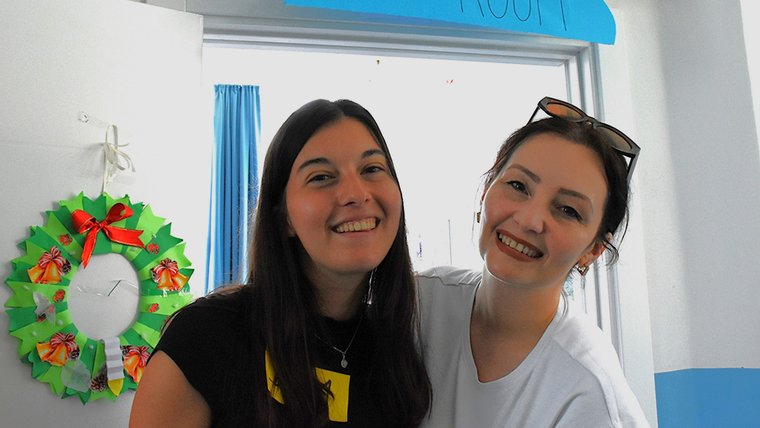
Prior to the Peace Corps, I worked across Virginia as an outdoor educator and adventure course facilitator, creating accessible programming for students of all ages and abilities, including individuals with special needs. Additionally, I spent many summers working as an aid at a camp for adults and children with physical and mental disabilities, adapting classic camp activities to fit all ability levels.
I joined the Peace Corps because I wanted to expand my impact and immerse myself in a new culture. When was invited to serve in North Macedonia, I was excited and curious. I didn’t know much about the country, but I was ready to learn. I was intrigued by its ethnic and linguistic diversity.
A strong start
The first three months of pre-service training were filled with Macedonian and Albanian language classes, cultural lessons, long naps after class, and living with a host family. My host family helped me feel connected from the start. We shared meals, stories, and laughs. Those relationships are still a big part of my life here and I would not have felt confident in the Albanian language without my first host family’s support.
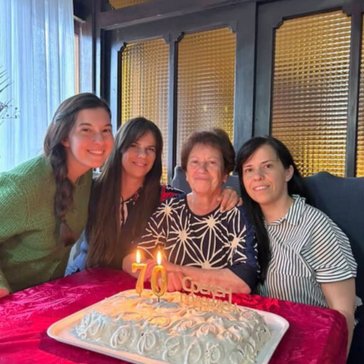
My second host family
I now live in a small lakeside city in the southwest part of the country and teach English to students in grades 1 through 5. Living here has given me a strong sense of cultural connection. I stay in a separate apartment within a Macedonian host family compound, but I’m fully included in daily life—joining family meals, attending slavas (an annual ceremony in the Orthodox Serbian tradition to venerate a family’s patron saint), and celebrating holidays together. They’ve truly become my second family, even giving me the nickname “Samcha,” which means “little Sam.” Whether it’s rides to school or spontaneous trips to nearby villages, they’ve welcomed me with open arms and supported me in ways that have made North Macedonia feel like home.
Creating supportive learning environments
I teach grades 1 through 5, and cofacilitate after-school clubs including an English club through my school and a youth club and an art class through a local NGO. The work is very different from my work in Virginia, but at its core, it’s still about connection—about showing up consistently and creating a space where kids feel supported and curious.
Special education students
As a secondary project, I work alongside Albanian and Macedonian special education teachers and their students in small group classes and one-on-one sessions. These moments have been formative for me. Although I wasn’t trained specifically to teach English to special education students, I leaned on what I knew: how to meet students where they are, how to adjust the pace, and how to turn lessons into hands-on, engaging experiences.
“Night to Shine” event
As part of my work on this project, I had the opportunity to participate in the regional “Night to Shine” event, a prom night experience designed for individuals who may not have had the chance to attend such celebrations in the past. The evening was full of traditional dances, joyful spins, and efforts to save balloons from plates of food being passed around. Although Night to Shine is a global event that has been on my radar for years, North Macedonia was the first place where I finally had both the time and opportunity to take part. Experiencing it in a foreign country, surrounded by new cultures and traditions, made the night feel especially welcoming and comforting, a shared celebration of joy and belonging that transcends borders.
Making learning fun for everyone
Working with students who needed extra support helped me develop a deeper sensitivity to different learning styles. It pushed me to create English lessons that were more flexible, interactive, and inclusive. I began adapting activities that worked in one-on-one sessions — like matching games, movement-based tasks, or visual aids—and modifying them to suit a whole class. Surprisingly, those strategies didn’t just support struggling students; they made learning more accessible and fun for everyone. In introducing these changes I made sure to work closely with local teachers to ensure they are sustainable and culturally respectful.
A cohort of Volunteers who arrived in September 2025 has reinvigorated the Special Education program in North Macedonia—a program that hasn’t been operational since before COVID. Due to my experience in special education here I’ve chosen to help train this new cohort alongside another Volunteer and facilitate sessions welcoming these new Special Education Volunteers to teaching in North Macedonia.
A formative experience
Serving in the Peace Corps has supported my desire to explore the world, learn new languages, and experience new cultures. At the same time, working in schools and community spaces has deepened my passion for youth development and inclusion. I've had the opportunity to support students of all abilities, which has shown me the importance of creating environments where every young person feels seen and supported. These experiences have inspired me to pursue graduate studies in special education or nonprofit leadership, so I can continue advocating for equitable opportunities and inclusive communities—both at home and abroad.
For anyone thinking about the Peace Corps, I’d say: Stay curious, stay humble, and don’t underestimate the power of relationships. You don’t need to have all the answers—what you need is to listen, to adapt, and to show your students that they matter. The rest follows from there.