An official website of the United States government


Mahe is the lesson
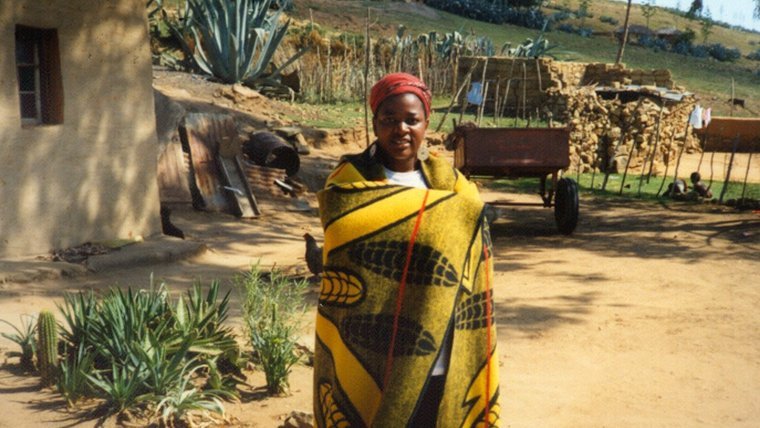
Thato is a name given to the resilient.
I was given the name by the U.S. Peace Corps training staff because they noticed these traits in me—traits that proved useful on a grueling two-day journey from Lesotho’s capital city of Maseru to Sehlabathebe in Qacha's Nek district. The journey of 190 miles was made in the open bed of a truck, bouncing from side to side along dirt roads, my luggage and I subject to the whims of the terrain. By the time we arrived, only two kilometers from the South African border, I already knew that my time here would be filled with lessons far beyond teaching English.
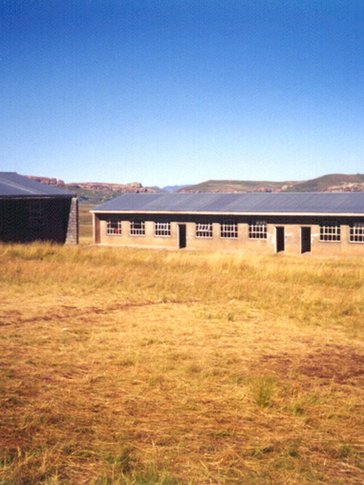
It was 1994, and as part of my in-service training, I stayed with a family. Their responsibility was to ensure I learned how to manage a traditional Sesotho household—how to cook local foods, socialize properly, and take care of my health and hygiene in this new environment. I had my own residence, a duplex to the right of the home, and I was to teach English at Mavuka Secondary School, just across the road. Water for cooking and washing was available there, and the village shop was supposedly “just there, on the left.” In my early days, I quickly learned that “just there” was a flexible concept in Sesotho culture—it could mean a mile away or five. It was all about perspective.
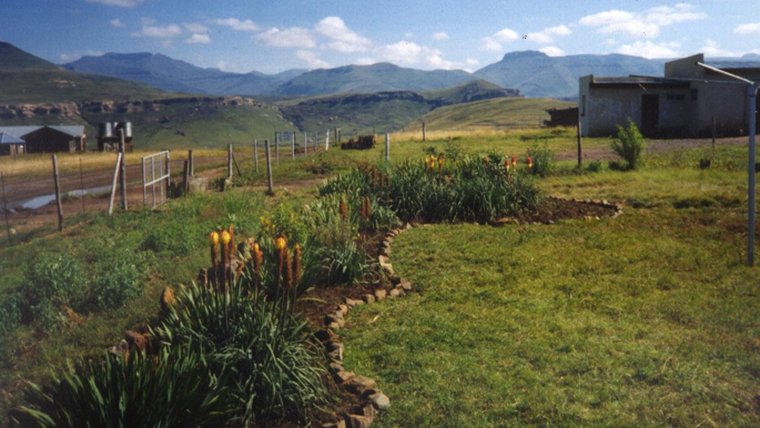
The day I arrived, after settling into my home and meeting my next-door neighbor, a fellow teacher, I unpacked my one box of belongings and sat outside, making a mental note of the provisions I needed to last me a few days: milk, bread, and eggs. Simple enough. No need to write it down. I slung my empty backpack over my shoulders in case the shop didn’t provide bags and set off for the shop with a wad of cash, feeling quite prepared.
The walk was pleasant. The sun was warm, the air mild. Villagers waved and greeted me in Sesotho, and I happily responded with Khotso (Peace), Lumela (Greetings), and Ke teng (I’m well). By the time I reached the shop, which turned out to be about a mile away, I felt surprisingly at home. The store was simple—an interior counter with a woman behind it who fetched items for customers from shelves along the back wall. A small crowd was gathered outside, people and even a few horses. I was aware of curious eyes peeking in or stepping inside to observe me, the newcomer.
Feeling confident, I greeted the shopkeeper. “Lumela, Me,” I said. She returned my greeting, and it was my turn to order.
“Ke kopa lebese, bohobe, le…” My mind went blank. I stared at the shelf where the eggs were clearly visible. No problem, I thought. I’ll just point.
I smiled and said, “Eggs.”
The shopkeeper looked at me blankly. “Ha ke utloe” (I don’t understand).
I was taken aback. The eggs were right there. I pointed again. “Eggs.”
Again, she shook her head. “Ha ke utloe.”
This was absurd! I had an English-Sesotho dictionary, but of course, I had left it at home. The thato in me refused to give up. I gestured more clearly, repeated my words louder, but the shopkeeper held her ground. No eggs unless I said it in Sesotho.
Defeated, I walked home, covering another mile just to retrieve my dictionary. Stubbornness would not allow me to settle for just milk and bread. I had to do this properly. I found the word I needed: mahe. With renewed determination, I walked back to the shop.
This time, as I entered, it felt like the entire village had gathered to watch. The same people and horses were there. Some even followed me inside, aware of my previous struggle. I greeted the shopkeeper again and took a deep breath.
“Ke kopa mahe.”
The shopkeeper smiled. “Kea leboha,” she said, setting a dozen eggs on the counter. Then she added, “Ausi Thato, if you’re going to live here, you must learn to speak the language. This is not about the eggs; it’s about your safety. Your health. Your ability to communicate with the children you came here to teach. You will learn Sesotho.”
As I walked home with my eggs, I reflected on what had happened. The lesson was bigger than a word—it was about immersion, respect, and belonging. I had lived overseas before, but I had always expected some level of accommodation for my English-speaking self. This time, that assumption would not hold.
Language is culture. It’s a way of seeing the world, of forming relationships, of building trust. It’s not just about convenience—it’s about understanding and connecting with others. If I refused to learn Sesotho, I would be limiting my experience, keeping myself isolated rather than embracing the community that had welcomed me.
From that day on, I put more effort into learning the language, appreciating that fluency wasn’t just practical—it was transformative. I learned to see the world differently through Sesotho idioms, understanding that a single word in another language could carry the weight of an entire page of meaning in English.
Most importantly, I would never forget the word for eggs. Mahe. Mahe was the lesson. A simple egg, but a profound turning point in my Peace Corps journey.
Margaret's story was selected as a winning entry in "Tales of Transformation," a Peace Corps Week 2025 storytelling contest that showcases the changes individuals and communities can experience when the power of human connection is shared worldwide.