An official website of the United States government



¿Jugaste al carnaval? (Have you played carnival?)

February 2024 was my first time celebrating carnival in Ecuador or, for that matter, celebrating carnival anywhere that observes this unique, colorful, and chaotic festival.
Carnival is a vibrant celebration originating from a period of indulgence in the Christian calendar, 40 days before the liturgical season of Lent. It’s similar to the Mardi Gras celebration in western countries, falling sometime between late February and early March.
Evolving from these European roots, carnival manifests in distinct ways across the Americas, influenced by a variety of indigenous and African customs. The event is marked by bright floats, elaborate dancing, decked-out street parties, elaborate costumes, and passionate music. What makes carnival unique in Ecuador is the playful tradition of throwing water balloons and spraying espuma (a strange foam that combines the consistency of shaving cream with the stretchiness of silly string) at random strangers with no rhyme or reason. Heaping batches of mote pata (a hominy-based dish similar to but less spicy than my back-home favorite, New Mexican posole) are made for the masses and consumed with ice cold beer or warm, flowery horchata.
Four days of exciting chaos
During a four-day weekend of celebrations in southern Ecuador, a few other Volunteers and I experienced the way Ecuadorians roughhouse like children while “playing carnival.” “Playing carnival” is when everyone, even adults, get to participate in the water-soaking, clothes-destroying, espuma-flying chaos of the season. Any communal gathering during this short but special season will surely end in these messy games.
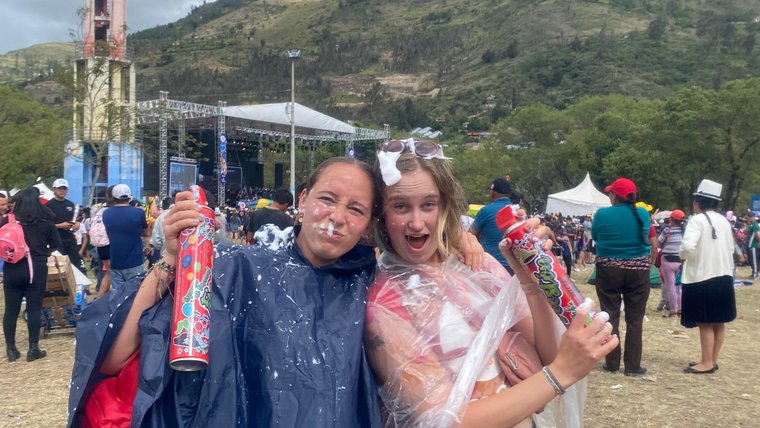
Like most festivities around the country, carnival is most authentic, elaborate, and exciting in small towns. Leaving behind the orderliness of the city, we decided to take advantage of this chance to experience a small-town version of carnival. After an hour-long bus ride, we hopped off at Paute and walked onto a crowded grassy field. We were quickly attacked with water guns, bottles of espuma, and handfuls of colored flour. As blonde-haired, blue-eyed Americans in a city not often visited by tourists, we became easy targets for shenanigans involving splashing and throwing. Complete strangers quickly became “enemies” as they pointed their various “weapons” in the direction of the clearly out-of-place foreigners (or gringas, as we’re called here). We threw on our water ponchos and strapped on goggles to protect ourselves and fought back with our own bottles of espuma. It was a hilariously fun time that gave me flashback memories of the competitive water balloon games and creative shaving cream battles of my childhood. It may not be the best option on a cool February day, but in most cases the rural sierran Ecuadorian plains offer the perfect warm climate for the juegos de carnaval!
A special meal during carnival
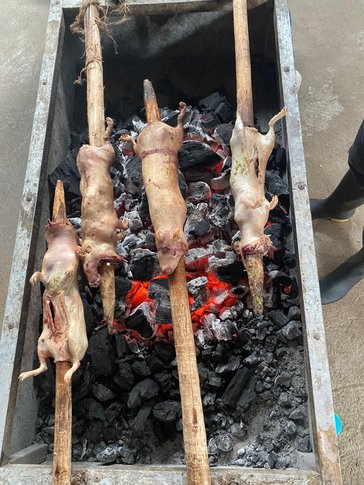
One special meal I loved being part of during carnival was preparing the special Ecuadorian delicacy of cuy (guinea pig). I accompanied my host parents on a drive out to a nearby campo town, where we joined grandparents, siblings, nieces and nephews at a grandparent’s home. The place was stocked with cows, chickens, guinea pigs, tomato trees, and an outdoor grilling space. After being removed from crates in the backyard, guinea pigs were roasted on the grill. Six of us adults watched the delicate white bodies slowly turn a toasty golden-brown while rotating on metal skewers over burning coals while the kiddos, their mom, and aunt splashed buckets of water on unlucky passers-by. We also prepped pork and hominy mote pata (hominy stew), which had to simmer for a few hours. Finally, we feasted on cuy, asado, seasoned potatoes, dulce de higo y durazno (sweetened fig and peach), and LOTS of mote. The feast was followed by more carnival fun— buckets, bottles, and balloons filled with chilly hose water. Feliz carnaval, indeed!
Recommendation for future Carnivals
If you ever find yourself on this side of the Americas for the festive carnival celebrations, make sure to bring a waterproof raincoat, protective goggles, a full bottle of espuma, and an attitude of fun to jump right into this silly and exciting cultural tradition!