An official website of the United States government




Into the jungle: An English camp adventure in Sri Lanka
A legacy of English camps
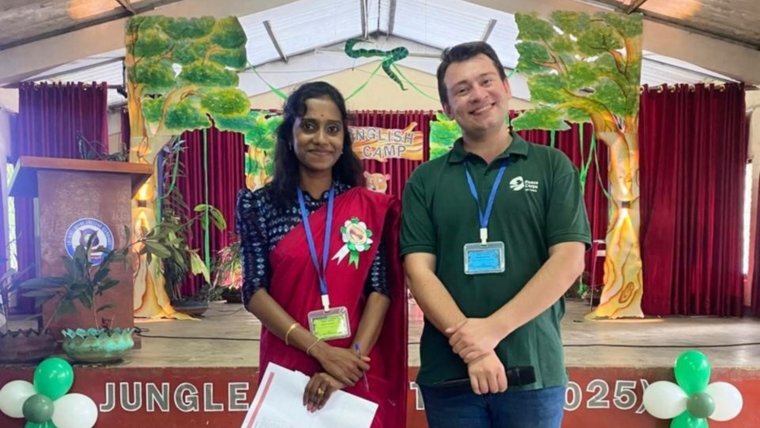
English camps in Sri Lanka have a proud history. First introduced by a Peace Corps Volunteer in 1996, they quickly became a cherished part of extracurricular English education. These camps gave students an opportunity to practice their language skills in a fun, relaxed setting. Since Peace Corps’ return to Sri Lanka, the tradition has continued. When my newly appointed counterpart, Sathya, approached me with the idea to host one after our mid-service training in late March, I was beyond excited. What I didn’t anticipate was how much this camp would bring our entire school community together.
Planting the seed: A jungle-themed event
With over 500 students at our secondary school and only two teachers in the English department, we decided to focus our energy on Grade 7. Our theme: the jungle. It was vibrant, playful, and full of creative potential. Almost instantly, we began brainstorming games, designing decorations, and coming up with wild puns. What started as a simple plan soon grew into something much larger.
All hands on deck
Starting in late April, teachers from across all subjects, from science and history to religion and art, volunteered their time and talents. Despite their initial nervousness about leading activities in English, they threw themselves into the work with dedication and enthusiasm. Teachers stayed after school to help cut and paint decorations, rehearse game instructions, and troubleshoot logistics. I watched in awe as colleagues who rarely used English in the classroom confidently prepared to guide students through language-rich activities. Their willingness to step outside their comfort zones was inspiring.
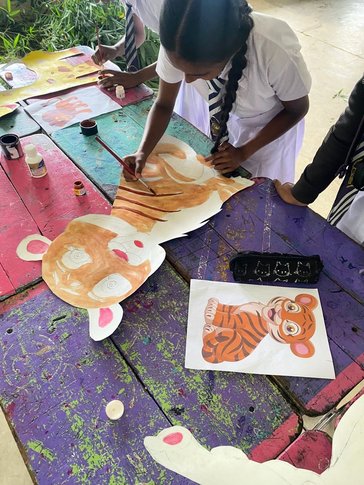
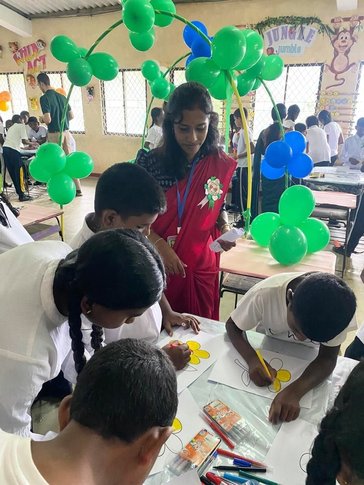
From planning to setup, the camp became a full community effort. Our school transformed: vines were hung from ceilings, paper leaves covered the walls, and handmade jungle creatures peeked out from every corner.
A wild day of learning and laughter
Camp day arrived on June 12. The excitement was palpable. Over 60 grade 7 students embarked on a five-station English “safari”:
- Jungle dash – a fast-paced team game where students raced to answer English questions and complete sentence-based challenges
- Jungle jumble – a vocabulary puzzle station where students unscrambled English words related to animals, weather, and the jungle
- Wild act – a dramatic role play station where students acted out jungle-themed dialogues using props and costumes
- Sentence safari – students pieced together scrambled words to form grammatically correct sentences, while practicing structure and creativity
- Jungle blossom – an arts-and-crafts station where students designed flowers and wrote short descriptions about them in English
Each activity targeted a different language skill—speaking, listening, reading, or writing—but all were united by the same goal of joyful, confident communication. As students rotated through the stations, guided by both teachers and fellow Peace Corps Volunteers from my province, it became clear that this was more than just a camp, it was a celebration. At the end of the day, we came together as one to sing “The Lion Sleeps Tonight.” Watching teachers and students alike sing, laugh, and sway to the music was the perfect ending to our adventure.
What we gained
Of course, our students benefited. They practiced English in ways that felt exciting, not intimidating. They worked together, used their voices, and felt proud of what they accomplished. But what I gained from this experience was just as meaningful. I saw what’s possible when people come together for a common goal. I saw teachers rediscover their creativity, step into leadership roles, and grow more confident in their own English skills. I saw my counterpart shine with pride. I saw the spirit of community in action.
More than just a camp
The success of our jungle-themed camp wasn’t just about English, it was about teamwork, inclusion, and shared joy. It reminded me of what Peace Corps is all about—building relationships, fostering growth, and learning from one another. I came to Sri Lanka to support English education. But during those weeks of planning, decorating, and laughing beside my Sri Lankan colleagues, I learned far more than I taught. I learned how deeply people care, how willing they are to try something new, and how powerful it is to feel supported by a community that treats you as one of their own. This wasn’t just a day in the jungle. It was a day that reminded me why I’m here.