An official website of the United States government



Language as a cultural journey
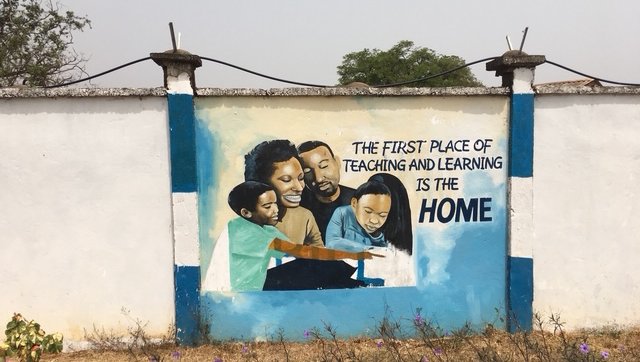
“If you don’t know where you are going, know where you come from.” (If you no no usai you dey go, yu foh no usai yu komoht.)
When the Peace Corps assigned me to Sierra Leone as an agricultural extension agent in 1984, I felt embarrassed that I didn’t know where to find the country on a map. Like most Volunteers, I underestimated the transformative journey ahead. And it rested on speaking a language I had never heard or heard of—Krio.
During my initial training, my instructors emphasized that despite Sierra Leone's aspiration for universal English fluency, most of the country’s farmers had not learned English. While the rural farmers I lived among often spoke five, and sometimes even six different indigenous African languages to each other, the lingua franca in this former British colony was Krio.
Before long, I became immersed in new and subtle understandings of both the modern and precolonial worlds. Even though 90% of Krio’s vocabulary is derived from English with Portuguese influences, every word and phrase is impacted by the sound and meaning systems of indigenous African languages. Like all Pidgin and Creole languages, its accessible musicality became a way for me to perceive the nature of language itself. I more thoroughly appreciated how it has always been a continuous, fluid, and evolving means of communication among different people, primarily for commerce.
Everyday phrases like, “Ow di bodi?” (How is the body? Or how are you?) to which I would respond, “Ay dey trai” (I'm trying) or “Ay dey fodom and grap” (I fall and stand back up), as well as “Empty bag no dey tenap” (An empty bag doesn't stand or I'm hungry) became welcoming refrains into the world of those I served. One light-hearted expression came from a village farmer who, upon watching me frustratingly try to strike a match to a soggy cardboard matchbox, uttered, "Nar one-tem krach" (It’s a one-time scratch), then laughed while he explained this could also mean “a one-night fling.” Another risqué saying was, "Yu go be mi kawna kawna?" referring to a secret love (Will you meet me at the corner?) These playful conversations added both humor and intimacy to our lives together. They also demonstrated how Krio was in fact, sophisticated and uniquely so, contradicting the linguistic bias of most Americans, myself included, who had easily internalized the longstanding prejudice toward Pidgin, or so-called “broken” English.
Although Peace Corps trainers taught Krio and its history, I soon recognized its broader implications. Africans who were bought and sold from Sierra Leone––where enslavers paid premiums for their rice-growing expertise––arrived in the Americas speaking various tribal languages. This confluence of dialects and idioms would, of course, necessitate a new common language with Krio serving as a shared ancestor. The rich tapestry of culture, history, and resilience, often woven into every word and phrase, continues to serve as a powerful connection between Sierra Leone and the African diaspora.
Upon returning home in the United States, I visited the Gullah community in South Carolina, which is populated by direct descendants of formerly enslaved West Africans. I experienced the remarkable cultural similarities to the oral traditions and language of Sierra Leone. The Gullahs’ tradition of "basket names” is distinct from their public “English names.” For example, a girl named Rachel might also have the basket name, Sungila, which means to save or to help. Dual naming is common in Sierra Leone too. “House names” highlight a specific characteristic of a child but can also carry deep ancestral significance, sometimes as a form of resistance and resilience. “Nar So?” (Is this so?) a Sierra Leonean might ask. “Duh so?” (Is this so?) a Gullah might ask.
My time in the Peace Corps coincided with the “before before” of Sierra Leone —before the civil war and Ebola—so my recollections of Krio conversations are also of proverbs that still serve as moral lessons and cautionary tales.
Regarding frustrations about the country’s politicians at that time, farmers would recite: “Wherever you tie the cow, there it will eat” or "A promise is a debt," always emphasizing accountability. Referencing rebellious children, parents would remind each other, “No bad bush no dey for trow away bad pikin” (There is no bad forest to throw away a bad child). Emphasizing collective efforts to support one another rather than place blame, farmers would recite, “Heart nohto bon” (The heart is not a bone).
Learning Krio didn't end with my Peace Corps service. It continues to inspire me and bring new connections in ways I could never have imagined. Whenever I meet anyone from West Africa, the Caribbean, Latin America, or the United States who speaks a dialect of English creole or pidgin, I consider the proverb, “If you think you are a star, look up at the night sky.”
Its relevance is always right at my door.