An official website of the United States government



How to self-assess your language skills before applying to the Peace Corps
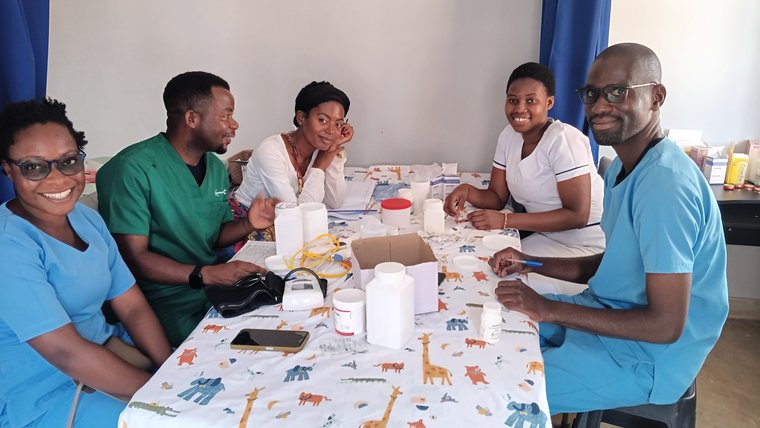
Speaking the local language is a core part of how Peace Corps Volunteers build trust, collaborate with communities, and make a lasting impact.
If you’re thinking about applying for a position that has a language requirement, evaluate your current language proficiency. A thoughtful self-assessment can help you set realistic expectations and decide what opportunity best fits your skillset.
Most opportunities do NOT require proficiency in a language other than English. For those that do require a second language, below are practical, yet specific ways to gauge where you stand, so you can confidently apply.
Why an honest self-assessment matters
The Peace Corps places Volunteers in immersive settings. Even if you’ve taken years of language classes, communicating effectively in a real-world environment can feel different. A strong self-assessment lets you:
- Identify which programs match your current abilities.
- Determine whether you may need to refresh or strengthen your skills before applying.
- Feel confident heading into step 5 of the application process: the interview.
- Understand how your skills align with Peace Corps language expectations.
Step 1: Reflect on your practical communication skills
Instead of thinking only about grammar rules or vocabulary lists, focus on everyday communication. Are you able to introduce yourself, explain your background, and talk about interests? How well can you understand native speakers in conversations, videos, or podcasts at a natural speed? Do you know how to ask for clarification or navigate misunderstandings? These questions help you approximate your level in a real-life context.
“Not being able to speak the Chichewa language confidently significantly hurt my community’s initial perception of me; they assumed I was prideful because I spoke English ... With time, my proficiency in Chichewa grew thanks to the tutoring provided by my counterparts.” Anissa F., Health Volunteer, Malawi.
Step 2: Test yourself with free online tools
Several free assessments can help you estimate your proficiency level. Look for tools aligned with recognized frameworks, such as the CEFR (A1–C2) or ACTFL (Novice–Superior). While these tests don’t replace the evaluation completed at the end of pre-service training, they offer a helpful benchmark. You can also search online for “free CEFR language test,” “online Spanish proficiency quiz,” or “French listening comprehension practice.”
Step 3: Practice with authentic materials
Language comprehension is crucial when living in a different country. To gauge your ability to understand native speakers, try listening to radio segments, podcasts, YouTube videos, short films or children shows. Evaluate how much you understand without subtitles. If you can follow the main idea, you may be closer to an intermediate level than you think.
It can also be helpful to look online to see if you can understand street signs, simple articles, or social media posts in the language.
Step 4: Record yourself and get feedback from native speakers
The most effective self-assessment tool? A native speaker of course! Choose a simple topic—such as your hometown, work experience, or your motivations for service— and record yourself speaking for one to two minutes. Listen and evaluate your own clarity, pacing, and confidence.
Next, find someone in your community who is native or fluent in the language to weigh in on your pronunciation, vocabulary accuracy, pace, and cultural appropriateness of phrases. Even a single 15-minute conversation can reveal a lot about your strengths and areas to improve.
Step 5: Compare your skills to Peace Corps’ requirements
Service opportunities will list any required language competencies.
For opportunities that require existing Spanish language skills, candidates must meet one of the criteria below:
- Completed 4 years of high school Spanish coursework in the past 8 years
- Completed college-level elementary II Spanish semester within the past 6 years
- Score between 50-62 on the Spanish College Level Examination Program (CLEP) exam in the past 6 years
- Score Novice-High or Intermediate-Low on official American Council on the Teaching of Foreign Languages (ACTFL) Oral Proficiency Interview (OPI) in Spanish within the past 6 years
For opportunities that require existing French language skills, candidates must meet one of the criteria below:
- Completed 4 years of high school French coursework within the past 8 years
- Completed minimum 2 semesters/3 quarters of French college-level coursework within the past 6 years
- Score of 4 or better on the high school French Advanced Placement (AP) Exam OR score of 5 or better the high school French International Baccalaureate (IB) Assessment within the past 8 years
- Attained a score of 50 or greater on the French College Level Examination Program CLEP exam or a score of Novice-High or greater on official American Council on the Teaching of Foreign Languages (ACTFL OPI) within the past 6 years
- A self-reported native or bilingual speaker of French
There may also be some Response service opportunities that require intermediate French. Read the position descriptions carefully for more information on how to meet the requirements.
Self-assessing your language skills is an empowering first step toward Peace Corps service. By taking an honest look at your abilities and using the tools above, you’ll be better equipped to choose the right program, prepare for interviews, and succeed in your host community.
Remember, once you arrive in country, you’ll receive training from skilled language and cross-culture facilitators. Your skills with further develop with daily use at your site, too.