An official website of the United States government


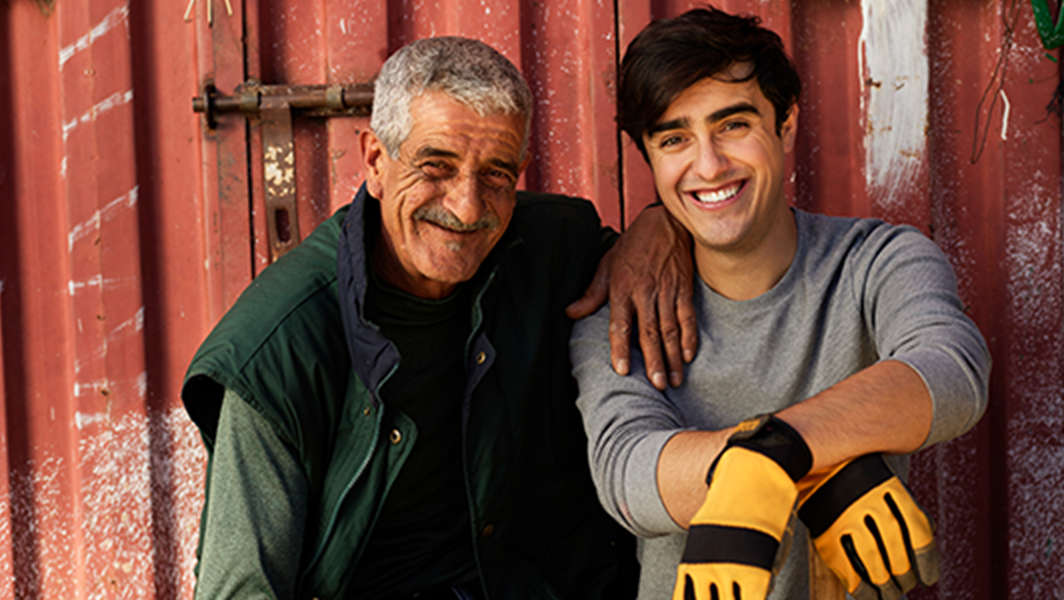
Georgia provides support to displaced Ukrainians
Displaced Ukrainians find a second home in Georgia
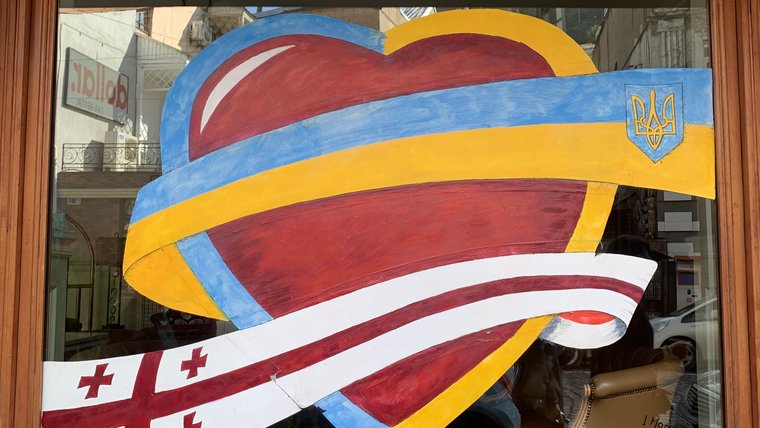
“Georgia reminds me of Ukraine not only because of its people, but also because of its spirit. There’s a similar respect for traditions, a deep love for the land, and a pride in their culture. The family gatherings with heartfelt toasts and songs all bring back memories of my homeland. Georgia has become my second home—a place where I feel warmth, comfort, and endless hospitality,“ said Diana P., one of thousands of displaced Ukrainians residing in Georgia today. Like other displaced Ukrainians, Diana faces delays returning to Ukraine as the war with Russia drags on.
Georgia’s Ministry of Education, Science, and Youth (MoESY) wanted to support displaced Ukrainians as they create a healthy and secure home away from home. To start, MoESY (a relatively new office) expanded its psychosocial services to include trauma-informed care.
VSP Participants collaborate with Georgian social services
Peace Corps Georgia felt the capacity-strengthening project was a good fit for Peace Corps’ Virtual Service Pilot. The Peace Corps offers short-term, virtual engagements to local organizations that request more advanced or specialized skills, are interested in gaining Peace Corps experience before requesting an in-person Volunteer, or are located in areas of the country where Volunteers are not placed.
At the start of 2023, MoESY staff collaborated with two Virtual Service Pilot Participants (VSPPs) who applied their extensive social work experience to adapt the existing psychosocial development needs assessment based on The National Academy of Medicine’s framework for emergency displacement. The assessment was then administered at the three Georgian schools that Ukrainian children attend.
Tamar S., MoESY’s social work supervisor, shared that the assessment results indicated Ukranian children desired a friendlier classroom atmosphere: “Some of the [children] mentioned instances of bullying, which became the basis for further research and intervention, both individually and at the class level. We focused on exploring the causes of bullying, supporting the children, strengthening their communication skills, developing a safety plan, and modeling ways to [respond]. Additionally, we worked with parents to educate them on how to support their children. Children also emphasized the importance of conducting informal activities, so recreational and educational events [were conducted], involving the collaborative participation of both Ukrainian and Georgian colleagues.”
In addition to providing direct psychosocial support to referred children, local social workers are expected to monitor each case by observing the child’s behavior changes and progress in school.
Displaced children receive more support
One participating social worker reflected on the impact of the virtual engagement: “We modified the student vulnerability indicators, which allows us to better identify the needs of students with traumatic experiences. Additionally, we discussed which questions should be asked and how to communicate with children who have experienced trauma. We explored the competencies, skills, and knowledge necessary for working with children who have experienced trauma and war. Case study discussions on coping after traumatic events helped us better understand the specifics of trauma-informed work.”
Classroom teachers revealed that the case studies also helped them understand emotional situations better. Teachers reported that they will continue the practice of starting class with fun, interactive exercises to encourage friendly exchanges among students—an idea from one of the VSPPs involved. After six months, the virtual engagement concluded, but MoESY’s professional development work was far from done.
Peace Corps Response Volunteer builds on VSP collaboration
That in-person Volunteer is Amber D., a Returned Peace Corps Volunteer (Ukraine 2018-2020) who answered the call to serve again as a Social Work Specialist Response Volunteer with MoESY in fall of 2023.
“As a clinical social worker with experience in school social work and crisis services, when I saw the opportunity to serve as a social worker with displaced Ukrainians in Georgia, it felt like the perfect opportunity to serve with [the] Peace Corps again. I feel like the transition into the local community was smooth,” stated Amber.
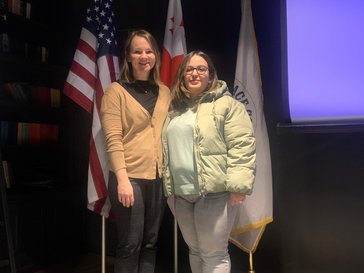
Amber’s 15-month-long assignment focused on strengthening the local psychosocial support and case management skills of 8-10 social workers. She also created a resource bank of free, evidence-based materials and curricula on depression, bullying, stress management, substance use, anxiety, critical thinking, trauma, and supervision.
“I partnered with school social workers, a Ukrainian psychologist, and English teachers to facilitate activities that increased positive coping skills, stress management, tolerance, child and human rights, and future planning. I conducted several trainings for school social workers on childhood traumatic stress and combating professional burnout and stress management.”
The social workers involved have already seen noticeable changes in the children, specifically in their emotional well-being, social interactions, and engagement in school activities. MoESY continues to use the tools developed during both the virtual engagement with the two VSPPs and in collaboration with Amber during her service.