An official website of the United States government




Drumming in and drumming out: A metaphor for the Volunteer service journey
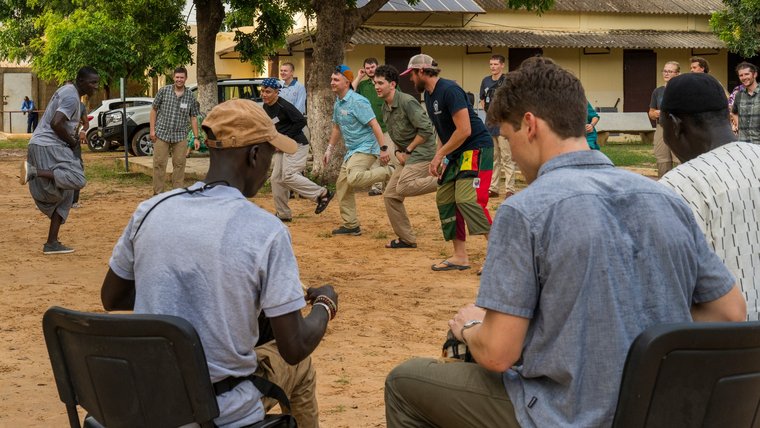
In West Africa, a drum is never far out of reach. The practice of drumming is done by all, mastered by few, and enjoyed by everyone.
Drumming into service
As Peace Corps Trainees arrive for their first time at the historic Thies Training Center, about 45 miles east of Dakar, staff welcome them with drumbeats. They clap their hands, then stomp their feet. They grab the loose material of their boubou (kaftan) and wave the material around like a fan, arms raised above their heads in grand gestures. The sounds explode. With this song and dance, training center staff welcome Trainees and give them a glimpse into their new Senegalese lives, and the sights and sounds that will soon become familiar.
One cohort participated in drum and dance classes as part of their 11-week pre-service training. Some who were otherwise shy found an expressive outlet in dance, others who played the drums already joined in to experience new styles, rhythms, and the feel of the locally made djimbe and tama drums. Learning the drums, with their unique sounds and significance, fast-tracked the group’s appreciation of the music, expressive dance, and richness of Senegalese culture.
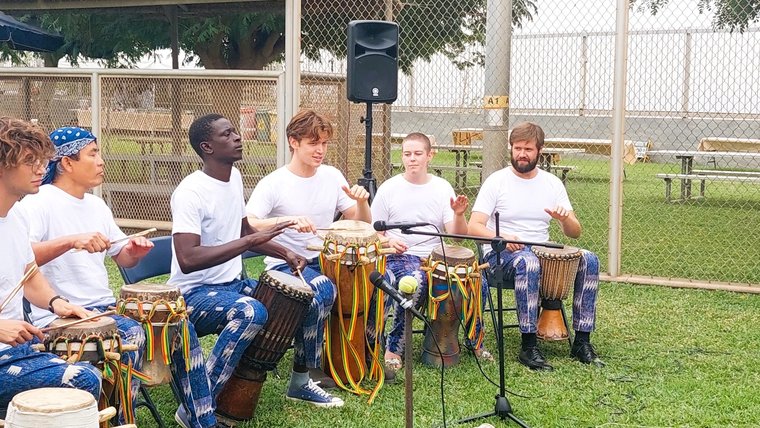
Speaking through the sound of drums
Once in their host communities, Volunteers are surrounded by the sound of drums. Whether marking the opening of a special workshop or event, or welcoming family and friends to a wedding ceremony (takk), or baby naming ceremony (ngente), drums are part of the cycle and flow of life. When a drum isn't available, a plastic oil drum (bidon), or a wash basin (siwo) suffices. With the palm of their hand, or the twig from a neem tree, little children beat out delightful rhythms. Drumming is a unifying sound, bringing together all walks of life, all members of a community, and cuts across cultural divides.
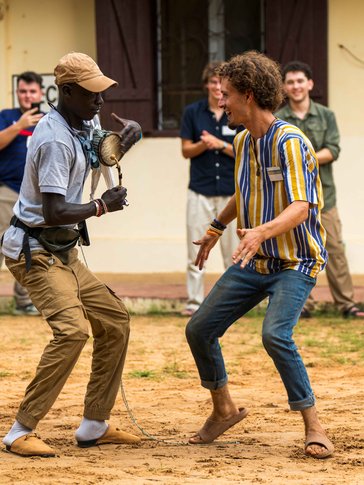
Some Volunteers take up the drum during their service. Some perform publicly, while others refrain from the limelight. After all, traditional drummers are from a unique class called the gewels in Wolof or griots. Music is a cultural tradition passed down through families. The big names like Youssou N'Dour, Baba Maal, Ismaila Lo, and Doudou N'Diaye Rose, all come from the griot caste, who are the traditional oral historians for families, communities, and even national leaders.
Peace Corps Trainees and Volunteers in Senegal gravitate to the drums, an integral part of Senegalese culture. Different ethnic groups within Senegal explore different rhythmic patterns, using local languages like Serere, Mandinka, Diola, or Fula to weave their stories and highlight their traditions. Volunteers start to recognize the unique sounds in different regions of Senegal and, for those who develop a strong interest in Senegalese music, there is a never-ending supply of wonder and amazement.
Drumming out
As Volunteers come to the end of their service, we show our appreciation for their hard work and dedication, their vulnerability, their creativity, perseverance, sense of humor, and kindness with a drumming session, or "drumming out." The staff sing the praises of the Volunteers, highlight their successes and what they will be remembered for—all to the beat of the drum. As they have done throughout their service, Volunteers sit behind the drum, strike it with their hand or a stick, with a series of beats or a single tap. They make peace with their departure from Senegal, and the end of this chapter. Many make a commitment to return to their Senegalese friends and families, the laughter and the tears ... the sunshine, dust, heat, stylish dress, smiles and jokes, rich and spicy foods, energetic dancing, and, of course, to the drums.
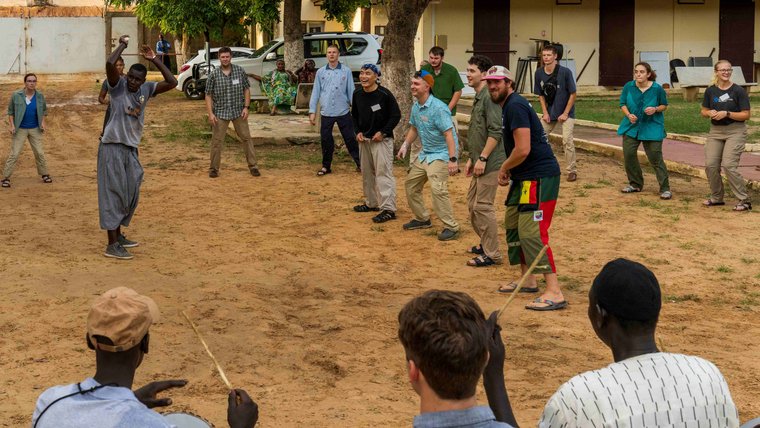
The drums may call them back
When Returned Volunteers hear it again, the drum calls back their memories. The celebratory feel of the music, the culture, and the strong bonds with their Senegalese community wraps around them like the flowing cloth of a large pagne or siir – the multipurpose piece of cloth used to swaddle a young child, protect skins from the sand-filled winds during Harmattan, or collect mangoes from under a tree. The drums will remind them of their time in Senegal and the community members they came to love and care about.
Peace Corps Senegal staff are fortunate to be part of the Volunteer's journey, one that is unique for each. The drum sounds vary and each Volunteer responds to the drums differently. With our “drumming in” and “drumming out” ceremonies, we celebrate the uniqueness of each Volunteer, their special contributions during service, and the individual paths they set out on after departing. Our fervent hope is that their paths will lead them back to Senegal someday. In peace, ci jamm.