An official website of the United States government



Continuing to support a Botswana community from home
Imagine biking down the street on your way to work; you hear your name and see children running toward you, eager to greet you and tell you good morning.
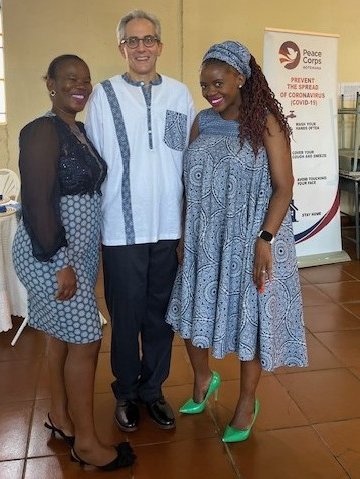
It’s an experience many Peace Corps Volunteers have had during their service abroad, and it was a highlight for Perry, who served as a Peace Corps Response Volunteer in a village in Botswana in 2024.
Perry’s Peace Corps service came after years of working in health and human services. “I felt like I needed to reconnect to a broader purpose and mission, and I thought that Peace Corps was a great way to do that,” he said.
After arriving in Botswana and going through orientation with his cohort for a few weeks, Perry was matched with a community near the border with Zimbabwe, where he supported a project to create a plan and fundraising strategy to expand a pre-school learning center. From the start of his in-person service, Perry felt connected. Meeting the local children contributed to Perry’s passion for the early learning center expansion initiative. It was a project that would eventually triple capacity for the center.
But while he’s proud of the work they’ve done, what impacted Perry the most was the kindness of his community in Botswana. He was impressed by “the importance that people who live [in Botswana] place on just acknowledging each other.” At home in Florida Perry’s neighbors get caught up on their phones, engrossed in their busy lives, and don't always take time to greet one another and connect in person.
While he loved living and working with his community in Botswana, Perry returned home to Florida earlier than planned due to family commitments. But he wanted to continue to support the community online and complete their collaborative project. Perry’s Peace Corps program manager was supportive of Perry continuing his engagement virtually after returning to the U.S. For Volunteers who want to continue to engage with their host communities after returning home, the Virtual Service Pilot can be a good option. In person service also provides an excellent cultural foundation for virtual service.
“Perry has been in Botswana. He has learned about the culture. He has learned the way of life. He understands the context,” said One M., Perry’s program manager. Perry also continues to speak the language, which facilitates his ability to build rapport and exchange ideas with his Botswanan partners online.
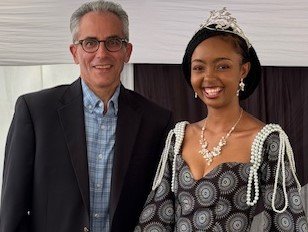
Oabona, Perry’s counterpart for the project, shared that Perry’s support has been crucial to getting them where they are today, and they hope to break ground on the early learning center expansion this spring. She was also impressed by how Perry jumped in to teach the Village Development Committee members how to operate a computer and get their printer working, a necessity in the business setting.
The impact of Perry’s service is felt greatly on both sides: community members have increased their digital literacy and expanded early learning education, and Perry has found a renewed purpose and learned about a part of the world that he previously knew little about.
“I had such a great experience [and I am] interested in doing Peace Corps Response again in another part of the world where I think I can help and be part of a community, just the same way that I was part of this community in Botswana,” he said.