 An official website of the United States government


Featured Volunteer Profile
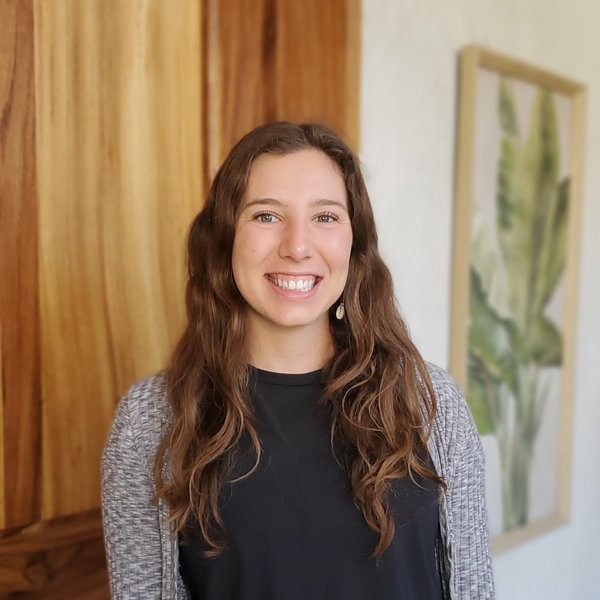
Joella H.
“As a Volunteer you learn to expect that, well, there isn’t a 5 p.m. bus today, or a huge funeral procession is blocking the streets, or there are chickens on board the bus today. Things happen along the way, but you usually make it to your destination!”
1. What got you interested in the Peace Corps?
Peace Corps interested me as an opportunity to not only live abroad and learn another language, but to fully immerse myself in a unique culture while engaging in key issues in my Volunteer sector. Beyond the tangible benefits of service, like career and graduate school, the intangible benefits are countless, such as increased adaptability and flexibility, and the ability to more critically engage in the world’s complex issues.
2. What projects are you working on?
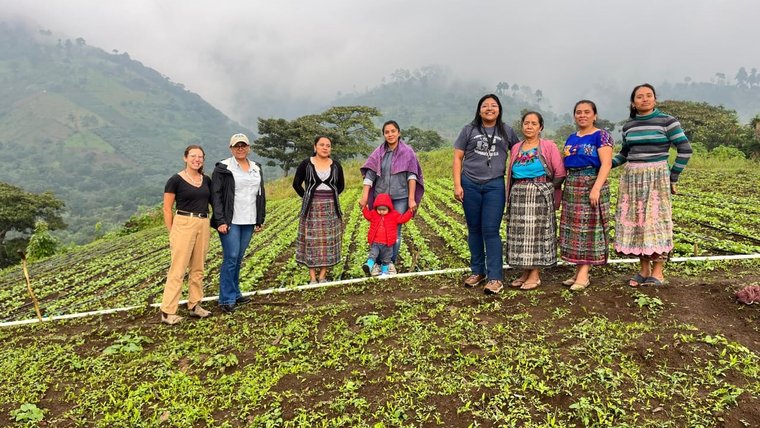
In the Rural Extension Program, I primarily collaborate with extension agents from the Guatemalan Ministry of Agriculture. Together, we train community agriculture extension groups in women’s empowerment, nutrition, healthy recipes, sanitation, and family gardens.
We have several side projects, including the construction of a seedling project in order to maximize local resources to meet nutrition gaps of local families. As seedlings are expensive and hard to access, we have identified a need for a shared greenhouse to grow and distribute seedlings within the community. A recent project used a participatory needs assessment to identify community needs for business classes. We then coordinated a 3-part business class and offered subsequent business support.
3. What strategies have you used to integrate into your community?
I love my host family, and cultivating a connection with them has really helped my integration into the community. They have helped me establish many connections in the community. Another strategy I use is to show up in the same community spaces. For example, I am a regular at certain stores, and over time, have created a connection with the owners. Other opportunities could include being a regular at a cafe or gym, or joining a local sports group or club, depending on your community and interests.
4. What is a highlight of your time in service so far?
I made special connections while learning to weave. Learning to weave in the traditional manner was a highlight by itself; it also brought me deeper connections, as most of the women in my community weave. I was able to sit along others as we learned weaving and grew our relationships. They are skilled artisans and have been very patient with my challenges as a beginner.
5. What have you enjoyed most about the community where you are serving?
Before the Peace Corps, I was constantly moving around. I am surprised by how much a part of the community I feel, mostly due to the unparalleled kindness I have received. Recently, someone told me that I will be missed if I leave because I am considered a part of the community.
Also, as a geology nerd, being able to watch an active volcano from a safe distance is a highlight of my days.
What are some of the most important things you’ve learned from your community?
At times, I compare being a Peace Corps Volunteer to riding a crowed camioneta (“chicken” bus). At first, it feels intimidating and everyone else seems to understand what’s happening while you feel clueless at first. Is there a bus schedule? When can I get off? Can I actually bring chickens on board? (Spoiler, yes you can!) How much does it cost? Over time, you learn. Similarly, you continually learn to adapt to the unpredictable, and learn to expect that, well, there isn’t a 5 p.m. bus today, or there’s a huge funeral procession blocking the streets, or yes, there are chickens on board today. No matter what happens along the way, you usually make it to your destination!
In addition to this adaptability, I have been pushed to ask better questions and continually look beyond initial impressions. I have been forced to engage in issues, such as migration and environmental degradation, if even internally, on a more complex level.
6. How do you spend your time when you are not working on a project?
Peace Corps is much more than goal 1; cultural exchange (goals 2 and 3) is also an important component. Similarly your interests and hobbies do not have to be put on hold during service and oftentimes will help you find a community. For example, I found a community of trail runners and hikers, things I love. Service also gives you a chance to try new hobbies, like weaving, while integrating into your community.
7. What are you looking forward to in your remaining time as a Volunteer?
After being evacuated for 3 months, I am looking forward to re-integrating into the community and working on some more projects in my final year. I am also excited to continue deepening the connections I’ve built in country and experiencing some unique cultural celebrations and holidays.
8. Once you finish your service, what will you do differently when you return to the U.S.?
Even after a year, I already feel much more flexible and adaptable for what life throws at me. I will, hopefully, make fewer assumptions and continue to stay open minded. In a more concrete sense, my time in the Peace Corps has altered my career path, and I hope to continue in international development.



