 An official website of the United States government



Veterans in the Peace Corps
Continue your service. Start your next mission.
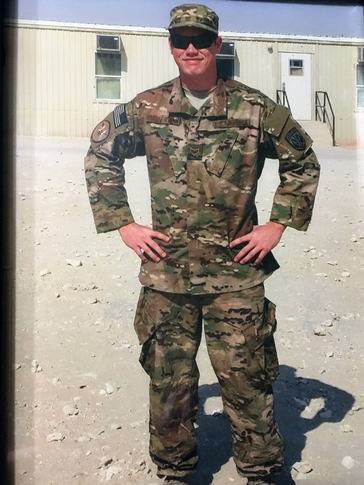
You’ve worn the uniform. You’ve led teams, solved problems under pressure, and served something bigger than yourself.
That doesn’t go away.
The Peace Corps offers a new way to continue your mission – working alongside communities around the world to make a lasting impact.
Want examples?
Veterans from every branch have made the transition.
- Brittney Ortega served in the U.S. Army for 6 years and went on to serve as a Community Economic Development Volunteer in Timor-Leste.
- After serving in the Marine Corps for 4 years, Darryl Sanchez went on to serve as a community organizer in Moldova.
- Dr. André Boyer, retired from a 22-year career in the Marine Corps, served as a Peace Corps Volunteer in China, a Peace Corps Response Volunteer in Georgia, and a Virtual Service Participant in Ukraine.
Interested?
Three ways to serve
Choose the mission that fits your life right now:
- Volunteer (27 months): Full‑time, immersive, community‑based service.
- Response (6–12 months): Shorter, specialized assignments for experienced professionals.
- Virtual Service: Contribute skills remotely while maintaining your current routine.
What service actually looks like
Peace Corps service is meaningful, and it asks you to step outside your comfort zone:
- You may live in a rural or remote community.
- You may be the only American at your site.
- You may need to adapt to shared-leadership models that are more informal and focused on earning trust over time.
Reality check: Is this the right fit?
Peace Corps could be a strong fit if you:
- Are in a transition period (post-service, career pivot, or pre-graduate school)
- Can step away from full-time U.S.-based income
- Are motivated by service and long-term impact
- You don’t have significant financial obligations in the U.S.
- You don’t have any regular caregiving responsibilities
- You prefer flexible environments
What you gain
Veterans consistently report that Peace Corps service strengthens:
- Intercultural leadership and communication
- Operating independently in ambiguous environments
- Language skills and global awareness
- Project ownership with real-world constraints
- Positioning for federal, nonprofit, and international careers
Returned Volunteers build the adaptable, in‑demand skills that help them succeed in any sector and compete in a rapidly changing economy.
Where your skills fit
Your military experience, including technical expertise, operational know-how, and leadership, translates into meaningful impact across all six Peace Corps sectors.
Benefits and support
Continue serving without giving up what you’ve earned—and with strong support throughout Peace Corps service:
- Monthly living allowance that covers housing, food, and essentials (amount varies by country).
- Full necessary and appropriate medical and dental care during service.
- Flights, paid leave, and training.
- Volunteer service award* ($10,800 pre-tax after completing 27-month service)
- Lifetime educational benefits through the Paul D. Coverdell Fellows program
- Federal career benefits, such as non‑competitive hiring eligibility after two years.
*Readjustment allowance
Eligibility notes for veterans
- You can apply immediately after military service (no mandatory waiting period)
- Certain intelligence roles carry restrictions (up to 10 years depending on role)
- Reserves must ensure service does not conflict with obligations
Plan your transition
- Review open positions and apply by the deadline. New positions are posted on the first of each month throughout the year.
- Depart 6 to 8 months after you apply, are invited, and undergo medical and legal clearance.
Take the next step
- Find your best fit (10‑minute quiz) → helps match you to Volunteer, Response, or Virtual Service options.
- Explore current openings → new positions post monthly; watch apply‑by dates.
- Connect with a recruiter → ask to speak with a recruiter who has served or worked with veterans.
Your next mission is waiting.
What veterans usually ask first
The Peace Corps provides necessary and appropriate medical and dental care to Volunteers throughout service. If an injury/illness occurs in the performance of Peace Corps duties, the Federal Employees' Compensation Program (FECA) may provide benefits post‑service.
Most VA benefits (e.g., disability compensation, many education benefits) remain payable if you live overseas and your payments can be expected via EFT. The VA Foreign Medical Program is also an option for service‑connected care while abroad. Always confirm your specific case with VA.
Yes—Returned Volunteers commonly use the GI Bill (including at VA‑approved foreign schools) and many pair it with Paul D. Coverdell Fellowships for added tuition support. (GI Bill eligibility and usage depend on your military service record.)
You’ll receive extensive training and ongoing in‑country support—and you’ll also be expected to operate independently and take initiative in your community.
Before you move to your permanent site as a Peace Corps Volunteer, you’ll receive technical training to equip you with skills and knowledge to successfully support your assigned project. Your pre-service training will also include preventive health care, safety, risk mitigation strategies, and communicating in the local language.
A few months after being sworn into service, you will attend in-service training to strengthen working relationships and develop technical skills. You will also attend mid-service training, which provides additional development opportunities for language learning, community engagement strategies, and skills to support their primary project work.
Training during service includes guided and independent learning, as well as facilitated group-based in-service trainings (ISTs). Number of trainings may vary based on country of service.
The Peace Corps requires you to live in approved housing that meets our safety criteria. Types of housing will vary by country. In most countries, you are required to live with a host family for a number of months before living independently. In certain countries, you will live with host families for the duration of your service. To learn more about typical housing and requirements for specific countries, find the country where you would like to serve and then navigate to its Living Conditions page.
Read more stories about veterans who served in the Peace Corps and more.
More questions? Check out our frequently asked questions pages.