An official website of the United States government


Seeds that grow through challenging times
Towards the end of my service as a Community Economic Development Volunteer in Costa Rica, I was finishing an activity at my community’s high school, thinking, "I'm not ready to close this chapter of my life."
When the opportunity presented itself to extend my service and help reopen the Peace Corps program in El Salvador, I decided to take the leap and accept.
A new assignment in El Salvador
Upon arriving in El Salvador in fall 2024, I was surrounded by sunny skies, tropical landscapes, and fruits and vegetables similar to what I experienced in Costa Rica. Even the slang was similar. As the days passed, this superficial first impression began to change.
Over the past decade, El Salvador has weathered turbulent times—years marked by periods of violence that touched nearly every community. Despite this adversity, the Salvadoran people have been resilient, and their country has become more stable. It is now considered one of the safest countries in Latin America.
Reopened in September 2024, the Peace Corps program in El Salvador aims to partner with Salvadorans as they continue to innovate and move forward. As a Volunteer, it was exciting to be a part of what felt like a new beginning.
Challenges and opportunities
My role as a Program Development Volunteer was to partner with community members and organizations to identify culturally relevant activities that incoming Volunteers could undertake with communities in El Salvador. I co-facilitated discovery sessions with cooperatives, small businesses, and local schools to identify challenges youth faced in participating in their country’s economic development. Together with my counterparts at the local high school, I supported entrepreneurship activities, including a baking workshop, with the goal of motivating youth to innovate with ojushte, a nutrient-dense seed.
Meeting Ana
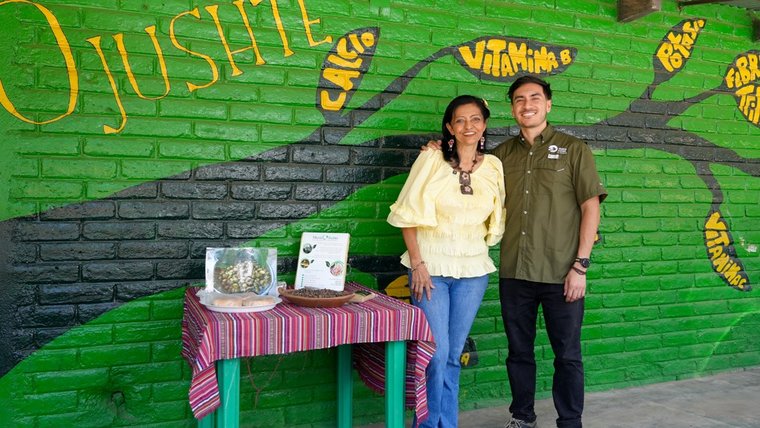
One morning while I was eating breakfast, my host brother mentioned Ana E., a community leader and entrepreneur who had worked with a Peace Corps Volunteer prior to the suspension of operations in 2016. When I met Ana, she welcomed me with open arms. She was excited to hear about Peace Corps’ return to El Salvador and shared with me stories of working with Volunteers and the challenges they experienced living and working in another culture. Her passion, I would soon learn, was rooted in the ojushte tree, a native tree that indigenous people had used for centuries.
Ana first learned about the importance of the ojushte tree while visiting a national park with a Peace Corps Volunteer named Zachariah. A park ranger explained its historical and nutritional significance as well as how its seeds add a distinctive flavor and health benefit to food.
Turning a passion into a product
Ana went on to harvest the seeds from trees in the community and spend hours experimenting with ojushte, adding the seeds into different culinary creations, such as bread and even hamburger patties. She worked together with Zachariah and eventually developed two products made from the toasted ground ojushte seeds: a caffeine-free instant coffee mix and a nutrient-dense general baking and cooking mix.
After Zachariah’s departure, Ana continued to pursue her passion for ojushte, and eventually started ManaOjushte, a company dedicated to innovating with ojushte and educating others on indigenous traditions.
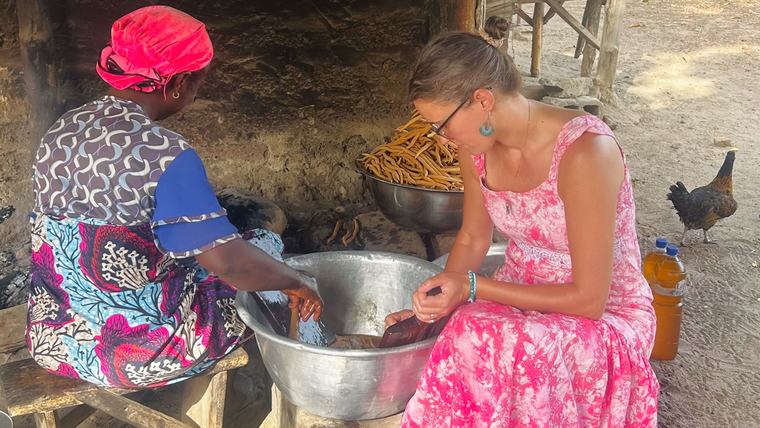
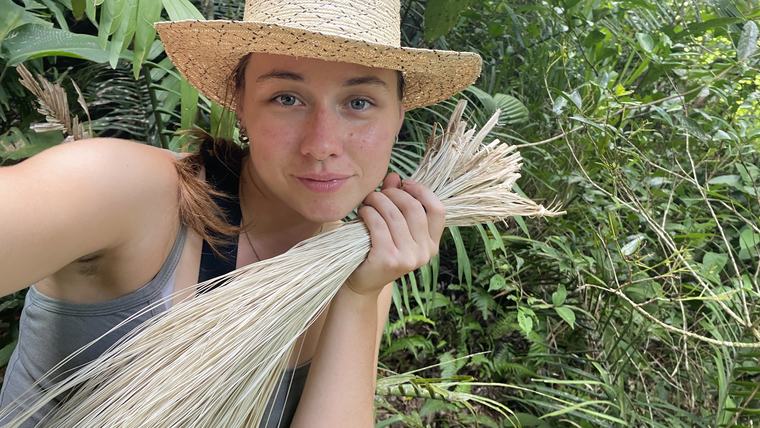
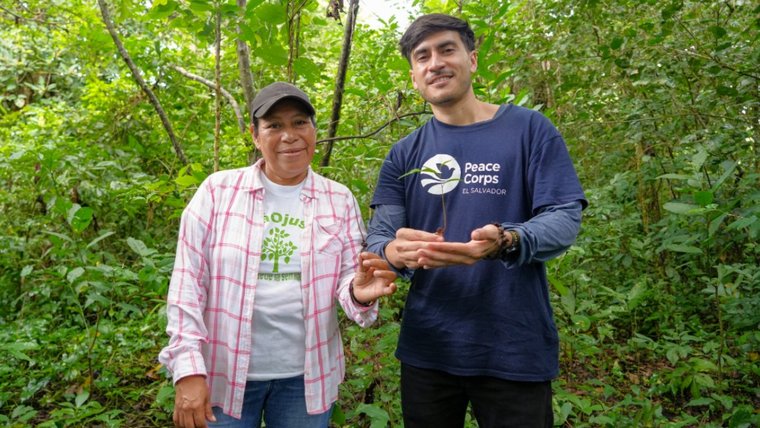
As the months passed, Ana and I became close friends. I was inspired by her creative thinking and her desire to give back to others. She connected me with other community members passionate about indigenous culture, the environment, and motivating youth to preserve traditions. She also taught me how to forage, cultivate, and process ojushte for consumption.
A local economy sprouts from the ojushte seed
A highlight of my time in El Salvador was the Feria de Ojushte, a community festival where artisans and entrepreneurs showcase food and products made from ojushte. Ana had established the festival with the support of Volunteers before the Peace Corps suspended its program in 2016. I was amazed to see that, despite the turbulent times, the festival has grown since then. Youth are involved and excited to participate, coordinating logistics, innovating and selling ojushte products, and offering guided hiking tours.
I hope to see the community, now referred to as the “capital of ojushte,” continue to embrace the seed, with Salvadoran youth actively leading its development.
Ojushte defined my service in El Salvador. It taught me that solutions to community challenges are often seeds, planted long ago, that continue to grow even in challenging environments.