An official website of the United States government


The 12 words you'll hear in Malawi
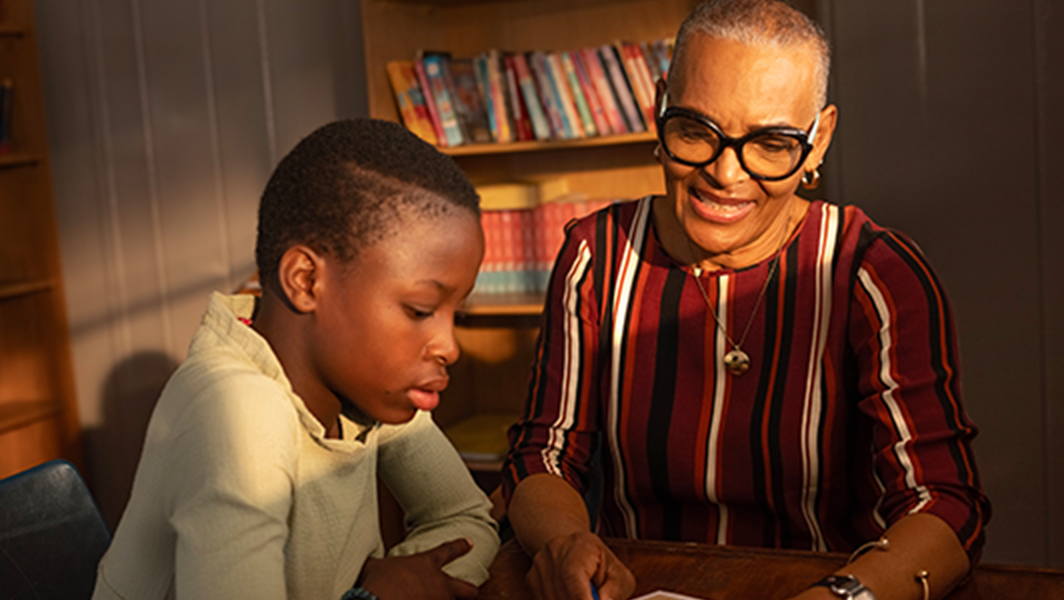
I feel like my personality changes a bit when I speak in Chichewa, and others have told me similar things about their own experiences speaking other languages.
I make an attempt to speak in the way those around me speak and, in that way, integration and adapting to the environment around me becomes easier. Of course, I can never be Malawian. But I can try my best to understand, as an outsider, to fit in and become a member of the village and part of the extended family of community.
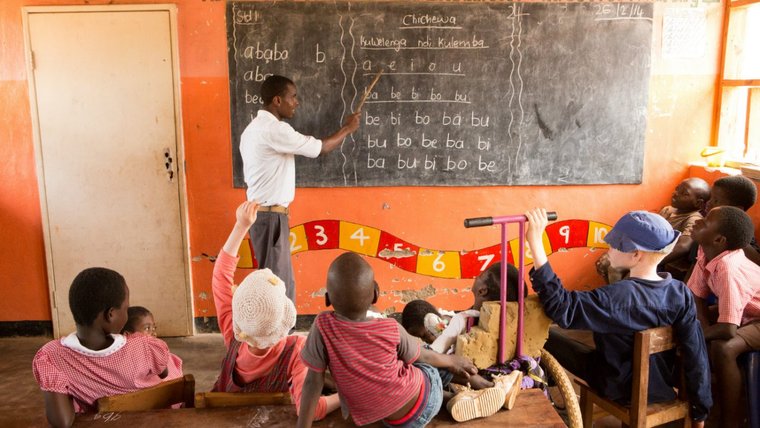
For such a small country, Malawi has a pretty diverse amount of languages. There are about ten or 11 total if you don’t count Chitipa, Malawi’s northernmost district. Due to a variety of geographical and other factors, Chitipa alone has upwards of 20 languages. The main language used in Malawi is Chichewa, which is native to the Central Region. Here are the most common words and phrases that I hear daily, weekly, or multiple times a day here in Malawi:
1. Zikomo
No post about Malawian language would be complete without this word which I use and hear used at least 20 times per day and usually more. Zikomo typically means “thank you” but you can pretty much use it whenever you have no idea what else to say. It can mean “excuse me” when passing someone it’s usually also used as “you’re welcome” in response to thanks, it can be used as a greeting, and many other things. There is a companion word, ndathokoza, which is present in many African languages, that simply means “I am grateful.” Whenever I receive a gift or buy anything, I usually say both of these words multiple times. To an outsider it might seem quite comical, since zikomo is also the response to zikomo.
2. Boh!
This is a very informal greeting, typically accompanied by a thumbs up and a smile. It’s used among people who are the same age (usually younger people), but whenever children see a white person, they love to shout “Azungu boh!!” It can also be said in repetition: “Boh boh?” and the response is “Boh.” Boh literally means good. You might ask someone “Ulendo unali bwanji?” (How was the journey?) and they might answer “Unali boh!” (It was good).
3. Iwe, choka!
This literally means “You, go away!” and is slightly rude if you’re saying it to a person your own age. It’s commonly used with animals. In homestay, the goats used to try to come into our house while we were eating and my amayi would always angrily yell “Ah ah, choka iwe!” and begin chasing the goat all over the yard until it went away. Close friends also use this phrase with each other in joking around, the same way you might imagine some men saying “Shut up, you!” in jest. (Side note: Despite the fact that “iwe” literally means “you (informal),” it’s used much more frequently and differently than English. People commonly use “iwe” the same way we might use “hey!” in America, or the way people say “come on, man,” or “bro.” I hear iwe used more commonly by itself than in sentences.
4. Basi
The “i” at the end is frequently left off so the word usually sounds like “bas.” The word can be used in a variety of ways and tones depending on the context. If it’s said alone, it means “that’s enough.” I would say it every day in my host village when my amayi poured water over my hands to wash before eating. It’s frequently said before leaving somewhere: “Basi, ndapita.” (Literally: “Enough, I have gone.”) You can use it if someone is annoying you: “Iwe, basi.” It can also sometimes be used to mean “only.” In training we were taught to tell people “I don’t get paid a salary, I just receive an allowance, basi.” Another example: “I like all vegetables but with fruits I like bananas, basi.” The words iwe and basi are frequently sprinkled in English sentences by Volunteers, and we use them with each other when no Malawians are around. I have no idea how I’m going to remove them from my vocabulary when I return to the U.S.
5. Ndikubwera
This literally means “I am coming,” but no one uses it like that. I almost always hear this phrase used (in both English and Chichewa) when someone is getting up to leave. At first I thought maybe people were just confused about the meaning of the word in English but once I heard that the same thing was said in Chichewa as well as how ubiquitous it is, I realized that there was a bit more going on. I eventually realized that people are using it to say, “I am leaving now, but I will be back.” It doesn’t always mean that they will be back immediately, however. It may be several hours or even the next day. But they will return. I now say this in English to Malawians so frequently that it has become a habit and I forget that this is something I never would have said in America.
6. Tiwonana
Both "tiwonana" and "ndikubwera" signify something deep about the culture here that, in my opinion, is vastly different from the U.S. Tiwonana is typically translated as "goodbye," but it literally means “we will see each other.” Goodbye is too final. Goodbyes can be final, but tiwonana and ndikubwera are never final. With those words, there is always the hope and perhaps even the expectation that you and the person you are chatting with will meet again at some point in the future. Some Volunteers, upon leaving, say something like, “It’s not goodbye, it’s tiwonana,” drawing out that subtle difference.
7. Lowani!
Literally, “Enter!" (formal) or “Come in!” but used much more frequently than in English. In America, if I want to visit a friend, I typically wait for an invitation or at least inform them that I'm coming. In Malawi, a guest is treasured. If I was sitting outside my house in the training village, amayi would always come find me if someone walked by and say, “Alendo afika!” (a visitor/traveler has arrived) and we would all come over and greet them. I used to visit one of my close friends at least once or twice a week, and he would always tell me “Lowani, lowani, tidye!” (Come in, come in, let’s eat!). In general, people want to welcome and be hospitable to visitors in Malawi.
8. Greetings
I can’t stress enough how important greetings are here. People here are shocked when I tell them that in America you can just walk by someone without acknowledging their presence. If I let my American side take over and try and get down to the business at hand without greeting a person, they may not say anything, but often they will wonder why I didn’t greet them. I usually notice a change in their tone and attitude towards me if I suddenly remember I didn’t greet them and then apologize and start over. Usually the greetings I’ve posted here are followed up with “What about your house? How is it?” and things like that. I realize that “How are you?” and “I’m fine” has become an essentially meaningless form of phatic communication in English, and it is in Chichewa as well, but the fact that it is used so frequently seems to give it more meaning. The meaning is in the greeting itself and not in the words exchanged. The basic greeting for someone you haven’t met or someone you haven’t seen in a while (they’ve been away on a journey, perhaps) is as follows:
A: Muli bwanji? (How are you?)
B: Ndili bwino, kaya inu? (I’m fine, what about you?)
A: Ndili bwino, zikomo (I’m fine, thanks)
B: Zikomo (Thanks)
9. Ndithu
"Ndithu" literally means “indeed” or “that is true.” It can also be used as conversation filler when there’s nothing else to say. In my own experience the latter use is more common in the Southern Region than the Central Region. It’s often repeated: “Mvula!” (Rain!). “Ndithu, ndithu (Indeed, indeed). The suffix "-di" also means "indeed" in Chichewa: Sometimes people add –di to ndithu itself for emphasis. “Kuli njala” (There is hunger). “Ndithudi, ndithudi” (Very much indeed).
10. Ugeni
My best translation of "ugeni" is “whatchamacallit.” In fact, I taught my form one class in Zomba the word “whatchamacallit” so that they would stop saying ujeni so much in class (I know it wasn’t a terribly useful thing to teach, but I wanted them to use English as much as possible). Ujeni is used all the time to refer to literally everything: people, places, things, verbs, words you can’t remember. Basically, if you can’t remember what you were going to say next, just drop an ujeni in the sentence. One friend in the north has a counterpart nicknamed “Mr. Ujeni” because of how frequently he uses this word. My counterpart used to start every argument with something along the lines of “Let’s take an example of that ujeni…that uh who…that ujeni, that president of Zimbabwe ... Robert Mugabe.”
11. Azungu
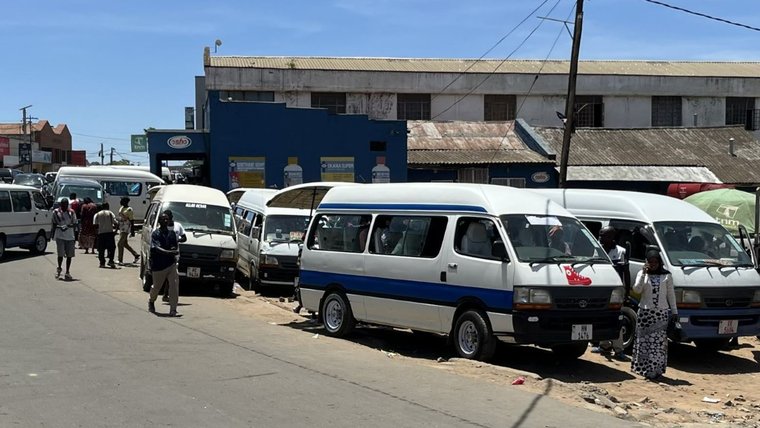
Technically "azungu" means “foreigner,” but it has come to specifically identify white or lighter-skinned foreigners. Although, people still get called azungu regardless of their skin tone once people realize they are foreign. Children will scream this word at me as I pass by on the road. Slightly older children will often follow it up with the phrase, “Give me money!” Still, it is used by adults as well. In the market once, I was walking to a chippies (french fries) stand with some friends and heard the vendor’s friends yelling behind him in Chichewa “Make the price higher! They’re azungu!” Having just greeted him in Chichewa, he turned around and told his friends laughingly, “I can’t, they know Chichewa!” As annoying as this word can sometimes be, I understand that there are a variety of factors that motivate its use. Children are often excited by the novelty of an outsider, and if I stick out more than anyone in a crowd, the term really does become useful to refer to me. Several times while waiting for a minibus to fill up, I am used by the conductor as an attraction to try to get more people to get on the bus (“Come on this bus, here’s an azungu who lives in a village! He knows Chichewa!” etc.) Technically the word itself is “mzungu,” but in Chichewa, putting an “a” at the beginning of any word makes it respectful. So “azungu” can be also be a term of respect from a different perspective.
12. Pang’ono, pang’ono
"Pang'ono, pang'ono" literally means, "little by little." It’s used to mean “slowly.” People most often use it as a form of encouragement. When I was first struggling with how to make fires or how to wash my clothes by hand, my host parents would say “Pang’ono pang’ono mudziwa” (little by little you will come to know how). When I was struggling with settling in here my new neighbor would say, “Pang’ono pang’ono.” In English we might say “One day at a time.” The first proverb I ever learned in Chichewa was “Pang’ono pang’ono ndi mtolo” (A bundle of fire grows little by little”)—meaning that gradual and persistent attempts will yield success. (Side note: Essentially every language in Malawi has a version of this that sounds similar: "Pang’ono, pang’ono" in Chichewa; "Pachoko, pachoko" in Chitumbuka; "Panandi, panandi" in Chiyao, Chilambia, and Chindali; and "Kamana, kamana" in Chitonga; and so on.)
Those are 12 of the most common Chichewa phrases I hear daily. But Malawians are also fun and creative with English as well. My all-time favorite example of this is something I’ve overheard twice now when two people were playfully arguing. One person sighed and, rather than call his opponent a liar, said, “Ah, my friend, you are being economical with the truth.”
At my host family's house, a distant cousin came to visit and ate dinner with my family and me one time. He greeted us all and we ate. Upon leaving, he got up and said goodbye to everyone. When he got to me he said “Zikomo, alendo. Tiwonana." (Thank you, visitor. Goodbye)” My sister was quick to cut him off. She said “No, you are the alendo. You live far away and are here for just a night. This one is achimwene (brother).” They laughed, but I know that it was only because of language that that joke was possible, and it was only because of language that I was able to feel accepted in that family and that they were accepted by me. And it’s only possible for that type of knowledge sharing to happen because of the welcoming nature of Malawian culture, which is reflected in the word for “welcome” in Chichewa: takulandirani. The literal translation is, “We have received you.”