 An official website of the United States government


Connecting Cultures Lesson
This lesson aims to empower students to see themselves as part of a global society and understand the importance of connecting with other cultures.

Objectives
Students will:
- Learn about the Peace Corps' mission and how their work impacts over 60 countries worldwide.
- Consider how the Peace Corps’ mission helps connect cultures and communities, while promoting world peace and friendship.
- Consider how engaging in communities worldwide can be a transformative experience.
- Explore the value of being a global citizen and how viewing the world through this lens can have a positive impact.
- Create a social media video highlighting the values and lessons learned.
Materials
- Connecting Cultures Educator Guide [PDF] with step-by-step lesson instructions
- Connecting Cultures Student Handouts [PDF]
- Connecting Cultures Presentation [PPT]
- Video featuring RPCV Rob Watson
- Device with internet access
- Pens/pencils/markers
- Chart paper
- Large pieces of butcher paper (large enough to trace a student)
Procedure
Day One: What is the Peace Corps?
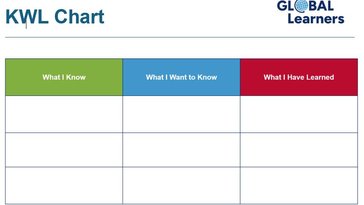
- Begin class with a KWL chart (page 1 of Student Handouts). Ask students what they know about Peace Corps and connecting with cultures worldwide. Invite students to think about what they know, what they want to know, and what they learned at the end of this multi-day lesson.
- View the video featuring Rob Watson, a returned Peace Corps Volunteer. Lead a class discussion about the Peace Corps’ history and mission using the questions on the Peace Corps Video Discussion Guide (page 2 of Student Handouts).
- Divide students into groups of three. Each student in the group will research different aspects of the Peace Corps. (See Educator Guide for the task outline.) Once students have completed the tasks for their roles, they will discuss what they have researched with one another.
- Students will use what they learned to design a symbolic Peace Corps image, using blank drawing paper and markers (or pages 3-5 of the Student Handouts). The symbol must reflect the three goals of the Peace Corps.
- Place posters around the classroom, and lead students on a gallery walk. Afterward, students will discuss their designs.
- Close the lesson for the day by having students revisit their KWL Chart and complete it.
Day Two: Volunteerism & Community Engagement
- Play the Meet a Volunteer video about Christine, a Peace Corps Volunteer in Mongolia.
- Facilitate a discussion on volunteerism. Ask the students to share examples of when they volunteered their time, either at home, in school, or in their communities in general. Have students list some of the benefits of volunteering.
- Break up students into groups of 3 or 4. Within their groups, individuals will take turns discussing what skills and characteristics make a great Volunteer. Students will research various stories available on the Peace Corps website or the Peace Corps Volunteer Profiles to make these considerations.
- Using the Peace Corps Volunteer Profile Capture Sheet (page 6 of Student Handouts), each group will create a profile to share with others. Place a large sheet of butcher paper on the floor. One student will lay down on the paper to help create a template for the design of a Peace Corps Volunteer Profile.
- Students will then divide the butcher paper into four sections (as outlined in the handout). Each section will have one of the following: what they think, what they feel, what they say, and what they do.
- Students will then use the Skills Self-Reflection Handout (page 7 of Student Handouts) to list some of their strengths and reflect on how they match up to those on the profile they have just created. Have students discuss their results with others in the group
- When done, the class will join for a general discussion. Each group will take turns sharing their profile with others.
- Lead a class-wide discussion using the prompts found on page 6 of the Educator Guide.
Days Three-Four: Global Citizenship
- Begin the lesson by leading a discussion to define what a global citizen is. Write down responses on the board and come up with a class definition.
- Break up class into groups of three or four. Students will work on creating a “job listing” for someone who is a global citizen. This can be created by hand or using a computer.
- Students will post their listing around the classroom, and do a gallery walk looking at the listings other groups posted.
- Once students have looked at each other's work, they will return to their groups and make a list of desired skills based on what they saw in the job postings. They will use the Global Citizen Cause and Effect Chart (page 8 of Student Handouts) to list these skills on the left-hand side. On the right-hand side, they will list the positive effect (or outcome) of having such a skill.
- Students will now begin work on the cumulative project for this lesson bundle. They will take what they have learned about the Peace Corps’ mission, volunteerism, and global citizenship and create a social media video to promote the Peace Corps’ values to others. Students will choose the social media type they believe will have the most outreach and use the Social Media Video Planner (page 9 of Student Handouts) to prepare their product.
- Allow students an appropriate amount of time to plan out, record, and edit their video. Once all groups are finished, host a viewing party. Have students provide constructive feedback to one another.
Teacher Notes:
- This video project could be to create an educational video about Peace Corps or a video that serves as a call to action around a service project that students are passionate about.
- Students will most likely need Day 4 to record and edit their videos in class. The watch party could be on any subsequent day after all students have turned in their video project.
Standards
National Social Studies Standards
- Theme 1—Culture: Through the study of culture and cultural diversity, learners understand how human beings create, learn, share, and adapt to culture, and appreciate the role of culture in shaping their lives and society, as well as the lives and societies of others. In schools, this theme typically appears in units and courses dealing with geography, history, sociology, and anthropology, as well as multicultural topics across the curriculum.
- Theme 9—Global Connections: The realities of global interdependence require an understanding of the increasingly important and diverse global connections among world societies. This theme prepares students to study issues arising from globalization. It typically appears in units or courses dealing with geography, culture, economics, history, political science, government, and technology.
National Literacy Standards
- CCSS.ELA–LITERACY.CCRA.SL.1: Prepare for and participate effectively in a range of conversations and collaborations with diverse partners, building on others’ ideas and expressing their own clearly and persuasively.
- CCSS.ELA–LITERACY.CCRA.SL.2: Integrate and evaluate information presented in diverse media and formats, including visually, quantitatively, and orally.